FBR & Tax Updates

Stay informed with the latest FBR announcements, tax regulations, and updates on filer registration, NTN, and income tax filing in Pakistan.

Books on Taxation in Pakistan
FBR & Tax Updates

Your Essential Guide to Books on Taxation in Pakistan

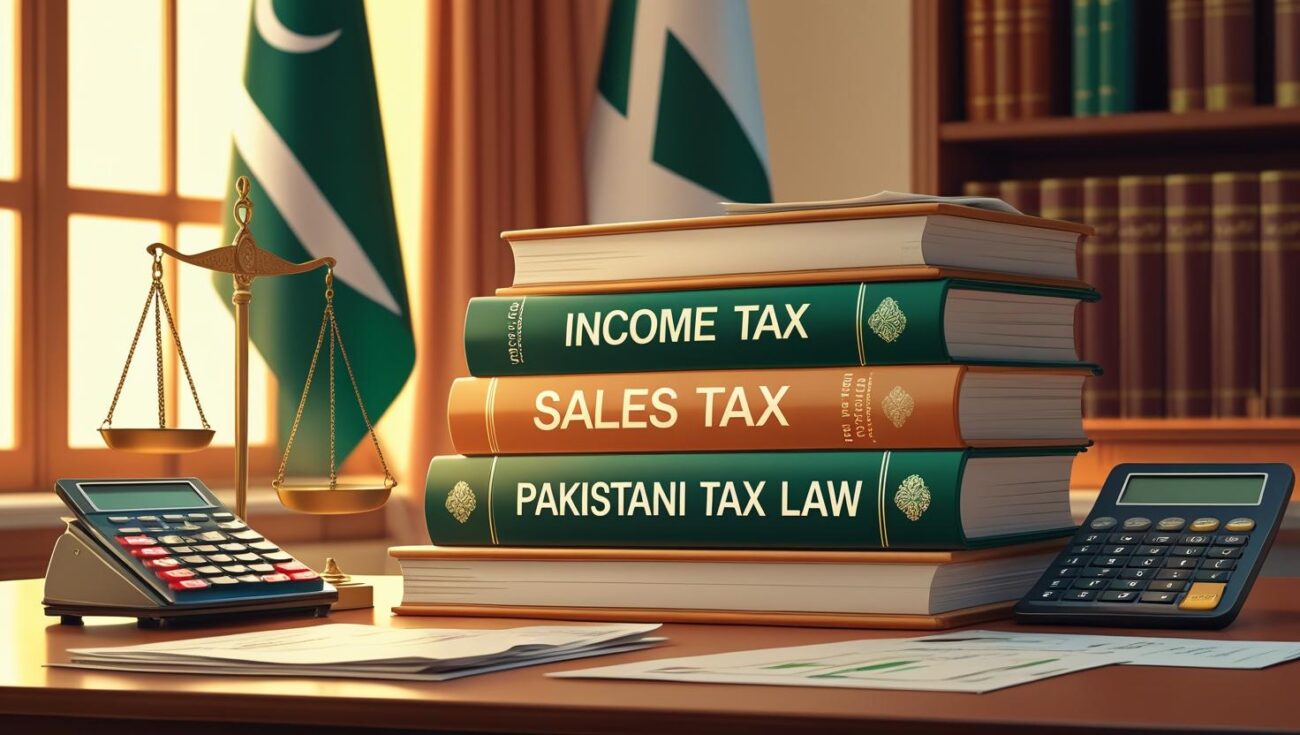
It is important to know your tax laws in every country, but particularly in Pakistan as the ever changing tax regime in the country due to legislative amendments and regulatory updates can really catch you off guard. Taxation books in Pakistan are an ideal choice for students, law practitioners, tax lawyers and business people to get acquainted with this complicated subject. The books are academic textbooks and important professional tools for a wide variety of subjects including income tax, sales tax, customs duty, and federal excise. Books on taxation in Pakistan can assist not only in comprehending the legal structure, but also contribute towards adherence and appropriate financial strategies. This article provides some valuable on why these books are important, what to expect inside them, what features to look for, the best authors and publishers, and who can benefit from the books. The Function of Taxation Textbooks in Pakistan Books on taxation in Pakistan substantiate the difference between text of law and its practical interpretation. In Pakistan, tax matters are overseen by the Federal Board of Revenue (FBR), which is known for regularly updating laws and frequently revising regulations. To keep abreast of such changes requires information, so that individuals and organisations know how to comply with them. Tax books provide time-tested anchors for navigating these changes. They describe difficult tax rules, break down filing requirements, and shape judicial decisions. More importantly, they also help readers correctly apply the law to their particular situations. Ideal for filing tax returns or for students embarking on professional exams, here are updated and up-to-date books on taxation in Pakistan. Categories for Taxation Books in Pakistan Books on taxation in Pakistan can be generally divided based on target readers and contents’ level. Each of them has their specific role, and is employed in certain contexts. Academic Textbooks Textbooks are generally tailored for students pursuing commerce, law, and accountancy. They are specifically designed to align with the syllabi of institutions such as the University of the Punjab, the Institute of Chartered Accountants of Pakistan (ICAP), and the Association of Chartered Certified Accountants (ACCA). The content is presented clearly and concisely, organized into practical sections, and enriched with examination-style practice questions, exercises, and worked examples. Books such as Dr. Muhammad Afzal’s Taxation in Pakistan and others written by Sohail Afzal and M. Idrees are among the most popular academic textbooks. These publications are dedicated to elucidating tax concepts and fundamental tax computations for the benefit of students. They aim to make the tax laws accessible to college students who have had little or no exposure to the tax law previously. Professional Reference Books Professional reference books are geared toward chartered accountants, tax consultants, lawyers and auditors who deal with detailed provisions of the law and legal interpretations. Such publications may contain detailed ancotations to Income Tax Ordinance, 2001 and Sales Tax Act, 1990. They also provide references to applicable case laws, judicial interpretations, and comparisons with previous provisions. Famous case law books: Pakistan tax laws by Mirza Munawar Hussain, The income tax ordinance explained by Altaf Sheikh. These pakistan tax law books are updated as and when new finance act is announced and the notes and comments of expert are added to gain the understanding of the law in a much better way. Practitioner’s Manuals Practitioner manuals are written for office use by workaday tax specialists, accountants, and tax lawyers. The handbook is a ready-referencer for tax managers, legal experts and corporate counsels, as it offers access to vital information like tax rates and filing dates, procedure and rules, among others. They may not contain the scholarly or legal analysis depth, but they are so helpful for practical work. Renowned authors like Shaukat Mehmood and firms such as Naveed Zafar Ashfaq Jaffery & Co. consistently publish widely consulted handbooks, revised annually to incorporate the latest developments in tax law. The handbooks on tax and custom law in Pakistan provide quick references and assist tax collectors in the collection of taxes and duties. Features of High-Quality Taxation Books Looking for the best books on taxation in Pakistan. Some qualities would help us to judge the book for its usefulness in understanding the Pakistani taxation system. 1 Legislation is up to date First and foremost, current legislative content is crucial. The law changes annually with the Finance Acts and an old book of this kind can be an implication error waiting to happen. Secondly, detailed commentary is of excellent value. “Books that tell you not just the ‘what’ but the ‘why’ of a legal rule do a better job of imparting a rich knowledge of the material. Third, the good books will contain case law references.High Court and Supreme Court rulings in Pakistan are frequently referenced in the resolution of tax matters. Other added features such as legal definitions, practical examples, quick summary, tax tables and procedural checklists, all serve to make the text user friendly. Exam-style questions, in the form of MCQs, past papers, and solved questions, must be included in academic books, particularly if they are written for student readers. Top Writers and Publishers in Pakistan The credibility of books on taxation in Pakistan largely depends on the author’s expertise and the reliability of the publisher. Some writers have worked up a reputation over decades in the tax law and accounting community. Syed Imtiaz Hussain is a prominent tax attorney whose writings are considered by many practitioners to be the bible for their legal accuracy. The books of Altaf Sheikh are known for their lucid and comprehensive commentaries. Academic writers such as Sohail Afzal have proved instrumental in breaking down the labyrinth of law for students with tight schedules, revision commencing and more. But when it comes to publishers, Iqbal Publishers and Professional Business Publications (PBP) are considered reputable names when it comes to academic and professional tax books. They maintain their own editions annually to reflect tax law updates. Accessibility and Digital Formats In recent years, the availability of digital resources has expanded access to books on taxation in Pakistan. But many of
Agriculture Taxation in Pakistan
FBR & Tax Updates

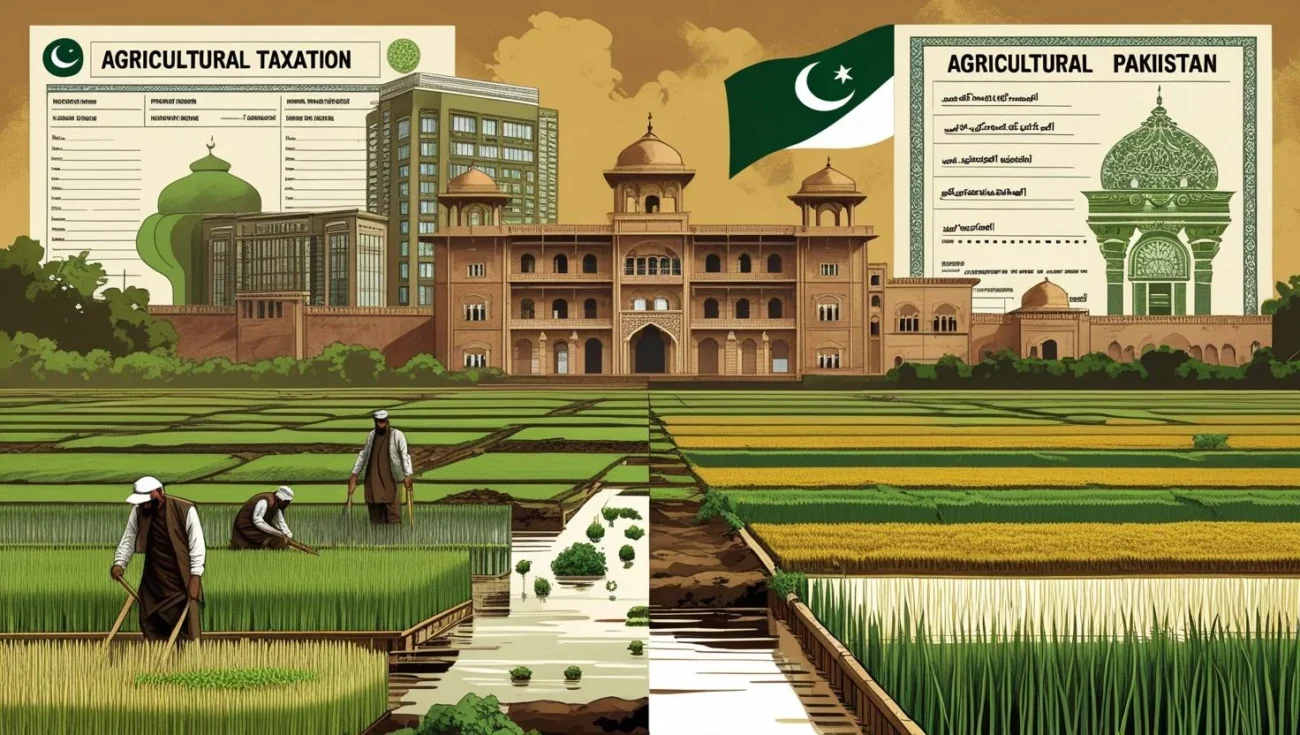
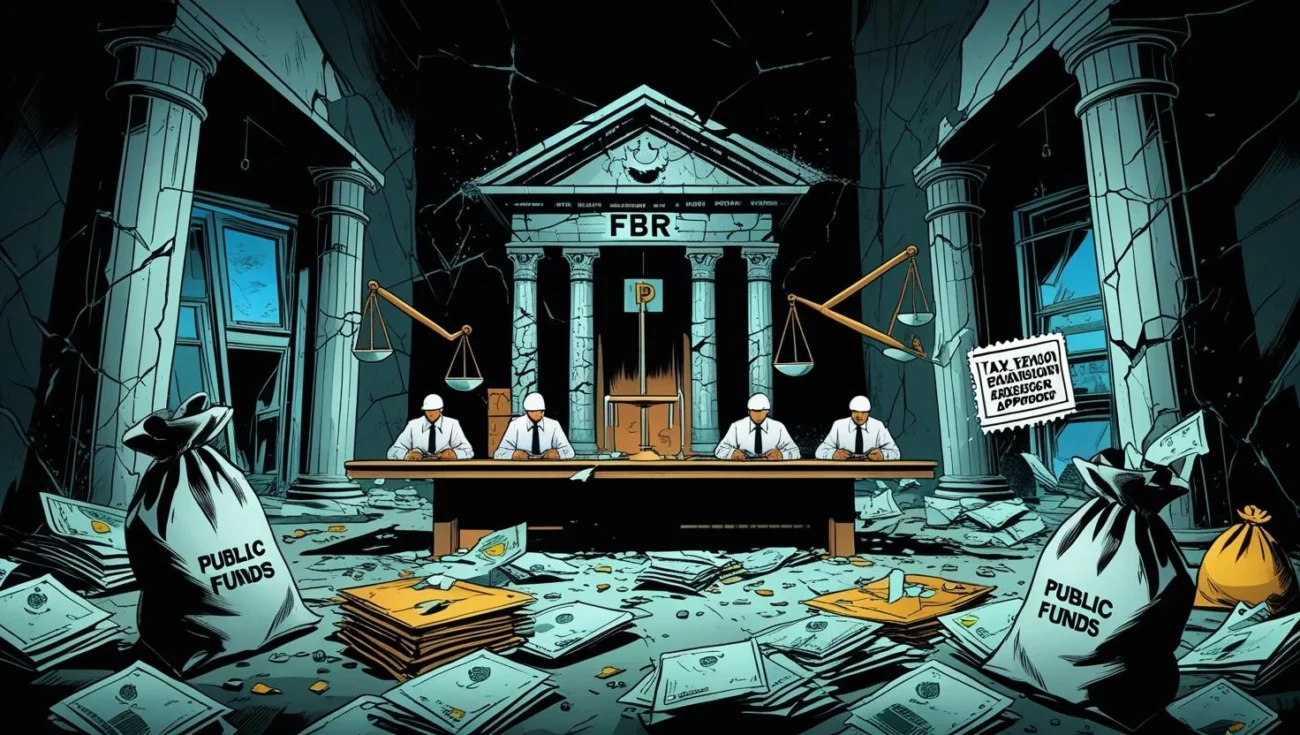
Agriculture Taxation in Pakistan Assessing the Impact of Fiscal Gaps and Elite Capture

The issue of agriculture taxation in Pakistan has been a taboo, or at most, a sidelined matter, constituting the modus operandi of fiscal policy. In a country where agriculture accounts for almost 20% of GDP(approx.) and engages nearly 37% of the working population; its taxation should be a fundamental part of the national revenue policy. However, despite being a huge and vital sector, like so many areas of Pakistani life, Pakistan’s agriculture tax system is ineffective and politically skewed. This failure has perpetuated economic inequality, eroded public confidence in tax fairness and cost the government billions in lost tax revenue. Getting a grip on how and why this sector continues to be undertaxed is essential to any serious discussion of economic reform. A Constitutional and Political Legacy The origins of agriculture taxation in Pakistan are intrinsically linked to the country’s federal system of governance. Tax in relation to agricultural income under 1973 Constitution is a matter for the God under Article 80 (2) not for the Caesars – the provinces and not the Centre. This dichotomy was supposed to recognize the particularity of land and farming practices locally, but in reality, it forms a system of schismatic inefficiency. Each province — Punjab, Sindh, Khyber Pakhtunkhwa and Balochistan — has set its own rules, which go largely unenforced, and coordination is almost nonexistent. There are provisions under the law in all the four provinces to tax the agricultural income or to levy a land-based tax but the collection of revenue is virtually zero. Under this constitutional setup, the federal government has also been able to stay away from taxing agricultural income for national income tax, which has put a check on the strict scrutiny from audit and accountability. The story of agriculture taxation in Pakistan, therefore, is that of a missed opportunity, and institutional neglect. Who Really Pays? A Broken System of Accountability Notwithstanding the available legislation, the real application of agriculture taxation in Pakistan has been quite defective. Most of the country’s farmers own only a few hectares of land and their earnings are lower than the taxable bracket. But the system also safeguards wealthy landowners — some of whom own thousands of acres and make millions of dollars a year. These wealthy landlords frequently pay little or no tax, exploiting legal loop holes, lax enforcement, and political influence to shirk that accountability. A lot of Pakistan’s top politicians also happen to own huge amounts of land. The confluence of economic power and political control has made it near-impossible to introduce or implement laws that have agriculture income meaningfully in their crosshairs. These exceptions are publicly marketed as protection for “poor farmers” when in fact the richest players in the industry have the most to gain. Meanwhile, wage earners and small-business owners — with little escape from scrutiny — pay the brunt of the tax bill. This unequal system has generated enormous resentment and further undermined the legitimacy of the larger tax code. The Illusion of Equality The discourse surrounding agriculture taxation in Pakistan is frequently framed around the protection of rural livelihoods and the pursuit of food sovereignty. Because, these legitimate concerns have often served as a distraction from the larger issue at hand: wealth concentration and tax dodging. Most of Pakistan’s farmers work on small pieces of land, and they are often under financial strain and lack access to credit. These farmers are not impacted by an effective tax policy that affects only high-income agricultural producers. Regrettably, it is the absence of reliable data and lack of record-keeping, in addition to the heights of political intolerance at work that thwart the evolution of a progressive tax system which makes the poor peasant farmer in rural Homa Bay different from the agribusiness industrialists. Taxes on agriculture are perceived by the public as an assault on the rural poor, even as the majority of small and marginal farmers earn far below taxable income limits. This falsehood has helped maintain business as usual, which leads to economic and social inequity. Institutional Weaknesses and Revenue Loss One of the main causes of the failure of agriculture taxation in Pakistan is the institutional frailty of the provincial revenue authorities. These offices are often understaffed, under-resourced, and under-trained to evaluate, tax, and collect from agricultural income earners. The majority of the time, tax forms are not filed, and when they are, income is drastically understated. It is also easy to hide or move agricultural income among entities or family members to use exemptions. The effect of this failure of institution is loss of huge revenue. It’s estimated that the government could earn tens of billions of rupees in revenues each year through efficient agriculture taxation in Pakistan. The industry, instead, accounts for less than 0.1% of all taxing authority revenue. This shortfall not only constrains the government’s capacity to invest in public services, but also makes it more dependent on indirect taxes which impact the poor and middle classes more heavily. Social and Economic Distortions Apart from its fiscal implications the non-enforcement of agriculture taxation in Pakistan’s fields also distorts economic incentives and social justice. When holding land becomes a tax haven, it incentivizes elites to put their money into land rather than into productive sectors like manufacturing or technology. This process holds back economic diversification and centralises wealth. It also discourages agricultural innovation by preserving financial non-viability of inefficient and unproductive farms whose only special traits is that they do not pay taxes. The agriculture income tax-exemption also has the inevitable effect of producing public cynicism about the fairness of the system. If tax is being extracted from ordinary citizens earning minimal sums of money while multi-millionaire landlords are paying nothing then the moral authority behind tax collecting collapses. It poses an obstacle for non-enforcement reform elsewhere. Confidence in government institutions breaks down when people believe the system is designed to entrench privilege, rather than advance fairness. The Way Ahead: Reform and Resistance Agriculture taxation reform will not be easy in Pakistan. Just any measure to place

flaws in taxation system of pakistan
FBR & Tax Updates

Top 10 Flaws in Taxation System of Pakistan You Should Know About

Faced with such challenges, the current structure of Pakistan’s tax system is heavily criticized for not serving the economic development needs of the country or for nurturing fair and complaisant culture. Though there have been reforms in different political periods, the system grapples with inefficiency, inequity, corruption and public mistrust today. Getting a handle on the flaws in taxation system of pakistan is key to reforming the way it operates, not merely on paper, but in fact. 1. Too Few Taxpayers A particularly grievous deficiency is the small tax base. Of the over 240 million population, just around 3 million are registered with the Federal Board of Revenue (FBR) of which less number file their tax returns every year. This small pool of taxpayers are supposed to shoulder the budget burden of the entire country, and it’s unsustainable. Much of Pakistan’s economy is informal, and small traders and shopkeepers, as well as those who own agricultural land or work as professionals like doctors and lawyers, often make sizable amounts of money without ever registering or paying taxes. Wage earners, meanwhile, are taxed at the source, and their room for evasion is limited at best, making them the simplest — and often most exploited — group to target. This imbalance breeds an abiding sense of unfairness — and feeds a vicious circle: The fewer who pay taxes, the more the ones who do have to carry — and the more those who don’t shun the system. 2. Weak Enforcement A tax system is only good to the extent that it enforces the statute. Enforcement is often weak and selective in Pakistan and, occasionally, politically motivated. The FBR has no reliable mechanisms to follow undeclared wealth or income, while audits remain infrequent and substandard. Enforcement is not data driven and is conducted based on outdated, manual, and discretionary judgment. This enables many of the biggest tax evaders to run amok for years, contributing to smaller companies and ordinary, everyday taxpayers getting unfairly caught in the cross hairs. But without a reasonable and efficient enforcement system, the system is sending a dangerous message: that not paying taxes has no true consequences, particularly for the powerful and affluent. 3. Corruption Undermines Credibility Corruption in one of the flaws in taxation system of pakistan and a cause of weak institution. From the process of getting registered as taxpayers to assessments and appeals, taxpayers frequently say they face demands for bribes for lesser obligations or prompt resolutions. In most cases bribery in relation to tax liabilities is when officials and taxpayers agree to underreport income or use fraudulent numbers — to the benefit of both parties and detriment of the state. Honest taxpayers, meanwhile, are the ones losing out, as the system becomes increasingly stacked in favor of those who are able to “work the system.” Corruption not only syphons off the public exchequer but also maligns the image of the FBR and constrains voluntary tax compliance. When people see others cheating without consequence, these observers become less likely to play by the rules. 4. Indirect Taxes Hurt the Poor Pakistan Taxes system is heavily based on indirect taxes — GST, customs and fuel. The taxes are easy to charge, but they lay a heavy hand on the poor and the middle class, for whom they result in the same rate as for the rich on such basic necessities as food. Indirect taxes are typically regressive, since they don’t consider one’s ability to pay. For instance, a billionaire pays no more in sales tax on his lunch than a destitute person; the sales tax on food, fuel or electricity is the same for both. This results in unevenness and undermines the buying power of the poorest sections. A progressive tax system would be based on income, along with property and wealth to cover the flaws in taxation system of pakistan, under which the more you make the more you pay. Alas Pakistan has gone the other way, inserting itself further into the divide line of social and economic status. 5. Tax Filing Is a Nightmare Filing taxes is a daunting and exasperating task for many ordinary Pakistanis. The tax forms are confusing, the systems are frequently unsteady, and help from tax offices is minimal or spotty. Language barriers and legal language are yet another hurdle, in particular for smaller companies and those with lower incomes. Although there have been attempts to digitalize system with online return portals, such as mobile apps, they are often not user friendly. Technical issues, limited real-time support and sudden changes in rules make compliance that much harder. The result? Others would prefer to evade filing entirely — and not, mind you, because they want to scam the system, but because they’re afraid of being trapped by it. 6. Tech Use Is Outdated Any modern tax system should run on data — but Pakistan’s doesn’t. The FBR continues to rely on siloed databases and antiquated manual processes that make it hard to cross-verify data across departments or catch tax evaders who leave digital footmarks behind. Banking information, property files, car registration, utilities usage and even overseas travel patterns are uncollected, or poorly connected. This enables the rich to understate or hide income without being caught. In countries where tax collection is working, smart algorithms and interagency data sharing allow governments to detect discrepancies and send automated notices. Unlike modern, streamlined systems, flaws in taxation system of pakistan occurs due to tax framework remains largely reactive and reliant on physical paperwork — a setup that feels stuck in the 1980s rather than keeping pace with today’s digital advancements. 7. Political Interference Blocks Progress The politicization of tax policy and administration is another flaws in taxation system of pakistan. The leadership of the FBR is constantly changed on political basis and decisions of tax implementation are commonly influenced by vested interests. This institutional dependency is reflected in the fact that tax policies are designed to safeguard specific political power centers, and not for the national good. Exceptions and exemptions are

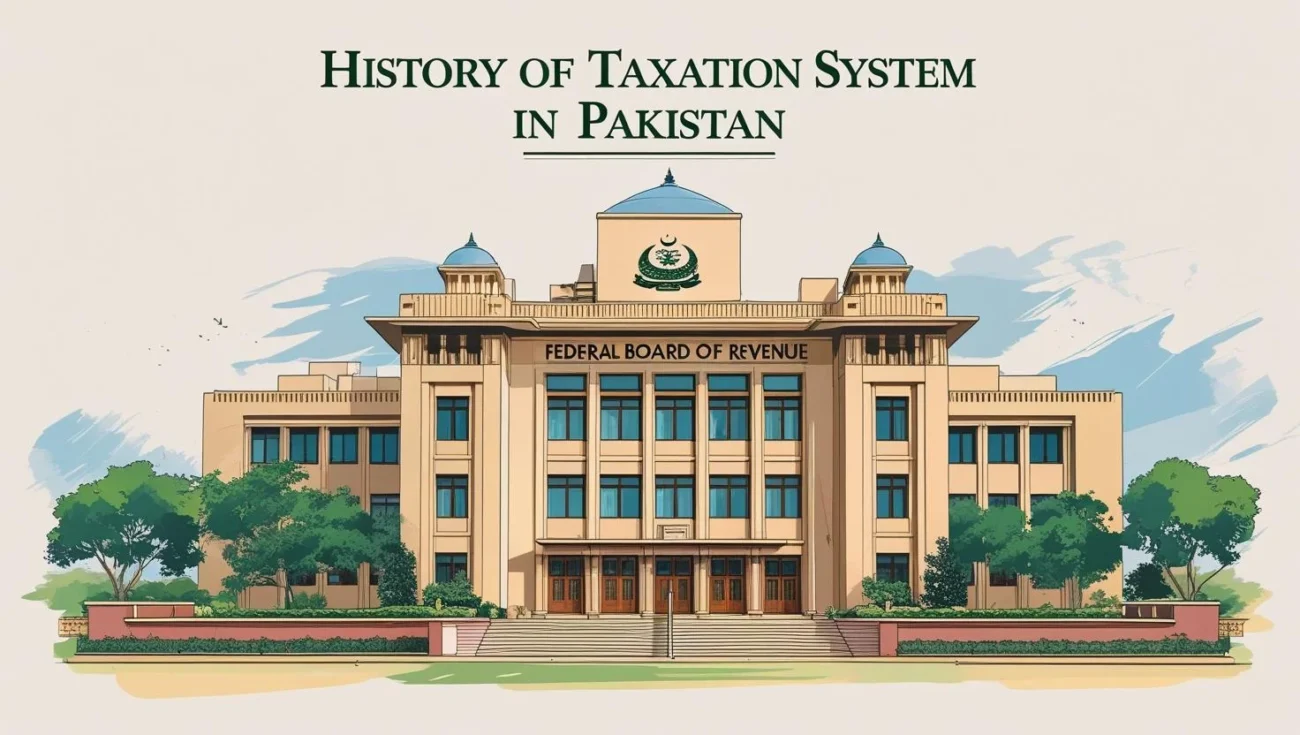
History of Taxation System in Pakistan
FBR & Tax Updates

History of Taxation System in Pakistan from Colonial Roots to Modern Reforms

The history of taxation system in Pakistan is deeply interwoven with the country’s political, economic, and institutional evolution. Pakistan has been salvaging to designer a fair and efficient fiscal system since it became independent in 1947. Although there have been some reforms to modernize certain aspects of the system, enduring structural problems — such as a small tax base, widespread informality and political aversion to direct taxation — remain ongoing stumbling blocks. Examining the history of taxation system in Pakistan helps explain the persistent shortfall in revenue collection, despite the nation’s demographic and economic scale. This article provides an overview of where and how Pakistan’s system of taxation evolved, and its historical and contemporary constraints, to give an in-depth picture of the antecedents and pitfalls of taxation in the country. Colonial Legacy and the Inherited Framework As of independence, Pakistan has the same system of taxation as British India. The Central Board of Revenue that came into existence as a result of the CBR Act, 1924, had a wide operational scope under the said Act but its functions were being extended to cover other domestic taxes such as Income Tax. The colonial system was based on indirect forms of taxation—customs duties and excise which, though regressive in nature, were easy to manage. Pakistan’s initial tax system was largely based on British-enacted Indian income tax laws, notably the Indian Income Tax Act of 1922. It had progressive income buckets and spared agricultural income, a policy that survives to this day and severely confines Pakistan’s direct tax base. Pakistan Tax Establishment The history of tax system in Pakistan started with the asymmetry in the capacity to collect taxes and fairness of the tax system. Post-Independence Centralization and Provincial Sharing In the first few decades after 1947, Pakistan adopted a tax model of the centralized system. The federal government could still impose major taxes with the consent of the provinces (this power was exercised through the Raisman Award (1951) and the creation of the National Finance Commission (NFC). Even in the formative decades of the 1950s and 1960s, the tax-to-GDP ratio hovered around a modest 6%. This revenue base was dominated by indirect taxes like customs and excise duties and sales taxes. Direct tax was still underdeveloped as a result of administrative capacity and political resistance against having to subject wealthy interest groups to income tax. It was the same story of taxation system broken during this period of time as well when they depended too much on consumption taxes which not too much has been done on the side of expanding the income and corporate taxes base. Nationalization and Economic Stagnation (1960s–1970s) During the 1970s, efforts to reform the tax system faced major obstacles. Under Prime Minister Zulfikar Ali Bhutto, the nationalization of core industries resulted in their stagnation, as state oversight failed to provide necessary support. This change depressed private enterprise and twisted tax incentives. As fewer private businesses were profitable, corporate tax revenue declined. Throughout the decade, the tax-to-GDP ratio was roughly 8%. The major sources of revenue continued to be indirect taxes such as sales tax and excise duty. Even as economies changed, there were no substantial reforms to widen the base and force compliance. Over reliance on regressive taxes missed opportunities of a structural reform The 70’s 1.0 The history of taxation system in Pakistan can be seen as the missed opportunity of structural overhauling and setting the direction of the path of reliance on regressive taxation system. Reforms And Adoption Of VAT (1980s – 90s) The 1980s featured at least some modest attempts to reform and streamline to raise tax efficiency. The enactment of the 1990 Sales Tax Act marked a shift from the 1951 law, laying the foundation for a value-added tax (VAT) framework. It admitted input tax credits, zero-rate of exports, bringing Pakistan in line with international VAT systems. “But weak enforcement mechanisms and administrative inefficiencies did not allow for any significant headway to be made. The tax regime continued to be heavily reliant on import duties, customs fees accounting for much of total revenue. While the world was moving toward broader tax bases and lower rates, Pakistan could not implement tax laws and widen documentation. Even by the end of the 1990s, the tax-to-GDP ratio remained below 10 percent, and fewer than 1 percent of the population was filing income tax returns. This chapter in the history of taxation system in Pakistan picturesque how inefficiencies of the system, whether systemic or lack of political-will, didn’t allow the country to make the most of positive legislative changes. Income Tax Ordinance 2001 and Institutional Overhaul An important chapter in the history of taxation system in Pakistan is the introduction of the Income Tax Ordinance 2001. Incorporating two decades of tax reform, the legislation replaced older laws and introduced key principles like universal self-assessment, residence-based taxation, and standardized definitions of income.The early 2000s also brought the adoption of the World Bank-funded Tax Administration Reform Project (TARP). The objective of this project was to strengthen FBR’s institutional capacity for: TARP was a mixed bag—there was good news (such as the infusion of more than $400 billion in late 2008 and 2009 to shore up the finances of banks, stabilizing markets, and increased revenue collection by 2011), but many of its goals went unrealized thanks to political opposition, bureaucratic foot-dragging, and spotty enforcement. The evolution happens in history of taxation system in Pakistan in the first decade of 21st century was a changing era, that modernized the system that ultimately led to the digital reform, but structural flaws hindered the process of reform. 18th Constitutional Amendment And Devolution Of Tax Powers In 2010, the 18th Constitutional Amendment radically altered the federal-province fiscal relationship in Pakistan when it provided constitutional space to provinces to tax services. This led to the establishment of distinct revenu authorities, namely. This gave power to provincial governments but also caused administrative disintegration and discord in service taxation between the provinces. There were different rates, rules and compliance measures faced by businesses that

Taxation Laws in Pakistan
FBR & Tax Updates

A Complete Overview of Taxation Laws in Pakistan

Taxation laws in Pakistan are undergoing a historic transformation. Economic structural adjustments, digital development and international commitments have made the national tax structure wider, stricter and more intricate. Whether you are a private taxpayer, a business owner or an offshore investor, knowing what you are up against is key if you are to make informed decisions. Finance Act 2025 Tax Culture Revolution The introduction of Finance Act 2025 brought a radical change in the methods of tax collection and payment system in Pakistan. It illuminated not only higher levels of money creation but also formalization of sectors that have long lurked in the shadows of the informal economy — notably, digital commerce and real estate. In this blog, we are going to delve into the in depth details about structure, recent reforms, enforcement mechanism and practical implications of Pakistan taxation laws. Legal Structure and Authority The Federal Board of Revenue (FBR) is the supreme government organization of Pakistan, responsible for the collection of revenue while playing the role of policymaker of Government of Pakistan. Controlled by the Income Tax Ordinance 2001 and the Sales Tax Act 1990, the FBR administers federal income tax, sales tax, customs duties, and federal excise. Revenue authorities manage taxes like services sales tax under their laws in the meanwhile. There has been increasing synchronization between federal and provincial systems also particularly in services taxation in recent years. More importantly, the move towards a documentation-based, harmonised system reflects its desire to increase tax compliance and broaden the tax base. Major Reforms Proposed by Finance Act, 2025 The introduction of the Finance Act 2025 marked a significant milestone in taxation laws in Pakistan. With effect from 1 July 2025, this law made fundamental amendments to income tax, sales tax, withholding tax and rules related to digital economy. Revised Personal Income Tax Brackets The government also adjusted the personal income tax brackets for a fairer distribution of the tax burden. With earners falling in the up-to-PKR 600,000 bracket, i.e., lowest income group, being disallowed from availing any waiver as they already avail zero excess to others falling in the 11-35% tax rates. These changes are intended to reduce inequality and claw back more cash from the richer parts of society. Capital Gains and Interest Income Reforms for Investors There were also various new provisions for businesses and investors relating to the taxation of capital gains and interest income. Nonresident Investors now to pay more capital gains tax on short-term investments in G-securities. Additionally, the rate for interest income was hiked for non-individual entities so that companies are not able to avoid tax via corporate structuring. Taxation of the Digital Economy Under the Finance Act 2025, the digital economy takes a new spotlight through new taxation laws in Pakistan. From now on, online vendors, marketplaces, intermediaries of payment and logistics services themselves are confronted with a broad array of tax obligations, being faced with compulsory registration in addition to monthly reporting. New tax of digital presence has been imposed on foreign companies that are doing business in Pakistan without having physical existence. This goes for digital advertisers, software providers and online traders worldwide. Property Tax Reforms and Capital Gain Exemptions Property tax is a proposed-reform area too. Sale Purchases of Immovable Properties have been updated to market taxes withheld. Now property held, used personally and lived in for 15 years or more can be exempt from the capital gain tax, subject to fulfilment of certain compliance conditions. Its objective is to promote transparency in the property market and reduce speculative practices. Sales Tax Reform through Negative-List Approach Sales tax also changed significantly. The decision to adopt negative-list system at the provincial level implies that all services are now taxed except those which are specifically exempt. This approach streamlines administration and minimises uncertainty regarding the interpretation of tax. Previously un-taxed services such as commercial renting (in many countries), now fall within taxable net leading to widening of tax net. Strengthening Compliance and Enforcement The new taxation laws in Pakistan has been laid supported by FBR empowered force of compliance. With the new laws, tax officials are given new authority to mine bank data — and to conduct more intrusive audits, such as posting officers on the premises of a business to monitor operations, more aggressively. In particular, section 175AA of the Income Tax Ordinance makes room for live connectivity and exchange of information between the institutions. Restrictions on Non-Documented Transactions For compulsion, non-documented transactions over PKR 200,000 can be disallowed for sake of calculating income on which tax is applicable. Likewise purchase and sale with the suppliers who does not have NTN, can also cause disallowance only to the extent of the supplier not having the NTN No. It is intended that these measures will force commercial entities to do business with registered persons and through proper banking. Penalties for Non-Filers and Higher Withholding Non-filers also face steeper consequences. A higher rate of withholding tax applies to those who are not registered as active taxpayers. The cash withdrawal tax rate of non-filers from banks has gone up and so have the advanced tax rates on property deals, purchase of vehicles. This balance of rewards and penalties reinforces the value of adhering to regulations. Policy Objectives and Economic Impact The central focus of such dramatic reforms is to articulate a policy agenda, which is to raise the tax-to-GDP ratio, to document the economy and to implement commitments made to international partners, including the IMF. Pakistan has long grappled with a narrow tax base, and high levels of tax evasion. These problems are directly targeted through present taxation laws in Pakistan. Ambitious Tax Targets and Agriculture Reforms Govt sets ambitious tax collection target of over Rs14tr for FY 2025–26. There have been reforms in agriculture taxation — an area which was undertaxed — to ensure larger equity. The commonality between governments, especially in the treatment of corporate tax rates on farm income and other related adjustments, can be seen nationwide. Integrating

active taxpayer status online
FBR & Tax Updates

Check Active Taxpayer Status Online: FBR Filer Verification Guide

For individuals and businesses in Pakistan, it is important to maintain an updated filing history with the Federal Board of Revenue (FBR). Due to the increasingly digital nature of government services, taxpayers can now verify their registration and filing status using the online filer checker tool. This comprehensive article discusses the process of FBR filer status check online by CNIC and also provides guidance on FBR filer status check via SMS. Moreover, it discusses the active taxpayer status online verification process and its importance for compliance as well as financial incentives. Why Your Filer Status is Important Your assumption after registering with FBR and filing your tax return may be that the work is over. Unfortunately, that may not be the case. There could be a lapse in taxpayer status due to missed filings, registration, or administrative errors. Regardless of whether you are an individual taxpayer, a business, or a salaried employee, FBR filer status check online is important from time to time to ensure that the tax profile remains valid. By filing, you gain access to these benefits: To summarise, the verification of your active taxpayer status online is more than a legal requirement; it is a prudent financial move.   Online Method: Check FBR Filer Status Using CNIC  This method is from the website of FBR which has provided a means to verify the status using CNIC for computerized national identity card holders. Let us analyse the procedure this way:   Step-by-Step Guide: With accuracy and no fees charged, the FBR active taxpayer status online portal acts as a useful tool to verify taxpayer status any time during the day if utilised the right way. SMS Option: FBR Filer Status Check SMS For those with limited internet access or who prefer using mobile devices, FBR offers a simple SMS option to check filer status. Steps To Follow: Reasons For Using SMS: Do note that sending messages on these services may incur charges depending upon the mobile service provider being used. Thorough Advantages of Confirming Your Active Taxpayer Status Online Verifying your active taxpayer status online through the FBR portal or SMS offers numerous benefits: Peace of Mind   “Active” status displays that you have filed your returns within the legal timelines which comes with various benefits. Ignoring this step may land an individual in various fines, legal notices or worse, face lawsuits. Government Tax Exemption Programs   Vendors of property, vehicles or services usually have a norm of source withholding tax deduction. Withholding tax exemptions result in lower or no rates being deducted for filers and increased costs for non-filers. Government Subsidies Programs Access Active filers are entitled to certain subsidies, agriculture incentives, and energy rebates, which are restricted to non-filers or inactive taxpayers only. Active filing ensures one meets the criteria to avail these benefits. Financial Institutions Access   When applying for a loan, credit card, or mortgage, banks and lending institutions usually require confirmation of recent active taxpayer status. Business Development   Credibility and eligibility for public tenders, supplier registration, and invoicing are done electronically. Tax compliance is strengthened through active status. Help Avoiding Compliance Notices   The FBR sends communication directly to the registered active taxpayers. If by chance a taxpayer becomes inactive due to some oversight, penalties or compliance reminders will be in place, which can be easily avoided by simply regularly checking status. Verification of Filer Status in Real Life Situations   Home Purchase: As part of the transaction and loan processing steps, your bank or estate agent may ask for an active taxpayer certificate.   Foreign Travel or Visa Application: Some embassies and consulates may require tax compliance evidence for certain visa applications.   Job Offers and Employment Contracts: To ensure proper withholding and tax compliance, employers may require proof of active taxpayer status.   Company Bidding or Contracts: For government projects, only tax-compliant businesses may partake. Verifying your FBR active taxpayer status online through CNIC saves you from registration problems.   Loan Applications: Proof of tax filing is a requirement for many banks, especially for car loans, home financing, or business capital loans.   Resolving Filer Status Problems Despite following best practices, problems can still occur. Here are some common issues and how to resolve them:  No Record Found  Inactive Status   Website Not Loading   Recent Filing Not Displayed Tips for Maintaining Your Active Taxpayer Status File Tax Returns Early Avoid waiting until the last minute. Filing in the first month of the new tax year improves chances of maintaining active status. Use CNIC Freely To avoid discrepancies with the status checks, ensure that the CNIC used for filing with FBR is the one officially registered. Report All Personal and Business Information Changes Use the web portal or your filing officer to report all personally or business identifiable information changes to the FBR. Print Annual Status Slip Revisit the portal after filing, do the FBR filer status check online, and download the confirmation for future reference. Ensure CNIC is Handy Online and SMS methods still use CNIC as primary verification for filer status checks. Land Record Punjab – Your Trusted Partner for FBR Filer Status Verification Land Record Punjab offers specialised services for checking FBR filer status check online. Known for our reliability in property and legal services, we aid people and organisations in verifying their taxpayer status with CNIC and SMS methods. Whether you are purchasing a property, applying for a loan, or need to remain compliant, Land Record Punjab makes certain that tax verification related to substantive compliance is precise, prompt, and effortless.   Final Thoughts   Tax obligation doesn’t have to be a hassle. Using both FBR filer status checks via CNIC and SMS provides a quick and efficient way to manage your active taxpayer status online. Utilise these services immediately, and maintain your status as a compliant taxpayer within Pakistan’s formal tax system.   Your financial stability and peace of mind commence with confirming your active taxpayer status online. Automate this step and unlock the numerous advantages associated with being a compliant

Fbr Filer Registration Fees
FBR & Tax Updates

Filer Registration Online in Pakistan: A Step-by-Step Guide to Becoming a Tax Filer

Over the past few years, the Pakistani government has been actively working to modernise public sector institutions. One of these major changes is filer registration online — a system that enables individuals and businesses to apply for tax filer status with the Federal Board of Revenue (FBR). With this system in place, not only is registration simplified, it enhances accessibility and transparency.   This article will explain everything you need to know about tax filer registration, NTN filer registration, FBR filer registration fees, and provide a step-by-step guide in accessible language.   What Is Filer Registration Online and How Does It Work?   In simpler terms, filer registration online refers to the procedure which individuals go through to become registered taxpayers through FBR’s portal Iris. After registration, the individual’s name is placed in the Active Taxpayers List (ATL) which means they are compliant and have submitted an income tax return for the fiscal year. A filer in Pakistan enjoys multiple benefits especially in areas such as banking, purchasing of real estate, and vehicle registration. The entire process can now be done digitally, which allows you to receive your NTN and submit your tax returns without having to set foot in an FBR office. Why Become A Filer? Becoming a filer provides more than just fulfilling a legal obligation; it also yields financial rewards that can be accessed almost immediately. Being registered with the ATL allows you to access cheaper tax brackets for essential financial activities. Along with lower tax rates on withdrawals, filers also enjoy discounted rates on loans, property purchases, and vehicle registrations. Moreover, your financial profile is boosted when paired with a valid NTN. If you’re looking to book a loan, file for a bank card, or apply for a visa, a registered filer boosts your reputation. It indicates that your transactions are proper and beyond question, which in today’s highly regulated economy, is a valuable asset. How to Start: Registering on Your FBR Iris Account To begin with filer registration online, you need to set up an account on the FBR’s Iris system, which is the digital interface for tax submission and other financial documents. Start by navigating to the official FBR webpage and searching for the Iris section.   On the login page, there’s an option labelled “Registration for Unregistered Person.” This is the new user onboarding section where users input their CNIC, name, phone number, and email address. After submitting the form, you will be provided with a verification code to complete the authentication process. Make sure your mobile number is registered under your own name with the telecom provider, as verification cannot be completed otherwise.  After completing identity verification, you receive login details for the Iris portal. With this step completed, you can now proceed to NTN filer registration. How to Apply for Your NTN: Starting Your Journey as a Tax Filer  After activating your Iris account, you can apply for a National Tax Number (NTN), which is an assigned identifier number for each taxpayer. This step is crucial for NTN filer registration. In the absence of an NTN, you are unable to file your income tax returns or be listed as a filer.   Form 181 available on the portal needs to be completed. It requires personal details, business details (if any), and an address. For employees, this is usually quite simple. However, if you are a businessperson, self-employed, or a property owner, you will need to report your income streams.   The FBR does not impose any official fees for this service.Though, if you decide to engage a tax advisor or accounting firm, there is likely to be a service charge, commonly known as FBR filer registration online fees. These charges differ based on how complicated your financial situation is, but the portal remains free to use regardless. Submitting Your First Income Tax Return Your next step after getting your NTN is to file your first income tax return. This action is what officially establishes your filer classification. Filing an income tax return means for a financial year declaring all of your required income whether it’s salary, rent, business, or freelancing services to the FBR. Your tax return must include comprehensive details: Most employees need to have only the salary certificate for the relevant period, a basic bank account statement, and sometimes a tax declaration. Most freelancers and proprietors would need to keep receipts and documentation related to income and expenditure, business transactions, and other activities. Your name can be seen on the Active Taxpayers List within a few business days of submitting the return through the Iris portal. This confirms the successful completion and finalization of your registration process. Common Misunderstandings Regarding Fbr Filer Registration Fees Filer registration online is commonly misunderstood to have a government fee attached to it. To set the record straight, the FBR does not charge for becoming a filer. The fees that many people mention are due to the lack of information and help with registration and are actually paid to accountants, legal and registration advisers who assist in the procedural steps involved in registration and tax return filing.If you are very confident with the Iris online system, you may complete the procedure 100% free. Despite this, many people opt to hire someone to assist due to the fear of making errors dealing with multiple income streams or business entities. For such scenarios, professionals can charge between PKR 2,000 to PKR 10,000 and above depending on the situation. Checking Your Filer Status Once you submit your return, it is critical to check that your status has been updated to “filer.” You can check this status by simply going to the FBR Active Taxpayers List. You only need your CNIC number which is entered without dashes or spaces. If your name shows, that confirms you are a tax filer. Note that the ATL is modified on a weekly basis. If your status has not changed, give it a few days and check again. Keeping Your Status as a Filer

Scroll to Top