Land Record Punjab

Land Record Punjab offers trusted services for filer registration, tax filing, and property documentation across Pakistan with expert support and accuracy.

online domicile certificate
Land Record Punjab

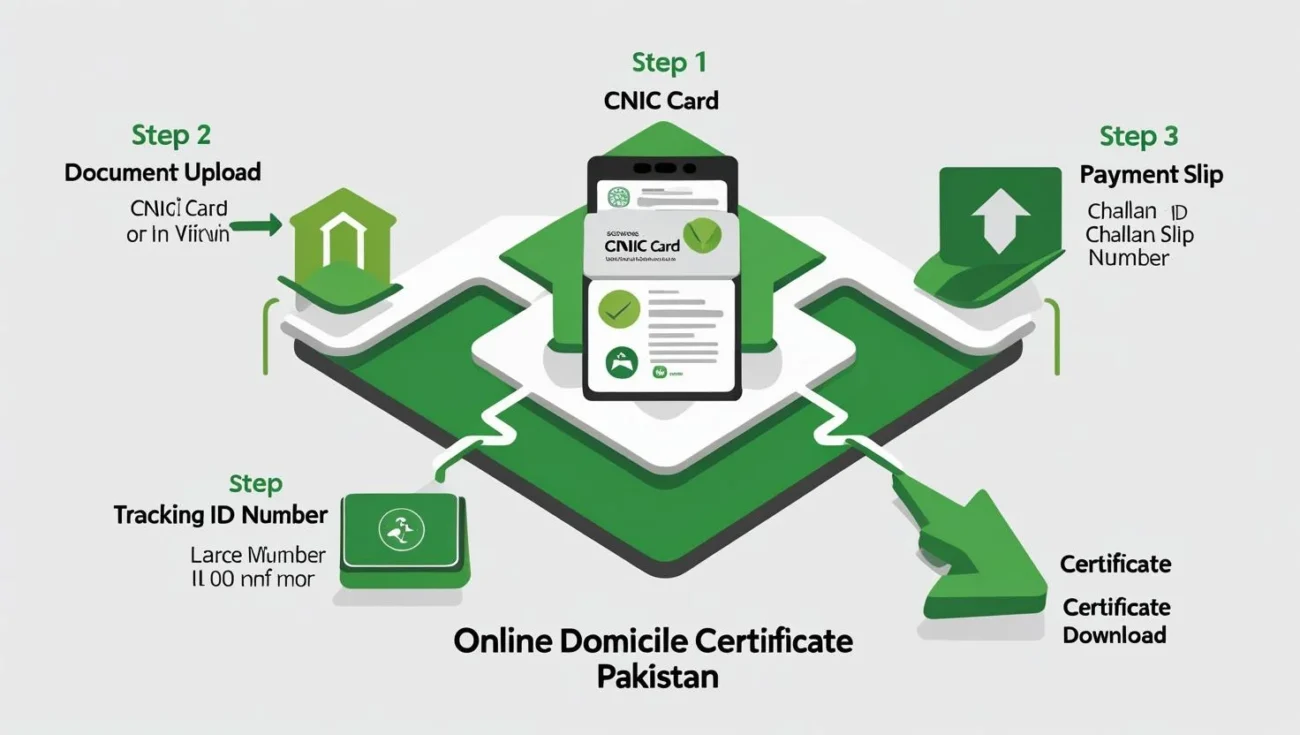
How to Obtain an Online Domicile Certificate in Pakistan

Pakistan has shifted in recent years towards digitization in the provision of services to the residents in order to make official procedures quicker, transparent, and within reach of citizens. Among the emerging situations, the availability of the online domicile certificate via digital platforms operated by the government is remarkable. Among essential legal documents, the domicile certificate holds significance as proof of an individual’s permanent residence within a defined administrative region, whether a district or a province.  There are numerous usages of the document among which the access to education institutions, seeking jobs in the government sector and receiving provincial quotas are the most evident. Online domicile certificate system streamlines efficiency in the application procedure by completing filling the necessary forms to verify the candidates using a computer. Importance of Online Domicile Certificate Domicile certificates are in most cases required in cases of official requests in Pakistan, however, in the past, this process was performed manually and subsequently required a person to physically travel to government offices a number of times. The launching of the online domicile certificate facility has made the process much easier since applications are now submitted electronically and updates can be monitored without the burden of physical follow ups. Such a transition to the digital realm guarantees efficiency and helps reduce delays, not to mention that records are simpler to keep and authenticate. Transparency helps the citizens as they can monitor their application progress in real time using official portals. Domicile Management System Anchoring the online domicile certificate process is the Domicile Management System, a centralized software infrastructure overseen by district authorities. This system deals with the entire lifecycle of a domicile certificate—receiving an application, verifying documents, and issuing the final certificate. The domicile management system provides the assurance that all the records are accessed in a digital form lessening a possibility that they can be lost or altered. NADRA is also amalgamated into the national level databases namely the national databases and is used to verify identity. Through this system, the authorities can easily find duplicate applications, block fraudulent claims of domicile and have a transparent record in the public. Online Domicile Verification One of the key features of the system, after the issuance of the certificate, is domicile verification. The process also enables employers, educational facilities and government facilities to verify authenticity of domicile certificate over the internet. Rather than photocopies or physical bypass, the interested party may feed certificate number into the portal and immediately get to know whether it corresponds to recorded data. The domicile verification facility is an effective feature, which greatly eliminates the chances of using forged documents during official procedures, thus, only authentic certificates are accepted. Sindh Domicile Verification Online The provincial government of Sindh has created its own portal of Sindh domicile verification online. With the aid of this portal, citizens and others in Sindh may verify the dividend of domicile certificates made in this province. Large cities such as Karachi and Hyderabad are particularly in need of this service since fake domiciles have long been used to improperly gain access to jobs quotas or educational admissions. The Sindh domicile verification online system enables government departments to promptly verify the authenticity of issued certificates, promoting transparency, fairness, and merit-based procedures. Domicile Tracking Facility The other notable aspect of the online domicile certificate process is the domicile tracking opportunity. After filling in an application, the applicant may enter the portal and follow the progress through different steps, “under review,” or “verification in process,” etc. This eliminates the element of uncertainty in the process since the applicants do not have to visit the issuing authority too frequently asking about their application. Accountability of the officials is also guaranteed since delays and pending cases are easily tracked through domicile tracking facility. Urgent Domicile Fee in Pakistan It is seen that various district administrations provide urgent domicile fee services to citizens who require their domicile certificate as an emergency measure. On paying this extra cost, the application will be done on priority basis, it may take one or two working days as opposed to the normal taking up to a week. The expedited home charge differs depending on the district it is applied in, but it is considered rather cheap to most applicants who need fast processing in their employment demands, educational, or government tenders. The actual urgent domicile fee and procedure should be checked by the applicant in his or her Deputy Commissioner office. Application Process for Online Domicile Certificate Online domicile certificate applicants have to visit the official site of either the district administration or provincial e-service globule. It normally starts by making an account verification with a valid CNIC number. Applicants subsequently complete an online application form wherein he or she will enter his or her personal information like full name, father name, permanent address and the cause of the application. Documents such as CNIC, educational certificates, utility bills and in selected cases affidavit of residence have to be scanned and uploaded. The domicile management system would have then processed the application, cross-checked the details with the NADRA records and assigned verification. When authenticated, then the applicant is informed via SMS or email and later the certificate can be downloaded or collected physical. Requirement in Laws to Issue Domicile Pakistan is ruled by rules and regulations of provinces when it comes to issuing a domicile certificate. In most cases, one must have stayed in the district a given time, which may be between three to five years depending on the provincial policies. There must be reliability of constant residence and family background. Applicants are also required to give a statement whether or not they have received domicile certificate in any other district. Deliberate falsehoods or presentation of forged documents in the process of the domicile verification may also result in cancelation of the certificate and face prosecution. The Advantages of the Online System Online domicile certificate introduction and domicile management system also present many advantages to both the applicants and the authorities. To the people, it is simpler, clearer and can be accessed at any point provided one has access to internet. In case of government offices, it ensures lesser work places, lesser mistakes due to human
Affidavit in Pakistan
Land Record Punjab

Affidavit in Pakistan Legal Importance and Requirements

In Pakistan an affidavit in Pakistan, is a written and sworn statement of fact authenticated by the oath or affirmation of that person who makes it, the deponent. This is generally an official document that is employed in many issues where the population is obliged to declare the truth in front of a court of law, the government body, or any official body. Affidavits are theoretically legally binding in Pakistan and thus they are admissible as evidence in both civil and administrative cases. Affidavit aims at recording a statement in a formal manner so that it can be used actually in the case of legal matters or administrative purposes and must have accountability and authenticity. Legal Importance of Affidavit in Pakistan The use of affidavits in Pakistan is deeply embedded in the nation’s legal processes. It is known under the Qanun-e-Shahadat Order, 1984 which applies the rules of evidence in the country. Courts and the government offices demand the affidavits to prove facts in issues like property transfer, family altercations, business transactions, immigration and education application. An affidavit obliges the deponent to assume the full legal responsibility to this statement being true. The Pakistan Penal Code states that any incorrect statement in an affidavit would lead to a legal action in form of a fine or jail term. Types of Affidavits that are Common in Pakistan In Pakistan, there are various choices of affidavits that happen to serve various intents. They are the affidavit of support, affidavit for domicile, affidavit for name change, affidavit for property matters, as well as affidavit for marriage; which are the most common. Both types are written based on the needs of a particular case and have to be sworn in by a qualified official, most likely an oath commissioner, notary clerk or magistrate. Affidavit of Support In Pakistan, the affidavit of support is usually needed in immigration and sponsorship cases especially where one is financially sponsoring a visa or residency application by another. This kind of affidavit proves that the sponsor possesses enough finance to accommodate the applicant during their stay either abroad or in Pakistan. An example is where students who are seeking to get admission in foreign universities must submit an affidavit of support by parents or guardians to demonstrate evidence of funding. On the same note, it might be necessary where there is need to reunify families, joint business ventures or perhaps to sponsor employment. Such additional information required in this affidavit of support should include the details of sponsors income, their occupation and willingness to cater the living expenses of the applicant. Affidavit for Domicile Other legal documents in Pakistan include an affidavit for domicile. Most of the time, it is necessary when one is seeking domicile certification with the local representatives. This affidavit for domicile grants the permanent stay of the applicant in a certain district or province in Pakistan. It is the most widely applied when it comes to educational quotas, application in the government jobs, or updating of statistical records. The address, the length of stay in a given place and confirmation that the applicant has never been awarded another domicile in a different destination must be stated in the affidavit for domicile. These supporting documents are normally attached along with the affidavit for domicile including the utility bills, national identity card, and proof of residence. Process of Making an Affidavit in Pakistan In order to prepare an affidavit in Pakistan, the initial requirement is to compose the content based on the case needs. It must be written in a specific, objective, and non-exaggerated wording. The affidavit should be printed on a non-judicial stamp paper of the proper value once prepared which is decided depending on the nature of the declaration. Once printed out, the deponent is then required to sign in the presence of the authority where an oath commissioner is required. The officer next checks the identity of the deponent, takes the oath and signs the document and seals it with an official seal and signature. Affidavit Fee in Pakistan The cost of affidavit in Pakistan will be a variation based on stamp duty on the stamp hyper paper and the charges that are levied by the authorized authority. The charges however would be minimal for the regular affidavits when taking into consideration the stamp paper which is cost ranging between Rs. 50 to Rs. 500 along with the small fee in the affidavit attesting. Nonetheless, some are specialized affidavits like the affidavit of support used during immigration process which might need very high valued stamp papers or an extra notarization hence costing more money. Before proceeding, it is good to check that the affidavit fee at the local court or the office of the oath commissioner states. Uses of Affidavits in Pakistan An affidavit in Pakistan is used on many legal and administrative occasions. It may be employed to claim the ownership right, to resolve disputes, or replacement of rights in property issues. Affidavits are utilized in family law to claim child custody, inheritance issues or even divorce. In education, universities can insist on affidavits during the admissions of students, scholarships, or the hostels. Affidavits are also needed by government authorities in order to rectify names in official records, prove marital status or even in obtaining updates in national identity. Writing and Correctness An affidavit in Pakistan demands absolute accuracy concise wording, complete honesty, and a single direct answer for every point. Any misleading information that has been given in an affidavit may have severe legal consequences according to Section 191 and 193 of the Pakistan penal code. These provisions impose penalties for giving false evidence and for fabricating evidence. Therefore, it is advisable to draft or review an affidavit in the presence of a legal expert to ensure compliance with legal requirements. Attestation Requirements An affidavit has to be attested to be legally valid in Pakistan. This happens either through an oath commissioner, notary public or magister, depending on the kind of affidavit being signed. In some instances, an affidavit must be attested not only by the Ministry of Foreign Affairs in Pakistan but also by the embassy of the destination country

Cheapest Agricultural Land in Punjab Pakistan
Land Record Punjab

Cheapest Agricultural Land in Punjab Pakistan

For new farmers, small-scale entrepreneurs, or those wishing to acquire farmland, finding the cheapest agricultural land in Punjab Pakistan has gained the utmost importance. While the farmland in Punjab Pakistan is still being pushed out of reach due to urbanization and the ever-increasing prices of real estate, there are still certain parts of Punjab, that provide agricultural land at a much lower price. Identifying and evaluating such regions of Punjab along with their future prospective value is crucial for anyone who is looking for investment or desire to cultivate over the long term.   Where is the cheapest land found?   The agricultural land that is the cheapest is usually found in the less developed regions of Punjab Pakistan that are canal-irrigated. These areas tend to have moderate soil fertility along with little or no infrastructure. The remote areas of Khanewal, and a portion of southern Punjab that is in proximity to the Thal Desert like the Chaubara Tehsil have agricultural land at much lower prices. The Attock districts have land in Pari and Fateh Jang where, at nearly 150,000 to 200,000 PKR per kanal, it is much cheaper compared to the rest of Pakistan. Khanewal is another district where the much of the available land is cheaper compared to other districts, with several listings at 1.3 to 2.8 million PKR for 100 kanals, equating to 13,000-28,000 PKR per kanal. Traits of Inexpensive Agricultural Land The lower priced areas mostly have a few traits in common. These locations tend to be further away from metropolitan areas like cities or markets. They don’t have proper irrigation systems or easy access to groundwater. In Southern Punjab areas like Chaubara adjacent to Bhakkar or Thal desert, land is priced at 5 to 6 million PKR for 24 acres (~30,000 per kanal or 130,000 PKR per acre). Not to forget, the land would be useless unless canals are constructed or reclamation is done. These regions have the most inexpensive agriculturable land in the Punjab province in Pakistan with trade-offs being lower access and lower productivity. Attock: One of the Farmers’ Most Inexpensive Choice Wetted areas have an agricultural average price to buy land, and to the Attock region, this price is relatively low. Some listings have and agricultural land for sale close to Fateh suggesting a price of 150,000 to 350,000 PKR per kanal. This price is partially dependent on the land’s water supply, and proximity to CPEC routes. Land priced at PKR 150,000 per kanal is considered very cheap for farmland in the far regions of Punjab. This partially explains why the land is highly valued. It is utilized for canal irrigated crops like wheat, peanuts, olives and crops such lower valued agricultural lands. Khanewal And Southern Parts: Ultra-Low Prices   Like in Khanewal or parts of Multan division, one can find very low prices advertised such as PKR 1.3 million for 100 kanals (thus ~PKR 13,000 per kanal) or PKR 2 million for larger 100 kanal holdings (PKR 20,000 per kanal). Many of these low priced plots are, of course, unenviated kacha land or located near kacha roads. These land plots do, however, stand as the cheapest agricultural land in Punjab Pakistan. Such plots are particularly appealing for long term investments or low-input farming.   Thal Desert And Reclamation Projects   In areas long considered barren such as Chaubara Tehsil of Layyah or parts of Bhakkar district (Thal Desert) land is very cheap, sometimes selling for PKR 200,000 to PKR 300,000 per acre (~PKR 50,000 to 75,000 per kanal). These areas are among the cheapest agricultural land in Punjab Pakistan. The Greater Thal Canal is expected to increase the wateraccess in these areas improving the value of these lands, though they will initially be non-fertile or semi-desert. Balancing Risk with Reward While some regions in Pakistan, like Attock and Khanewal, sit far from vital markets and are devoid of fertile soil and reliable water sources, they do offer cheaper agricultural land. This land, however, comes with the burden of higher risks. On the other hand, Southern Punjab and the Thal regions are rich in soil and offer water sources, but these regions do require greater investment in land development and irrigation. Buyers have the option of weighing cheaper upfront costs against ongoing maintenance expenses. Future Profit and Investment Strategy Used strategically, these low-cost farmlands have the potential to increase in value. Leasing these to local farmers, growing low-input crops such as pulses or oilseeds, or reselling as infrastructure develops are all ways through which value can be added. Additionally, the average ROI of 10% to 15% per annum on farms in the middle regions of Punjab fuels investment. With the right strategies, even those starting with backed agricultural land in Punjab Pakistan can achieve modest returns in the long-run. Legal and Regulatory Considerations Acquiring cheapest agricultural land in Punjab Pakistan demands careful consideration, especially if negotiating from a lower price point.To stay out of legal trouble, make sure the land is clear of claims and properly recorded in the Patwar and Tenant registers. Also, check that canal or groundwater is available for irrigation. In some regions of Punjab Pakistan, especially where land is offered at reduced prices, titles may be passed down through generations. Moreover, mapping precision requires on-the-ground help. Impact of Urbanization on Prices Urbanization is affecting agricultural land both in terms of scarcity and value within Punjab. Around cities like Lahore, Faisalabad, and Gujranwala, farmland is getting really expensive because of all the new housing societies and growing cities. But in the more remote parts of Punjab, land is still cheap since there hasn’t been much development there. The disparity is increasing between peri-urban expensive land and rural plots at much lower rates.   Advice for Prospective Buyers So, for buyers looking for the cheapest agricultural land in Punjab Pakistan, looking at regions such as Fateh Jang area of Attock, Khanewal’s kacha-land listings, or even the borders of Thal Desert may be a good starting point. Do a thorough assessment of water

Future of Girdawari in Pakistan
Land Record Punjab

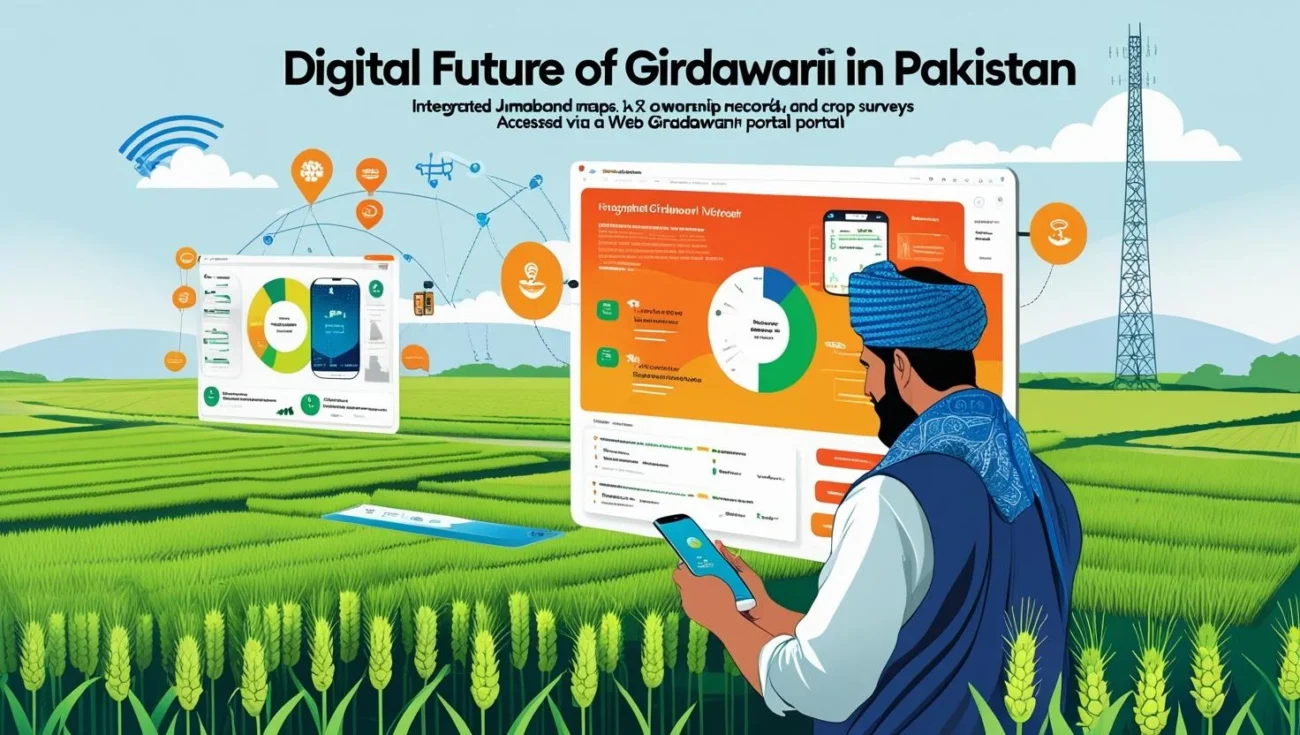
The Future of Girdawari in Pakistan with Jamabandi Integration and Web Girdawari Portal Access

Girdawari is a historic and statutory process in Pakistan which is imperative part of the Land Revenue System in which inspection of land and crop take place. Local revenue officials work traditionally as patwaris and tehsildars, conduct girdawari twice a year to document the details of cultivated land, tube can installation, type of cultivatet crop list, land area and status reviewing in rural holding. Web Girdawari Portal helps to keep accurate land and crop records, provides information for tax assessments, fights in the interests of farmers and also avoids conflicts over land grabbing. Traditional Process of Girdawari Traditional girdawari was conducted through visual observation, and roznamchas were maintained by the revenue department in which observations were noted. Inspectors would travel to every village during the Rabi and the Kharif season where all of this data was written away in registers, often leading to discrepancies, delays and leakages. The manual girdawari system was also liable to be tampered with, and its delayed operation led to lags in land revenue administration and contestations over possession & cropping statistics. The Evolution: Digital Girdawari Digital girdawari — A Big Reform by the Punjab Government and its Board of Revenue in this Regard Today, the Punjab government along with its Board of Revenue had undergone a major reform by introducing digital girdawari. Starting around 2020 or 2021, the project aimed to build mobile and web apps that used GPS tools to gather data from the field. The system links the crop and land inspections with the geospatial coordinates, that eradicates false entries and maintains accurate real time update from ground. On the digital girdawari front, patwaris log in and enter data at a location with an authenticated login, and can only fill data about that plot if their GPS shows them on the same. The implementation substantially expanded the integrity validation of Girdawari data and minimized system errors by ensuring that field observations conformed to predefined verification rules. For example, Punjab BOR full digitization of crop inspection registers Rabi & Kharif and achieved 100% in the year 2022 covering all over province and implementations thousands of Dehi Markaz Maal(DMM) for access at rural revenue centres. Punjab Land Girdawari Punjab land girdawari — The term punjab land girdawari refers specifically to the province-wide implementation of Lies in Punjab, Pakistan. Punjab land girdawari performed online by the Board of Revenue Not only urban but also rural land verification is arranged. Dehi Markaz Maal Centres set up in the villages, pushing for accurate girdawari data in PunjabThe government can approach farmers or landowners directly and get their names inserted correctly in the girdawari, that too without visiting field offices far away from their homes. This South Asian model of a provincial rollout has been transformational in terms of land records management in Punjab. Punjab land girdawari has not only lead to improved data management of crops; it has increased transparency and reduced the number of conflicts by ensuring correct records of cultivated parcels, helping strengthen revenue collection efforts. Interplay With Jamabandi Girdawari Jamabandi girdawari —A closely related concept to jamabandi, which helps in connecting the process of crop inspec今on with larger land〜record document. The Jamabandi lays down the particulars of rights pertaining to land i.e Owner, cultivator (meter reading), tenancy rights and shareholder or government Land etc. Jamabandi girdawari demonstrates modifications from the crop and land use information contained within Jamabandi records, which in turn assists in maintaining land document with ground recognition. In the State of Punjab the jamabandi girdawari is integrated which facilitates revenue authorities to tally digital girdawari outputs with the entries in Jamabandi. This ensures that any issues like changing ownership, missed out co-owners or wrong classification of land are quickly detected, and such discrepancies are rectified in Jamabandi records which will be benefit for the farmers as well as legal process. Access Via Web Girdawari Portal A web girdawari portal was launched by the Government as a complement for field based inspection process. This is an online platform to view and download the girdawari reports along with crop inspection results pertaining to land parcels, for landowners, farmers, revenue staff, as well as citizens. This web girdawari portal is interconnected with Jamabandi and other land registration tools to ensure easy validation of data for Correction. The girdawari updates or discrepencies, will lead to automated alerts and SMS notifications by the web girdawari portal at mobile numbers or emaiil addresses registered with Jamabandi records. This handholding with digital girdawari, jamabandi girdawari and web girdawari portal will provide convergence in access to the land records status trapping & stake holders got to understand about the progress of their requirements. Benefits and Impact in Pakistan There are many advantages of bringing girdawari digitalization in Pakistan, especially punjab land girdawari. This helps digitising will also help state land to be taken back by the state and also prevent land grabbing as records can be accessed at village level. Challenges and Continuing Issues Girdawari has taken a leap over the problematic issues, yet certain challenges are stumbling block in its implementation. In constituencies such as Rawalpindi, digitalization has been stalled and deadlines have been missed — until 2023, the eight main deadlines for completion of digital girdawari in all villages were said to be administratively impossible. Areas completely under new technlogy : all of this is fully up to date but incomplete coverage: there are parts where they have not been able to fully update the database,so some areas still rely on old manual records- making them inconsistent in both punjab land girdawari and jamabandi girdawaris. At the same time, a few other user experiences have occasionally complained about problems with accessing the portal or payment systems associated with it in web girdawari portal but those were possibly more concentrated around early rollout phases. Nonetheless, even in Punjab, the majority of landowners do not face any hassle and access their records free of charge through digital forms. However, worries more than re `ente_angbeen = “patwari affect” in the rural parts of the nation nevertheless persist, which could sluggish digitization unless of training course there is ongoing oversight. Future Prospects and Conclusion Paving the way, girdawari in Pakistan

E Stamp Sindh vs E Stamp Punjab
Land Record Punjab

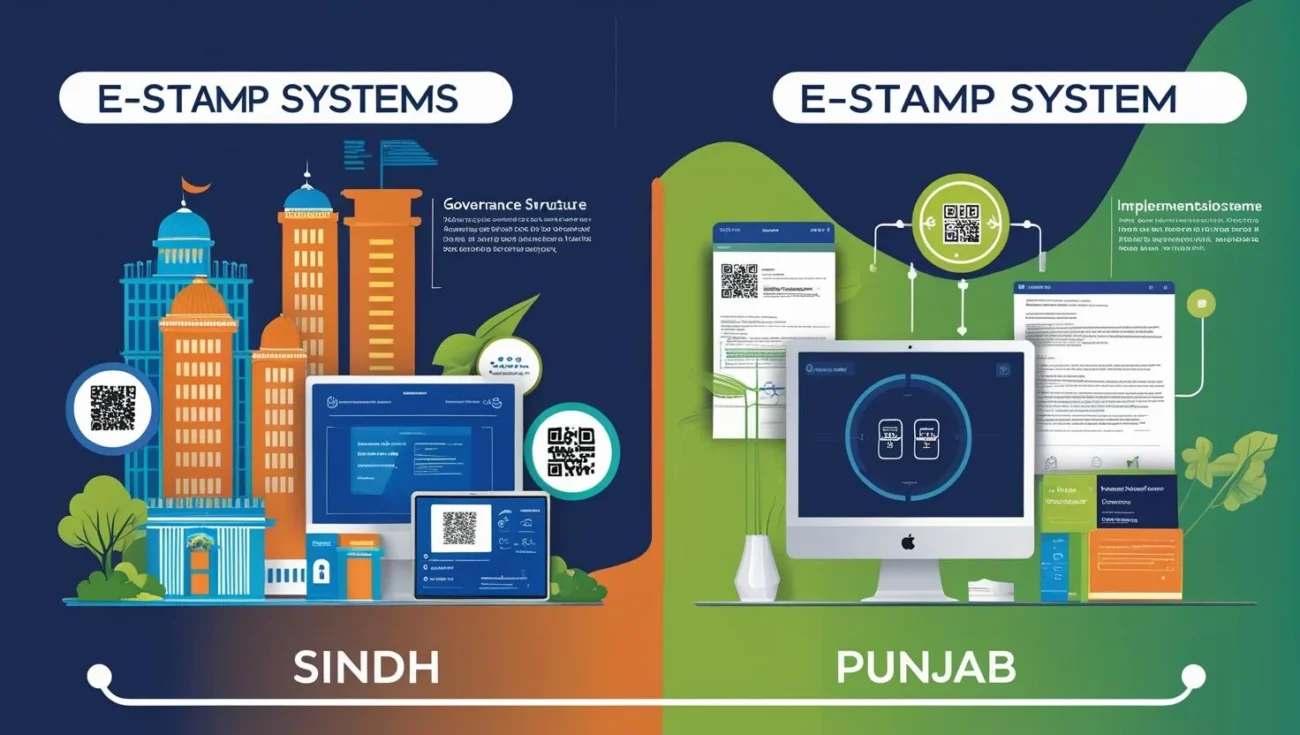
A Detailed Comparison of E Stamp Sindh and E Stamp Punjab

Digitization of Stamp Duty in Pakistan is being realized through e stamp Punjab and e stamp Sindh both of which are online services created and maintained by the government of Punjab and Sindh to handle electronic registrations. The aim of these systems is to make the issuance of stamp papers be easy and secure while reducing the dependence on the physical stamp papers and to provide information about stamp papers and to prevent fraud. While both efforts are aimed towards digital transformation, there are significant differences in design, execution, UI, and operational efficiency. This guideline is specifically about a comparison between e stamp Sindh and estamp Punjab and not about any other system, because both provinces have different systems. Administrative Authority and Operational Control The e stamping in Punjab was introduced with cooperation of the Punjab Information Technology Board (PITB) and is controlled by the Punjab Board of Revenue. The selection of PITB to create the portal was followed by its responsibility to maintain technical aspects and updates. On the other hand e-stamp Sindh is managed by the Board of Revenue Sindh in collaboration with the Sindh Revenue Board (SRB) and National Institutional Facilitation Technologies (NIFT). There are more agencies to consult in Sindh and this affects the procedural process and levels of staff. Key Difference: e stamping in Punjab operates under a streamlined, single-tier governance model managed by PITB, whereas Sindh follows a more layered and complex structure involving multiple stakeholders in its implementation. Platform Accessibility and User Interface The interface of e stamp Punjab is so user-friendly that it is not possible to get stuck. The public and authorized vendors can easily navigate through it. The search and confirmation tools are advanced and hardly needs any information to confirm. While E-Stamp Sindh also offers a web-based interface, its user experience is comparatively less intuitive and user-friendly.Frequently users complain about an even more technical structure and more complicated forms and procedures than on Punjab’s portal. Key Difference: E Stamp Punjab has much more user friendly and professional looking interface while E-Stamp Sindh might be more techy for some users. Registration and Verification Process Under estamp Punjab, people have to provide their CNIC, details of their property and its transaction value. The system will automatically compute the stamp duty payable and will produce an electronic challeng. Verification is carried out using QR codes and digital signatures embedded within the PDF document. With e stamp Sindh you are required to perform a series of activities such as form filling, voucher generation, bank visit for deposit and subsequently, e-stamp printing from the portal. This can verified via certificate numbers or a manual cross-reference. Key Difference: e stamping in Punjab, on one hand, enables faster and complete automated verification and generation, on the other hand estamp Sindh still has manual services and bank dependence. Payment Methods and Bank Integration The e stamp punjab is arranged with bank such as Bank Of Punjab. Digital payment is commonly conducted through internet banking, ATM transfers or bank counters. The whole system is designed to reduce human interaction. Under e stamp Sindh model a typical customer creates a payment voucher and then has to go to the bank “branches of Sindh Bank or National Bank of Pakistan. Sindh’s system has been instrumental in providing little hoard for online payments. Key Difference: Estamp Punjab is trekking along, adding facilities at least in principle to go digital (ease of doing business), but e-stamp Sindh is riding roughshod over you via physical bank bashing. Stamp Duty Calculation Mechanism The e stamp Punjab hosting is equipped with a live stamp duty calculator which works with pre-defined algorithms on per the locality of the property, kind of the document and the transaction amount. These rates are associated with district-level data, and produce quite precise duty amounts. Some other companies also calculate stamp duty electronically such as E stamp Sindh, however, calculations are done with manually input values and there’s little integration with auto market rates data. This may occasionally lead to minor errors or typographical mistakes. Key Difference: e stamping in Punjab In comparison over equities is more automated and accurate due to the fetching of dynamic rates, SF or Sale Deed is still estimated manually but estamp Sindh is also estimated manually. Legal Status and Acceptance Stamp papers created by the e stamp Punjab is valid nationwide with its acceptance to all courts, registration authorities and the banks in the state of Punjab. But for sindh the process is newer and gets update time to time, there are institutions that may ask for manual verification. Key Difference: Both e stamping Punjab and Non Judicial Stamp paper are legally valid, but eStampPunjab is more institutionally acceptable, because of its maturity and large-scale adopted. Vendor Involvement and Licensing The estamp Punjab feature permits registered Stamp Vendors to work in the portal in generation of e-stamps for the customers. It is the province that licenses and monitors these vendors. Vendor participation is much limited in estamp Sindh. There is an increasing focus on individual use of the system. There may still be some intermediaries but they are not as structurally licensed and digitally integrated as in the Punjab. Key Difference: E stamp Punjab has a very organized vendor integration system, whereas e stamping Sindh is more user led and not so much vendor mediations. Fraud Prevention and Security Features E stamping Punjab comes with a number of strong security features such as encrypted certificates, QR code verification, and OTP based user validation. These actions contribute to a high level of fraud and misuse resistance. E stamp Sindh does have basic digital sec Key Difference: E stamp Punjab also offer more secure options for security and fraud prevention than e stamp Sindh. Support and Customer Service E stamp Punjab users will be able to avail of a Support Mechanism, consisting of PITB helplines, live chat, and helpdesk for technical or legal assistance. E stamp Sindh contact can help you whenever you catch yourself in

e stamp verification
Land Record Punjab

Transforming Legal Security with E Stamp Verification

Digitization of public services in Pakistan has certainly led to visible gains in efficiency, transparency and accountability. The most notable advancement has been the digitization of stamp paper issuance through the implementation of e-Stamping. While printed paper stamp papers have become a rarity, the government now has safe and secure electronic means to issue and administer stamp duties. Key to this change is e-stamp verification or ensuring that each e-stamp is valid, traceable and tamper-proof. e Stamp verification is an integral part of modern legal, property and business worlds. Whether it is sale deed, lease deed, contract for business or an affidavit the checking of e-stamp gives immunity to an individual and firms from fraud, forgeries and pointless litigations. What is e-Stamp Verification? In simple terms, e stamp verification is the process used to confirm whether an electronically issued stamp paper is genuine. A unique Certificate Number is present on each of the e-stamps issued by the government, as well as specific details of the e-stamp, such as the name of the purchaser, Details such as the document’s purpose, the stamp duty amount, and the issuing district are provided. For verification, that information needs to be correct and contained on the government’s mothership database, not fraudulently changed or used again. In a way that creates a digital checkpoint. Once an e-Stamp is rissued, individuals who have access to the document can verify its authenticity in seconds online. This represents an additional level of confidence when using digital documents and is a useful weapon against document fraud. Why is Verification Necessary? One would require e stamp verification because the documents that are issued/signed with stamp papers are very sensitive documents. There are documents, including sale deeds, mortgage papers, affidavits, agreements and contracts, which have always had legal sanctity. If the stamp paper is not valid, it is forged or a duplicate then the entire document could be considered invalid and parties may suffer various types of legal liabilities as well as financial losses. Prior to the advent of e-stamps, the physical stamp paper system was largely abused by people in Pakistan. The mechanical process of issuing these imp-stamps made it difficult to keep track of the numbers and backdaited, fake and stolen stamp papers were being circulated in the black market. Most of these worries have been mitigated with the introduction of e-Stamping by the government, but to make the trust cycle airtight, consumers needed a trustworthy verification mechanism. e Stamp verification means the end of paper-culture, and no one would have to accept documents on trust: they can verify it vis- -vis the official records by checking the e-Stamp, thus making the system more transparent, with less room for corruption or fraud. Where and How Verification of e-Stamp Done? A leading e-Stamping and system for verification is in place in Pakistan in the province of Punjab. PITB E-Stamping System The e-Stamping project of the Board of Revenue with the collaboration of Punjab Information Technology Board (PITB) has been introduced in Punjab in order to handle the taxes system in a better controllable way. This control is entirely integrated into this system being accessible in the official portuguese site: estamp.punjab.gov.pk. To check e Stamp Punjab, one needs to open the portal first and select the verification option. The system would ask for some detail from the e-Stamp certificate ((number, date of issuance or district) and CNIC number of the buyer. After the information has been submitted, the portal queries the government’s database to verify that the stamp entered in the portal exists, and returns a response indicating whether the stamp is authentic. This real-time confirmation is incredibly efficient and can be accessed by anyone — property buyers, real estate agents, lawyers, court officials, or even regular individuals. Checking an e-Stamp becomes possible under the new system which was not the case under the old mechanism and thus reconfirms information security. Features of E Stamp Verification Systems The outstanding effectiveness of e stamp verification in Pakistan particularly evident in Punjab is a result of the robust technological infrastructure developed by the Punjab Information Technology Board (PITB). Centralized record management is one of the most important elements of the system. Once an e-Stamp is created, its information is recorded in a central database. This record becomes the verified source of truth, which cannot be changed after issuance. It is also noteworthy for its real-time processing. Verification checks are performed in real time, cutting out delays and enabling users to check the authenticity of documents right up until the point of signing or submission – even just seconds beforehand. It is an open platform and available around the clock without needing a special login or permission, making the process very easy to use. The last, but not least, security is our top priority in the system design. Our platform uses encrypted data communication, strict access protocols, and internal audit trails to ensure that unauthorized persons cannot access the system or manipulate the data. Moreover, many e-Stamp certificates have a QR code. The code can be easily scanned by someone equipped with a smartphone, and the link will direct the user directly to the verification page. This step further simplifies the process and attempts to reduce human error. Differences Between Provinces In terms of differences between provinces, it worth noting that while Punjab has the most complete and functioning e-stamping and verification system in the country, other provinces are only slowly digitizing the process. Whereas E Stamp Sindh has already digitized, the system does not operate in the full range and is limited; moreover, the public system of verification is entirely different. Khyber Pakhtunkhwa and Balochistan have both been announcing e-Stamping, but no fully functioning system has been implemented. Thus borrowers must know which platform to use depending on the province’s location. In Punjab’s case, e-Stamping for the non-judicial stamp papers over Rs. 1,000 is mandatory, and e stamp verification is ubiquitous in the property offices, banks, and courts. Therefore, it is expected that other provinces will adopt similar practices

Punjab Land Record Authority
Land Record Punjab

Punjab Land Record Authority: A Comprehensive Overview of Services and Digital Transformation

The Punjab Land Record Authority (PLRA) has completely changed how land tenure data is recorded, accessed, and managed across the Punjab state. Land governance was based on outdated, paper-based procedures prior to the Authority’s official constitution, which frequently resulted in delays, administrative duplication, and malpractice opportunities. The PLRA was created in 2017 with the passage of the Punjab Land Records Authority Act, marking the beginning of a period marked by improved openness, digital governance, and more efficient public services in land management. The PLRA has created a network of more than 150 Arazi Record Centers, which currently act as a single, province-wide interface for land-related services, after the complete digitization of local land registers. The Authority has effectively eliminated the need for middlemen, reduced rent-seeking, and implemented a customer-focused service model that both locals and foreigners can use in person or online. Both domestic constituents and Pakistanis living abroad can access services thanks to the integrated web portal and specialized mobile application. The Basis of Land Ownership: Fard Issuance The Fard, also known as the Record of Rights, is essential to every land transaction since it serves as proof of legal title and is required for many administrative, financial, and legal procedures. Why is Fard Important and What Is It? The Fard serves as the official record for land titles. Its presence is essential for property transfers, secured financing acquisitions, land-related litigation, and entitlement verification in conflict situations. The majority of land deals cannot be legally completed without a Fard. How to Obtain a PLRA Fard? Any citizen can obtain a Fard at the closest Arazi Record Center by presenting their CNIC and relevant land details, such as their Mouza title and Khasra number. The process usually takes little more than sixty minutes, greatly reducing the previously required bureaucratic time. The PLRA also allows applications through its website and smartphone interface for added ease, which is a very useful alternative for foreign nationals and people with limited mobility. Land Mutation: Simplified Transfer of Title Land mutation is a required process after any change of ownership, and the Punjab Land Record Authority has significantly lowered the administrative difficulties associated with it. The accelerated framework improves the efficiency of title updates in the record by reducing waiting times and procedural ambiguity. Recognizing Mutation and Its Significance in Law The official process of amending property ownership registrations to reflect title transfers brought about by sales, inheritances, gifts, exchanges, or court orders is known as mutation. Without alteration, a purchase made in complete compliance with the law will not be listed in the public register, leaving the supposed owner vulnerable to title disputes and endangering future deals. How the Mutation Process Is Simplified by the PLRA The Punjab province has completely digitized mutation. The PLRA web portal or an Automated Record Center (ARC) are two possible places for initiators to start the process. The applicant’s identification is verified by checking the National Database and Registration Authority (NADRA) after submitting the necessary documentary proof, which is usually a sale deed, succession certificate, or court order. After the mutation is decided by the PLRA, the updated record is electronically stored and immediately available for review. Both the possibility of fraudulent title modification and clerical errors have been significantly reduced by this publicly available and verifiable system. Verification of Land Records and Search Services The Punjab Land Record Authority’s primary responsibility is to provide a trustworthy system for confirming ownership. For buyers, attorneys, and other real estate industry participants, this service is essential since it allows them to determine the integrity of title before encumbrance or investment. Using Services for Land Verification People can verify the legal status of any cadastral parcel in several ways. A user has two options: visit any Arazi Record Center (ARC) and ask questions of the personnel, or use the mobile application or the Punjab Land Record Authority (PLRA) website. Presenting a Computerized National Identity Card (CNIC), the appropriate Khasra number, or geographic identifiers like district and mouza is all that is needed for verification. The service strengthens the integrity of real estate transactions and is an essential defense against land fraud. The advantages of confirming land records Prospective buyers are shielded from future legal issues, ownership disputes, and substantial financial loss by having their land records verified beforehand. By encouraging openness in real estate transactions, the service discourages unauthorized transfers and false claims to ownership. Now that they have access to reliable and up-to-date data, stakeholders consider this verification process to be crucial to responsible property management. Arazi Record Centers: Your Local Hub for Land Information The Punjab Land Record Authority has established an extensive network of Arazi Record Centers in an effort to promote regional fairness and increased public access. Which Services Do ARCs Provide? Each ARC is prepared to provide legal heirs with advising advice, fard issuance, mutation processing, cadastral record verification, and correction petition acceptance. Every center uses digital processing systems that speed up and improve the accuracy of service delivery, and they are all connected to the PLRA central repository. How Public Access Has Been Improved by ARCs Before Automated Record Centers (ARCs) were established, people had to rely on patwaris to grant them access to land records and travel long distances to record offices. These days, a record-related request can usually be completed the same day by visiting the closest ARC. This strategic network has increased trust in public land administration and significantly reduced turnaround times. Services for Data Correction and Document Verification In addition to issuing the Fard of Ownership Rights and handling title mutations, the Punjab Land Record Authority (PLRA) now offers services that verify the accuracy of the underlying data and safeguard the integrity of land documentation.  Acquiring Certified Land Records Copies Certified copies of land papers are made available to citizens through PLRA by using their jamabandi records for use in personal, business, and legal activities. These copies have the same evidentiary weight in courts and financial institutions as the original records, and

mutation law in pakistan
Land Record Punjab

Mutation of Property in Pakistan – Process, Documents & Fees Explained

What is Mutation of Property? Mutation of property is a formal process that facilitates a change in government land revenue records of a particular property or land. At the time when property is acquired or transferred (through selling, inheritance, gifting, or a court ruling), it is necessary to update the concerned government department. This is to ensure that the name of the new owner is updated in the land records of the relevant revenue department.   Although the process of mutation is of no significance, in isolation, it does serve to provide considerable legal and administrative value. A mutation certificate is usually issued after this process which is evidence of the updated ownership and is useful for taxation, utility services, and management of the property. A property buyer or a legal heir without undergoing the mutation process, will run into challenges asserting legal ownership or performing transactions in the property in the future. Why Mutation of Property is Required Recognizing mutation of property aids in legal compliance. Most importantly, it offers recognition of the new owner of the property by the revenue department records. This is important for the assessment of property tax and for availing other of municipal services and utility services like electricity and gas. Moreover, mutation helps prevent legal conflicts by keeping a documented and transparent record of ownership. If ownership mutation is not applied following a sale or inheritance, potential heirs or buyers may challenge legal ownership. It also becomes mandatory when applying for bank loans, selling the property, or enhancing the property because financial institutions and regulatory bodies often require a mutation certificate as part of their verification processes. Mutation Law in Pakistan The mutation law in Pakistan is governed by the respective provincial land revenue acts. Each province follows slightly different procedures, but the core concept remains the same: updating ownership records after a property transfer. In Punjab, the Punjab Land Records Authority (PLRA) manages this process and has digitized much of the system for public ease. By law, any kind of property transaction, be it a sale deed, gift, inheritance, or a transfer via a court order, needs to be documented through a mutation process. This is done to maintain the integrity of land records and to ensure responsible management of the properties. In the case of inheritance, heirs are bound to provide legally appropriate documents to the provincial court to start the mutation process. Not following the mutation process can result in a number of legal issues, complications in taxation, and disputes over ownership. Who Needs Mutation of Property Anyone who has received a property via sale, inheritance, gift, partition, court decision, or any legally documented means must apply for mutation. This includes: Mutation is not just about civil compliance—it’s a safeguard. By physically linking ownership changes to the public revenue record, the state prevents future fraudulent sale attempts, misallocation of utility services, and tax evasion. Documents Required for Mutation When applying for a mutation of property, applicants must present certain legal documents pertaining to ownership change to initiate the procedure. This includes the marriage or death certificate along with the succession or legal heir certificate if applicable. For a simple gift, partition, or a court ordered transfer, corresponding registered documents are to be submitted. A verified extract of land ownership, commonly known as Fard-e-Malkiat, must also be provided to establish the rightful owner listed in the official land records. For transfers not within the family, NOC along with some other documents like recent tax clearance receipts, utility bills, and documents proving there are no pending dues with the property are needed. Due to particlar mutation laws in Pakistan and tunable policies in Punjab, documents submission is now allowed through the PLRA’s portals. Filing in the documents with the right sequence is equally as important as using the right documents in order to avoid delays in the mutation of property procedure. Step-by-Step Mutation Process Applying for a mutation petition in Punjab involves making an application in person or online through the relevant Tehsil office, depending on the province. For Punjab, online submission is made through the Easy Jamabandi portal. In Easy Jamabandi, applicants can make payments for mutation fees, which in Punjab is set at a minimum fee and is fixed by the Board of Revenue. Once the mutation of property application and documents are submitted, revenue officers such as the Patwari and Kanungo verify the details. Sometimes, a site inspection is carried out to verify the property details. A public notice is then issued to allow for objections. If no objections arise—or once any are resolved by the Tehsildar—the mutation is approved, and the new owner’s name is updated in official land records. On the issuing of final approval, a mutation certificate is issued which in Pakistan is the formal certificate issued after a person is muted. Though a mutation certificate lacks the status of a title deed, its usefulness is paramount indeed for ensuring debts, transfers of property, and other relevant transactions. Mutation Fee in Punjab In Punjab, the mutation fee is set at a nominal rate, aimed at reducing corruption and ensuring the process is affordable for all citizens. As such, the Board of Revenue Punjab has issued a circular for the felony of mutation of the property which in itself is a crime. As a broad rule, the fee curbed a minor amount set aside for a Patwari, Kanungo, and Tehsildar, and collection through service centers.   These fees cater at serving the bare minimum as opposed to cost recovery for the service to help both the rural and urban populations. However, it is critical to mention that mutation fees are distinct from other fees that pertain to the property such as stamp duty, registration fee, or capital value tax which is charged depending upon the nature of the transaction and location of the property. To put it in simple words, mutation fee is an incentive in Punjab which serves to promote registration of ownership transfers which in turn enhances the overall

check online registry
Land Record Punjab

Check Online Registry for Property in Punjab, Pakistan – Complete Guide

In Pakistan, owning land has always been integral to personal wealth and the economy as a whole. It is accompanied by legal transfer, which is a critical challenge as well. The old ways of check online registry of property relied on a lot of manual work and physical document verification were slow and prone to scams. The government is modernizing the digital processes of registration in the Punjab province by implementing an e-registry system which is meant to improve accuracy and efficiency. e registry Punjab simplifies property registration, increases accuracy, enhances trust, and reduces reliance on outdated systems. Legal Structure Governing Property Registration in Pakistan In Pakistan, property registration is a provincial matter. Each province has its own system of record keeping of land and registration. In Punjab, the PLRA is in charge of land record management under the supervision of the Board of Revenue. In former times, Patwaris maintained property registers under the supervision of Tehsildars. These records were useful to prove ownership, identify property location and dimensions, and record its valuation and transactions.   This approach faced many challenges, such as title fraud, lost documents, and land disputes. The manual system of registry exposed many owners of land, particularly in the rural regions, to fraud due to unavailability of secure and verifiable records. How e Registry Punjab Transformed Property Registration? To improve service delivery and address these challenges, of check online registry in punjab. The goal was to modernize the infrastructure for registering property transactions to make them more trustworthy, open, and user-friendly. This system allows for the digitization and secure storage of all legal transactions related to property, such as sales, transfers, inheritances, and more. Reducing human interference in these processes aids in the reduction of delays. Furthermore, the system increases accountability at all administrative levels. With the introduction of this system, the province has automated many of the registry’s manual processes. How e Registry Punjab Works in Practice? As its nucleus, E Registy Punjab facilitates the online submission and processing of property transaction documents. Citizens can now log onto PLRA’s official webpage and they are walked through online robotic forms that take the place of handwritten documents.The system requires parties involved in the transaction to undergo biometric verification, which is cross-referenced with NADRA (National Database and Registration Authority) to confirm identity and legitimacy. Compliance with tax obligations such as the payment of stamp duty and capital value tax are checked through the systems and retrieved from the Federal Board of Revenue (FBR) which lowers risks of tax evasion.   After submission of the application and supporting documents, online bookings can be made for inspections and/or for final clearance and approvals. The transaction outcome, viz. approved, rejected, or under review, can be monitored in real-time which saves the multiple visits to the land offices. Migrating to online platforms not only helps save time but promotes public faith as all actions can been seen and verified. Understanding the Registry of Property and Its Importance The registry of property serves as an official document that verifies an individual’s ownership of land or property. It also records any changes to ownership, whether through sale, inheritance, gifting, or mortgaging. Registration of the property serves as legal proof of protective ownership. It safeguards the owner, and assists in accessing loans, investments, and other financial resources. It also provides documentary proof for the settlement of ownership disputes.   Ownership of land in a country like Pakistan, especially in developed and developing areas like Punjab, comes at an expensive price. Due to the emerging trends in urbanization, land value increases, thus digitization of such records through systems like e registry Punjab ensures preservation of records. How to Check Online Registry in Punjab? The digital aspect of the platform remarkably allows users to check online registry details without stepping into any office physically. This feature works for prospective buyers, investors, and legal consultants who want to check the authenticity of ownership before making any deal. Users only need to provide the owner’s CNIC or property registration number to the PLRA portal to receive, in summary form, the legal status of the land, its current ownership details, and any existing liabilities such as unpaid taxes or mortgages. This level of transparency not only boosts confidence in property transactions, but also diminishes the frequent fraudulent land sales in both rural and urban areas. The Role and Process of e Registry Verification The registry verification step is particularly critical in maintaining the integrity of a property transaction conducted in the PLRA system. In a verification search, the system connects to a centralized repository with all the properties registered in real time. This verification step is necessary to disclose important matters such as whether the land title is clean, the seller is the registered owner, and if the land is subject to any legal suits. Buyers are strongly recommended to perform this verification step prior to any transaction to mitigate the risk of fraud, encumbrances, or even legal claims. In the past, such information was elusive. Now, with the aid of technology, this information is available at the turnaround time of a few minutes. Benefits of e Registry Punjab for the Public and Government The launch of e registry Punjab has brought about widespread benefits for multiple stakeholders. It provides the public with easier access, lower expenses, and correct details about the properties. Both city and country dwellers no longer have to physically queue at land offices. Legal practitioners and real estate brokers also benefit as the registry streamlines the processing of cases and due diligence. Government officials no longer have to depend on estimates and have seen an improvement in revenue tax collection and the integrity of the data because the records of the properties are now kept in one secured place. Addressing Challenges and Looking Ahead Check online registry system has provided so much help people and government agencies that there is still much to be done. Challenges like a lack of computer and internet skills still

Property dc valuation punjab
Land Record Punjab

Property DC Valuation Punjab – What Every Buyer and Seller Must Know

Property DC Valuation Punjab associates with the value of land set by the government for tax purposes, registration, and other formal transactions within the region. This assessment is done by each district’s Deputy Commissioner in Punjab, and in most cases, the value of land set is lower than the prevailing market price. DC valuation aims at achieving a standardized value of the property which serves the purpose of uniform tax assessment, registration fee levies, and a benchmark for property transactions. This is crucial in ensuring the law is abided by, aiding collection of revenue, and controlling the property market of Punjab. Legal Framework The property DC valuation Punjab has its roots in various provincial and national laws. The valuation is conducted by the Punjab Revenue Department, and the Deputy Commissioners of the Districts are instrumental in its administration. Important legislative acts like the Punjab Land Revenue Act and the Stamp Act of 1899 provide the legal grounds for these property valuations. The Federal Board of Revenue issues property valuation tables for the entire country. However, the DC rates are instrumental at the provincial level for determining stamp duties and registration fees. The pervasive conflict between the FBR values and DC rates is especially pronounced in metropolitan centers such as Lahore and Rawalpindi, where there are substantial discrepancies between market rates and the DC rates. Components of DC Valuation DC valuation Punjab has several salient elements that affect the valuation of a property. Properties are grouped into categories which include residential, commercial, agricultural, and industrial. Each category is further evaluated on parameters such as the property’s location, plot size, road access, proximity to major centers of business, and the level of development in the area. For example, commercial property on major roads in urban centers have a much higher valuation than those in semi-rural areas. DC rates are also higher in urban areas as compared to rural zones owing to inadequate infrastructure, facilities and higher demand in cities. Process of Setting DC Valuation The Revenue Department begins the process of determining property DC valuation Punjab with the collection of data. Local officials such as Patwaris and Tehsildars conduct surveys and collect data concerning real estate transactions in different regions. This information is consolidated at the Tehsil level and then sent to the Deputy Commissioner. Upon approval, the DC rates can be published online. These rates are usually revised every year. However, due to political or bureaucratic delays, there are often outdated valuations which result in discrepancies when compared with the current market prices.   Applications of DC Valuation DC valuation Punjab fulfills an essential function in determining the incurred administrative costs for the Government in the course of a property transaction and for imposing taxes. Other important taxes such as stamp duty, capital value tax (CVT), and withholding tax are based on the property’s valuation. Registration authorities use these valuations to charge fees for property transfer or mutation registration. Additionally, when the government acquires land for public use, compensation is often calculated based on DC valuations. This can sometimes lead to disputes, especially when the DC rates are lower than the actual market prices. Comparison with Market Rates and FBR Valuation In property valuation rates, one of the major concerns is the difference between the FBR estimation and the market prices, as well as the DC values. The principal concern with the DC valuation punjab is the drastic disparity between the sales and purchase prices of the properties and the reported valuation. The FBR has attempted to fill this gap by issuing valuation tables, yet the inconsistencies in these figures can create confusion and risks of tax avoidance. To minimize tax responsibilities, property buyers and sellers often declare transaction values close to DC rates, leading to lost tax revenue for the state. Issues and Challenges The effectiveness and equity of the DC valuation Punjab system faces numerous problems. The primary concern is the outdated tables with valuations that lag behind the actual market prices. In addition, the opaque and arbitrary property valuation processes devoid of any clear rationale leads to concerns of equity and uniformity. Also, there is the possibility of biased corrupt political favoritism behind property valuations that biased to favor particular individuals or groups. Additionally, the gap that exists between DC rates and the prevailing market rates leads to the suppression of declared property values for the purpose of tax evasion, damaging public confidence in the system. Reforms and Recommendations In order to improve the property DC valuation system in Punjab, a number of reforms are required. Most importantly, the digitization of land and property records should be implemented to enable real-time updates and to improve public access to valuation data. Constant updates of DC rate revisions, which are published online, would improve transparency and ensure that the data remains relevant in the socio-economic context. It would further be important to bring valuations in closer alignment with market rates to enhance the tax base and discretionary revenue collected by the government. Coordination between the FBR and the provincial governments would be useful in designing a single, uniform, and coherent valuation system. Furthermore, the accuracy and objectivity of property assessments would be enhanced by proper training of the revenue staff. Case Studies / Real Examples In Lahore, for instance, the DC rate of a commercial property located in a prime location, DHA, is pegged at PKR 30,000 per Marla, when in reality, the market value is well over PKR 500,000 per Marla. This differential is so substantial that it incentivizes buyers to underreport transaction prices, significantly lowering their tax obligations. In contrast, recent attempts to revise DC estimates in Multan and Faisalabad have led to an increased tax burden, which in turn, reduced property transaction volumes. These cases illustrate the profound consequences that property valuation methodologies have on the real estate market and on the economy in general. What is e Stamp Punjab dc Valuation Rate Online? E stamp Punjab DC valuation online refers to the digital system used

Scroll to Top