
Land Record Punjab

Land Record Punjab offers trusted services for filer registration, tax filing, and property documentation across Pakistan with expert support and accuracy.

Green Property Certificate
Land Record Punjab

Green Property Certificate in Punjab: Online Apply, Fee Structure & Complete Guide

Buying or selling property in Punjab used to mean a lot of paperwork, a lot of trust in middlemen, and not much certainty. That’s changing. One of the more recent additions to this push toward digital, secure property records is the Green Property Certificate. If you’ve been searching for what it actually is, how to get one, whether it can be done online, and what it costs, you’re not alone — owners, buyers, sellers, overseas Pakistanis, and investors are all asking the same questions right now. At its core, a Green Property Certificate confirms that a property’s legal status, ownership, and possession have actually been checked and verified — not just claimed. It exists to cut down on fraud, fake ownership claims, blurry boundaries, and the disputes that tend to pop up during a sale. Whether you’re dealing with land, a house, a commercial unit, or agricultural property anywhere in Punjab, this is quickly becoming a document worth having. Below is a full breakdown — what the certificate is, why it was introduced, how to apply, what it costs, what documents you’ll need, and answers to the questions people ask most often. What Is a Green Property Certificate? A Green Property Certificate is an official verification document issued through Punjab’s land record system. It tells you, in effect, that a property has been checked against official records and that its ownership, possession, and legal standing hold up. Put simply, it’s proof that the paper trail behind a property is clean. That matters to owners, of course, but it also matters to buyers, banks, and legal authorities, since the certificate is directly tied to official land records rather than just a seller’s word. It does more than confirm who owns what, too. The verification process also looks for legal red flags — disputes, unpaid dues, an existing mortgage, objections filed against the property — so the certificate ends up functioning as a kind of due-diligence report as much as an ownership document. Why Was the Green Property Certificate Introduced in Punjab? For decades, Punjab’s land records were largely manual, and that came with predictable problems: disputed boundaries, fraud, multiple people claiming the same piece of land, and records that simply didn’t match reality. Anyone who’s dealt with property in the region has probably heard a story (or lived one) involving fake documents or a sale that fell apart over an ownership question nobody saw coming. The Green Property Certificate was brought in to close those gaps — to give ownership a verifiable, digital backbone instead of relying purely on paper that could be forged or misplaced. A few of the goals behind it: For a buyer, it works almost like a pre-purchase inspection — a check before committing serious money. For a seller, having one in hand can make the whole negotiation smoother, since it removes a layer of doubt the buyer would otherwise have to chase down themselves. Who Needs a Green Property Certificate? This isn’t only for people in the middle of buying or selling. It’s relevant any time ownership or possession needs to be beyond question. You’d likely want one if you’re: Even if none of these apply to you right this moment, it’s still worth having on file — property situations change, and having verified status ready in advance saves time later. Green Property Certificate Punjab Online Apply A lot of people type “Green Property Certificate online apply Punjab” into Google expecting a fully online process, start to finish. That’s not quite where things stand yet. The system is moving in a digital direction, but in most cases you’ll still need to visit your nearest Arazi Record Center in person for identity verification, biometrics, and to actually open the case. What online tools can help with is information, fee payment, tracking your application, and filing objections — but the certificate itself isn’t something you download after filling out a form. Officials have to verify ownership history, possession, boundaries, and check for any objections before it’s issued, and that requires more than a digital form submission. A realistic way to approach it: So plan for at least one ARC visit, even if some of the peripheral steps can be handled from home. How to Get Green Property Certificate in Punjab The exact steps can shift a bit depending on your district, the type of property, and how clean the existing record already is — but here’s the general path most applicants go through. Visit the Nearest Arazi Record Center You start by visiting your local ARC. You’ll usually be issued a token, and a service center official opens your Green Property Certificate case in the system from there. Submit Property Details Next, you provide the full property information — khewat number, khatooni number, khasra number, registry details, mauza, tehsil, district, and any other land record references that apply. If the property sits within a housing society, expect to provide a few society-specific details on top of that. Pay the Required Fee You’ll pay the processing fee through whichever method is available to you — Bank of Punjab counter or branch, a PSID, e-Pay, a mobile wallet, or online banking, depending on what’s offered at that center. Complete CNIC and Biometric Verification Your identity gets verified against your original CNIC plus a biometric check. This step exists to confirm that the person standing in front of the official is actually the person tied to the property record. Ownership History Review From here, officials dig into the ownership history — past transactions, sale records, transfers, inheritance details, anything relevant to how the property changed hands over time. This is where they confirm that previous transfers were legitimate and that your claim to the property actually lines up with what the official record shows. Check for Disputes, Taxes, Mortgage, or Court Orders The record also gets checked for unpaid taxes, an existing bank mortgage, pending litigation, stay orders, or any other legal restriction. If something turns up here, expect the

gift deed in pakistan
Land Record Punjab

Everything You Need to Know About Gift Deeds in Pakistan: Procedure, Cost & Legal Advice

Transferring property within families ensures continuity, but many Pakistani families find themselves ill-equipped with knowledge about legal documentation processes. A gift deed is one of the most important ways to transfer property, as an owner can voluntarily transfer immovable property without any consideration.It is in contrast to sales or inheritance. When gifts are made properly, the transfer of ownership is instant while still alive, ensuring simplification in terms of estate planning and family wealth management. However, there are legalities involved, such as those related to stamp duty on gift deeds and registration processes, which differ by province. It becomes important to appreciate these nuances, as property disputes faced by Pakistani courts and the latest judgments by the Supreme Court are changing the interpretation and execution of gift deeds in Pakistan. Essential Ingredients of Gift Deed Format Parties and Identification Details in a Gift Deed A valid gift deed needs to be drafted in a certain way for it to be legally recognized in Pakistan. The parties (i.e., donor and donee) must be mentioned in the deed, which should include full names, addresses, and relationships with each other. Islamic Law Principles Governing Gift Deeds (Hiba) Pakistani gift deed law is based on the Islamic legal theory of Hiba, in which three conditions must be met for a valid gift to exist: firstly, there must be an offer from one party (the donor), secondly acceptance from the other party (the donee), and finally actual delivery of possession. These elements need to be explicitly included in the gift deed format and must hold good under judicial scrutiny. Property Description and Ownership Scope The property description portion requires specification, including survey numbers, boundaries, and any existing encumbrances. It is important that the documentation makes clear whether a gift transfers complete ownership or an interest only, as this difference can have repercussions on rights and liabilities in the future. Witnesses, Notarization, and Free Consent Essential elements include witness attestations, notarization when possible, and provisions stating that the gift is being made freely without duress. A clear comprehension of these basics enables proper drafting of a gift deed and smoothens the process of property transfer. How to Prepare a Gift Deed Initial Documentation and Record Collection Proper preparation is the key to a successful gift of property transaction. The procedure starts with collecting important documents such as original property title deeds, identity proof of both parties, and mutation records from the revenue department. Title Verification and Legal Due Diligence Verification is an important initial process. As per registration rules, all property papers must be checked for clear title and encumbrances. This includes ensuring there is no pending litigation, unpaid dues, or third-party claims that may cause complications in the transfer process. Drafting and Legal Review of the Gift Deed Deeds must be crafted with specific legal terminology according to customary styles. It is advisable to consult a lawyer, as incorrect language can make the deed invalid or cause future family disputes. Completing Formal Requirements for Transfer Once the documents are signed and cleared from a legal perspective, the next step is fulfilling obligations required to make the property transfer official. Duty on Sales and Property Transfers Stamp Duty Calculation on Gift Deeds It is not easy deciding the cost of a gift deed transaction, as several obligatory fees and charges must be considered. Stamp duty is the main cost component and is calculated as a percentage of market value or government-established price, whichever is greater. Registration Charges and Legal Fees Registering a property usually costs about 1% to 2% of the value of the real estate, depending on the province or administrative area. The responsibility of paying legal documentation charges lies with the property owner and is used to facilitate transfer procedures after confirming all necessary documents. Additional Administrative and Ancillary Costs In addition, ancillary costs may arise, such as mutation fees for changing revenue records, conversion charges if the property falls under another classification, and administrative processing charges by registrar offices. The entire cost structure of a gift deed can significantly affect the transaction and should be budgeted beforehand. The Lawful Regime of Transfer of Property through Gift Deeds Filing and Submission of Gift Deed Documents Gift deed property transfer follows a definite legal procedure, where documentation is necessary and carries official status. After preparing the gift deed and clearing applicable fees, the next step is filing the application at the concerned registrar office. Presence of Parties and Witnesses During Registration To ensure registration of the gift deed, the donor and receiver must be present along with original identity documents, witnesses, and the completed gift deed before the Sub-Registrar. Registration normally involves two independent witnesses to confirm that the transfer was made voluntarily and to identify the parties. Verification, Timelines, and Legal Effect of Registration The registrar verifies all documents to be complete and real before admitting the filing. The process of registering a gift deed involves checking validity of property ownership, payment of stamp duty and fulfilling all legal obligations. The process takes 15 days to one month over all depending on how much workload is in local office and the documents submitted. Upon successful registration, ownership of the property is officially transferred to the buyer and a permanent legal record is established. It’s this formal registration that sets gift deeds apart from other methods of property transfer and forms the basis for understanding why they might offer certain benefits over alternatives such as wills. Comparing Gift Deeds with Wills Timing and Effectiveness of Gift Deeds vs Wills Differences between gift deeds and wills are important for efficient estate planning in Pakistan Knowing the difference between Deed of Gift and Will is really important before planning for your property, in order to have efficient estate planning. Gifts are effective on the date of gift, whereas wills do not take effect until after the lifetime of the owner. This distinction carries great implications for planning. Revocability, Registration, and Legal Protection Registration of the gift deed is to be completed right away because

Waterlogging in Agriculture
Land Record Punjab

The Impact of Waterlogging in Agriculture on Crop Yields and Soil Health

It is a challenge present in virtually all agricultural production across the globe. In scenarios where water penetrates the soil to a point where the root region has insufficient oxygen, there are severe repercussions for crop yields and overall health within a short period. Farming cannot be sustainable, and our future cannot be guaranteed unless farmers understand it. What is Waterlogging in Agriculture? Waterlogging in agriculture arises when the rising water table floods the subsurface of crop root zones. Therefore, whilst this water-filled condition is anoxic due to the lack of air circulation, it confines the soil for some time to anaerobiosis. Waterlogging in agriculture is commonly identified with intense precipitation, poor drainage, or fields situated in floodplains and low-lying areas barely a step from being a swamp. Waterlogging is not water being consistently supplied to crops like in irrigation, but it is superfluous and detrimental. While the lack of water inhibits plant respiration, the accumulated water mass delimits plant roots and decreases their nutrient uptake; hence, waterlogged soil is a long-term soil condition degradation. It is the aftermath of several factors or a single factor. Causes of Waterlogging in Agriculture Several factors imply a weighty combination in resulting in the flooding of agricultural fields. Here’s everything required to understand how to avoid these factors and in turn, boost crop output. Heavy Rainfall It is often one of the leading sources of agricultural waterlogging in agriculture due to the failure of oxygen to penetrate the roots of crops. Where there is flooding on the field, it is because the rate of precipitation surpasses soil infiltration; hence, such levees often ensure it ends up saturating the root. Considering the typical tropical and monsoon zones, this is a common phenomenon, as seen in Environmental Pollution. Uncertain Drainage Paces Unfavorable drainage enhances the tendency of field farming to waterlogged zones. The draining of excess water from the field by a pumped system also involves water passing through the field. In instances when the field is well-thickened downgrading, water is aided. This is frequently how those who reside near the tributary or a low-top region allow the problem accompanied by waterlogging in agriculture to recur. High Water Levels An unusually high water table increases the difficulty of agriculture in growing crops, especially in the wet season. When it rains heavily, even a slightly high rise in the amount of groundwater can saturate the soil layer with its presence or change the water. Soil Types and Texture Specific kinds of soil are more susceptible to waterlogging in agriculture. For example, soil made up of fine particles, such as clay, has poor drainage and retains water. Conversely, sandy land typically allows water to flow through it quickly, reducing the danger of waterlogging. Consequences of Waterlogging in Agriculture There are both immediate and longer-term consequences of waterlogging in agriculture. Farmers who utilize this information properly must simultaneously strive to avoid these situations as much as feasible and reduce the extent of any resultant losses. Reduced Yields When waterlogging in agriculture occurs, there is insufficient oxygen available for roots to absorb to maintain respiration. Their ability to take in nutrients also diminishes. Prolonged waterlogging is very detrimental to crops, most notably wheat, maize, and vegetables. Soil Fertility Decline Leaching of vital soil nutrients such as nitrogen and potassium, as well as changes in their chemical composition, reduces them into useless compounds. This worsens the soil’s fertility; and this task becomes more difficult over time. Increased Vulnerability to Diseases Agriculturally used fields that do not have water flowing across them provide an excellent environment for fungi and bacteria. Roots that have remained in water for more than fifteen minutes are more vulnerable to infection, resulting in reduced productivity. Degeneration of Soil Structure When agriculture faces waterlogging in agriculture for long-term, the soil aggregates and compacts poorly. The absolute erosion of soil structure during previous saturation develops a shallow, dense mass. Soil composition is thrown into shambles, making work harder during the upcoming filling and, at the same time, opening spaces for disintegration. Solutions for Waterlogging in Agriculture To alleviate the problem of waterlogging in agriculture, both preventive and remedial measures and a combination of multiple solutions are essential. Farmers and promoters may test different techniques to decrease and counteract the impact of waterlogging due to the variety of strategies available. Improved Drainage Systems Around urban areas, local waterlogging problems can be solved by improved drainage systems. Other acceptable solutions include conventional or tile ditches that evacuate the water simply, effective when larger canals get silted; it conveys rainwater to be released into the previous without it affecting crops; and assists in soil aeration and decreases crop stress. Raised Beds and Contour Farming Raising planting beds above the general field’s surface stops water from accumulating above the basic level where the soil rests. Another effective way to help stop waterlogging in agriculture is to follow the field’s natural rise using the process of plowing and planting. Soil Management Practices The long-term solution of this problem, soil structure, can also be solved by adding abundant organic muck and impeccable tillage, while some soils pass through the water swiftly. Crop Option and Rotation Planting crops like wheat and maize rotations help improve soil structure and decrease the likelihood of waterlogging in agriculture. Groundwater Control To minimize the time when waterlogged and control the groundwater level, it is necessary to use the pumped land irrigation and drainage system and control the groundwater level—measures to be undertaken in the case of naturally high water tables in the region. Measure the water table regularly during the rainy season to ensure that the soil does not get oversaturated. Conclusion Experience from different places in the world demonstrates that new technologies along with pre-existing technology are required to curb waterlogging in agriculture. Through waterlogging, farmers are experiencing increasingly poor harvests, and it is proven that we need to look into new water control methods, since the river and lake water and their effects change daily. For centuries, waterlogging in agriculture has been one of

fard e badar
Land Record Punjab

The Role of Fard Badar in Ensuring Accurate Land Records in Pakistan

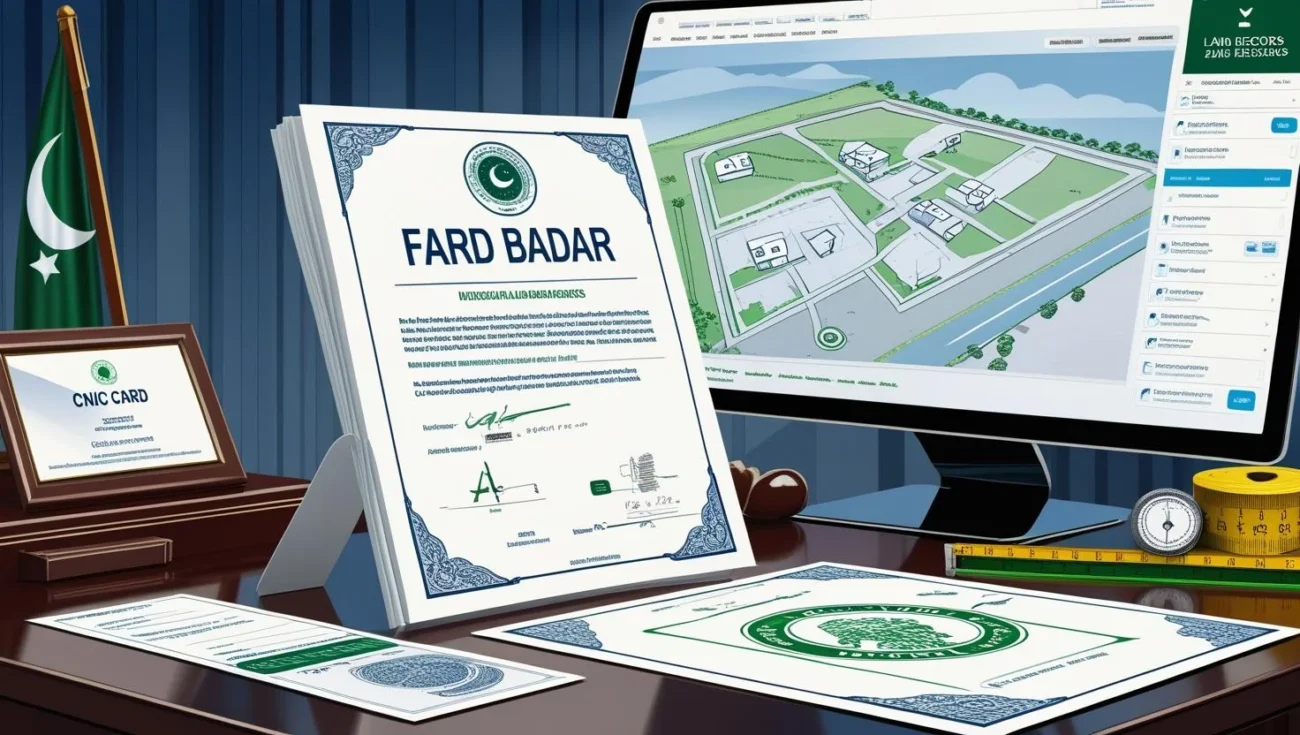
Land ownership and tenure have always been central to the administrative mechanism of Pakistan. A government has been established to organize, update and manage property and agricultural land so that there are no disputes and land is transparent. Terms of Importance in This Context : One of the key terms in this respect is fard badar, which establishes the guarantee for ensuring appropriate land records in rural and urban areas. What fard e badar means, its importance, and how it operates in the Pakistani land management system, is important to know both for the property owner, buyer, the farmer, and even legal professionals. What is Fard Badar? Within Pakistan’s property system, Fard denotes an official ownership record, serving as a legal document that specifies the details of a particular land parcel. It is a certified copy of the land records in the revenue department. Barraj, a correction or amendment. Thus, fard badar is the procedure of making amendments or corrections in the prevailing land record. This is not a matter of creating new ownership rights, but of rectifying errors in bureaucratic paperwork so that the official files correspond with the facts on the ground. Fard badar is primarily required when clerical errors, spelling mistakes and wrong entries are discovered in land records. Boundaries details, measurements and entry date is sometimes repeated during the land trade or bequest. The government has not been generating controversies in the guise of these errors, instead a proper process of rectifying them has been introduced in the form of fard e badar. Its Significance in Point of Land Management Land in Pakistan is an asset, yes, but it is also a means of livelihood, inheritance, long-term security. As land feuds are not rare such documentation is of great importance. This is where fard badar comes very handy. The legal trouble that can be caused if the official record reports a name mistake, incorrect child and size of land owned is not even worth thinking about. A corrected document by fard badar means that:- So fard e badar is not a clerical correction but it is a barricade between PILF people they want to rip off the properties of people in Pakistan. Fard Badar and Its Legal Framework In Pakistan, land is administered by revenue departments of the different provinces. In Pakistan, the responsibility for maintaining and updating land records rests primarily with the Patwari, Tehsildar, and other revenue officers. Fard badar can be executed by a special legal provision that allows for correction of a defect without having to reissue an entitlement in toto. Applicants often also have to make a written request to the relevant land record center for processing fard badar. The application may require supporting documents such as copies of CNICs, previous fard, inheritance certificates or court orders. Once verified, the revenue staff processes the correction and sends an updated record with the correct information. The advent of digital land record systems in provinces such as Punjab has made fard e badar more transparent. Citizens can now go to any Arazi Record Center where staff has been digitally trained to modify records for 30 other authorized operations right on the spot in 1 day instead of the weeks in a paper-based mode of transaction. Typical Reasons for Requesting Fard Badar Various situations can lead to fard e badar in Pakistan. Rife problems including in owner’s name spelling, wrong description of father’s name, national identity card number entered mistakenly and wrong measurement of land. Occasionally, boundaries are misreported, or legacy listings persist even as a property has been transferred. Another important reason is inheritance. When a landowner dies and heirs are shown through mutation, there is also the possibility of clerical errors during the typing of names or the distribution of shares. In these scenarios, the necessity of fard badar arises to establish correct heirs in government documents. Likewise, when land is bought and sold and small errors are discovered later, the process of rectification is used to prevent future conflicts. The Process for Submitting Fard Badar The method of fard e badar in Pakistan is simple, but it may differ slightly between provinces. Generally, the process involves: The processing times vary depending on the complexity of the correction and the evidence submitted in support to the correction. In digital systems such as Punjab Land Records Authority, the transfer is faster, fair and transparent than those of manual systems in few other places. Issues in the Fard Badar Runtime Method While fard e badar is a significant service for landowners in Pakistan, there are various issues with its delivery. Corruption, delays and a lack of awareness frequently stand in the way. A high proportion of its citizens are either unaware of their right to demand fard badar who don’t have access to it and end up agreeing to false documents or losing unnecessary time in court fighting for it. The second is the reluctance in some areas to embrace digital transformation. Punjab has made tall strides in reforming the land record but there remain challenges in provinces like Sindh and Balochistan in digitizing the land record 100 percent. In rural Pakistan the reliance on Patwaris often presents unnecessary obstacles as changes to records are put off for personal and financial reasons. But with the rise of public education and governance reform, fard badar is gradually becoming available. Online platforms, complaint bureaus and legal aid clinics are assisting the citizens for explaining and asserting this right. Technology in Fard Badar The technology has revolutionized land management in Pakistan. The transformation from paper records to digital records limited human error and the possibility of manipulation. With fard e badar computerised entries corrections have become accountable and audit-able. Citizens can monitor their applications, curbing the potential for delays and corruption. Transparency is improved with on-line record checking services and mobile applications. With the land owners now at the driver’s seat, they can for once verify if official records of their landholdings are in concurrence with the reality of

Zameen Ki Pemaish in Pakistan
Land Record Punjab

Zameen Ki Pemaish in Pakistan Accurate Plot Measurement and Land Records

Zameen ki pemaish translated as land measurement encompasses the distinct practices of surveying and zoning and holds particular significance in Pakistan pertaining to issues of land ownership, real estate controversies, agricultural management, and urbanization of infrastructure including real estate projects due to the fertile land along the Indus River. Land, as one of the most critical resources in Pakistan, demands precise documentation to avoid issues arising from boundary conflicts, divorce, partition, or even state-sponsored projects. These conflicts often lead to ancillary problems of illegal land claim, family feuds, and chaos, posing profound socio-economic ramifications, thus making zameen ki pemaish vital for sociopolitical order. Consequently, state institutions, land registries, and agricultural revenue offices impose stringent regulations to prevent land ownership discrepancies. Why Zameen Ki Pemaish is Important in Pakistan The agricultural and real estate industries in Pakistan are fundamentally reliant on well-maintained land record systems. Zameen ki pemaish not only legally protects ownership but also shields landowners from various types of fraud. For the purpose of updating records with the governing authorities, transactions and successions of land ownership require precise measurements. Locally, patwaris and revenue department clerks are instrumental in the upkeep of these records. In the rural economy, agricultural yield is proportionate to the size of landholdings and thus precise measurements influence economic activities like farming, irrigation, and even tax payments. In the case of urban centers, pemaish is indispensable for the orderly functioning of housing societies, plot distribution and infrastructure development which require boundary-marked ownership and planned developmental guidelines. Zameen Ki Pemaish Ka Tarika in Pakistan Zameen ki pemaish ka tarika in Pakistan is legally defined, but still differs between urban and rural land. Historically, the local patwari as the record keeper of fard and girdawari, exercised significant influence over zameen ki pemaish and employed primitive tools like chains, measuring tapes, and rods to conduct measurements. Fortunately, many provinces are now embracing modern approaches through the use of computerized land record systems. As outlined in the appendices, a customary approach starts with a submission to the land revenue office and then the checking of the land records. One of the office workers comes to the site with measuring instruments and marks lines as per the official map. In the case of Punjab, a good number of these processes have been to some extent reliable due to the PLRA (Punjab Land Records Authority) digitalization. In the same manner, the other provinces Sindh, Khyber Pakhtunkhwa and Balochistan are slowly modernizing with the aim of reducing corruption and enhancing transparency. Plot Ki Pemaish Ka Tarika Urban centers like Lahore, Karachi, and Islamabad in Pakistan witness significant demand for plot ki pemaish ka tarika, driven by the expansion of real estate and large-scale construction projects. While urban areas are serviced by plots of land that are lesser in acreage when compared to rural plots of land, they are considerably more expensive, therefore, disputes regarding fractions of land are common and can be very complicated and protracted. The measurement is generally done using the survey maps as well as municipal records. Housing societies have their own distinct survey departments responsible for ensuring that plots are allocated in alignment with the master plans. Moreover, municipal regulators, including the Capital Development Authority (CDA) and Lahore Development Authority (LDA), are entrusted with monitoring and supervising such activities. Recently, the use of modern urban planning tools such as digital mapping, as well as GPS and GIS technologies, have emerged which enhance the accuracy of plot measurements. The adoption of such technologies is minimizing dependence on traditional approaches, which are often manual, and ensuring precision for investors and buyers. Traditional vs Modern Techniques of Land Measurement Until fairly recently, land measurement, or in Pakistani terminology, zameen ki pemaish, used to be performed with basic tools such as measuring chains, ropes, and rods. While simple in their approach, these techniques often led to inaccurate results because of human manipulation or deliberate tampering by unscrupulous officials. A lot of conflicts ensued because boundaries did not correspond with maps or fellow neighboring properties. Contemporary techniques are based on computer mapping, satellite imaging, and GPS tools. Such techniques enable the use of Total Stations and GIS technology which provide great accuracy and limit the risk of conflicts. The province of Punjab seems to be at the forefront in attempts to modernize Pakistan by digitizing land records and implementing modern techniques of survey. With the increasing rate of urbanization in Pakistan, the use of such technologies is becoming need of the hour. Land Area Measurement Formula in Pakistan In Pakistan, zameen ki pemaish translates to land measurement, and applying the correct land area measurement formula is essential. This is because Pakistan uses different measurement systems, both traditional and metric. For rectangular or square shaped land, the formula is: Length × Width = Area For triangular shaped land, the formula is: Area = ½ × Base × Height In the case land has irregular shapes, surveyors break these shapes up into simpler shapes, often triangles or rectangles. They calculate the area of each section, and then sum them for the total measurement. The conventional land measurement system in Pakistan employs units like kanal, marla, killa, and acre. A few are given as: 1 kanal = 20 marlas1 acre = 8 kanals1 marla = 272.25 square feet (in Punjab standard) Thus, after applying the formula in square feet or square meters, the measurement is converted to these traditional units for official records. This approach helps maintain the reliability and accuracy of records. This is particularly important in land measurement for agricultural and urban use. Zameen Ki Pemaish in Inheritance Matters Zameen ki pemaish is most commonly required when distributing an inherited property. In Pakistan, farmland is often owned in common by an extended family, and when it is time to divide it, there is contention over how much each heir is entitled to. In these instances, the revenue department carries out the land survey and apportions the shares based on Shariah law and legal provisions. If precision in measurement is not done, there is always the possibility of an heir

conveyance deed
Land Record Punjab

Legal Importance of a Conveyance Deed in Property Transactions

In Pakistan, Conveyance Deed is an important legal document for property transactions. It confirms transfer of ownership from seller to buyer. Regardless of the nature of the property, residential, commercial or agricultural, this document facilitates the legal transfer of ownership. Protection of ownership without a properly executed deed of conveyance is impossible and disputes regarding the rights of the parties may arise easily. It is, therefore, one of the most important tools in the real estate industry of Pakistan. With the deed of conveyance, all rights, titles, and interests in a property is conclusively considered to be transferred and, therefore, it is often needed for sale of houses, flats, commercial plots, and in cooperative housing societies. This document is equally respected and recognized by courts, government authorities and real estate agencies which is why it is critical for all parties. Why a Conveyance Deed is Important in Pakistan The real estate sector in Pakistan is quite vibrant, with a multitude of property deals occurring on a daily basis. In this regard, Conveyance Deeds are indispensable. Trusting verbal contracts or informal agreements is unrealistic as legal disputes would arise, thus ownership of property is evidenced with a registered deed. Without a legally recognized deed of conveyance, a purchaser may struggle with having their ownership marked in the official land revenue files. There arise issues with selling, collateralizing the property for bank loans, or even passing it down as an inheritance. Ownership laws fraud are rampant, but with a deed, these are minimized, and a secure legal basis for ownership claims is provided. Conveyance Deed Classification in Pakistan Owing to the diversity of property transactions, multiple forms of Conveyance Deeds are recognized under Pakistan’s legal framework.The Absolute deed of conveyance is the most prevalent form, conferring upon the purchaser unrestricted ownership and absolute rights to the property. Another form would be the conditional Conveyance Deed which only comes into effect after certain terms such as payment or a contract are completed. In cooperative housing societies or government-allotted schemes, a deed of conveyance is used to assign collective ownership of registered property to individual members. Similarly, agricultural deeds may incorporate specific provisions based on regional or local laws. Such measures ensure that all forms of property transfers, be they private or public, are legally verifiable and safeguarded. Conveyance Deed Format in Pakistan In Pakistan, the deed of conveyance format adheres to the prescribed legal framework. It opens with the legal and contact particulars of the parties such as the full name, CNIC, and address of each party. The description of the property is provided next, covering the location, size, plot number, and even metaphorical boundaries. The deed outlines “consideration of sale” as the sum accepted by both parties involved in the transaction which is to be paid at the deed signing. The deed also carries a declaration by the seller regarding ownership and the absence of disputes, claims, encumbrances, or pending claims. The format also requires payment acknowledgment with requisite signatures of both parties, appendices of witnesses, along with a seal from a sub-registrar or the appropriate land authorities. Such framework guarantees that the Conveyance Deed serves its intended purpose without gaps and protects the interests of all parties involved. Conveyance Deed vs Registry in Pakistan In Pakistan, many people mistakenly conflate a Conveyance of Deed with a Registry, despite their distinct legal functions. Most people think they are the same. The deed of conveyance constitutes the primary legal document through which ownership is transferred, whereas the Registry represents the administrative process by which such transfer is formally inscribed into government records. To put it simply, the Conveyance of Deed is the deal struck between the purchaser and the vendor while registry is the state’s validation of the deal. All phases are required in attaining legal ownership. In the event that registration is skipped, legally the deed of conveyance is of almost no use, as authorities and courts only accept documents which are registered. This is the reason why both sellers and buyers must ensure not only the deed is executed but it is registered at the appropriate land revenue office of the province. Registration of Conveyance Deed in Pakistan Conveyance Deeds in Pakistan are registered under the Registration Act, 1908. This Act stipulates that all transfers of property must be registered at the relevant sub-registrar’s office. Under this Act, both parties must be present for registration, provide valid identification, and pay the applicable stamp duty and registration fees. The registrar authenticates and detects any forgery, if present and subsequently, adds the transaction to the government registry. A Conveyance of Deed that has been registered can be presented in courts and serves all intended legal and administrative functions, including issues related to inheritance and property development. Legal Importance of Conveyance Deed The Conveyance of Deed has the greatest legal significance in Pakistan.This document serves as the principal evidence in matters relating to property disputes, inheritance issues, and allegations of fraud. It is also a prerequisite for banks and housing and development authorities when properties are to be mortgaged, sold, or leased. The deed of conveyance ensures that a property cannot be sold multiple times and that ownership is definitive and traceable by guaranteeing a chronological record of ownership. It is essential for confirming ownership in advance during government acquisitions, urban development projects, and other housing schemes. Challenges in Conveyance Deed Transactions The deed of conveyance process in Pakistan holds vital importance, though it is frequently accompanied by procedural difficulties. These include claims of ownership that are fraudulent, forged documents, and bureaucratic corruption in land offices. Many buyers are defrauded because they place their trust in unofficial contracts instead of properly registered deeds. Another major concern is the lack of public awareness. The general public is not aware of the need for registration, assuming that private arrangements are adequate. This lack of awareness often causes unnecessary conflicts which could have been prevented if the appropriate Conveyance of Deed had been executed. The Digitization of the Conveyance Deed Process To address these issues, Pakistan is taking initiatives towards digitization of the land records.

Sale Deed in Pakistan
Land Record Punjab

Sale Deed in Pakistan Everything About Property Transactions and Ownership Transfer

In the real estate industry and property market in Pakistan, the sale deed is one of the most crucial legal documents. It acts as a record for the seller and buyer in the process of trading property. It is the legal record supporting the claim that a given property is offered for sale, and after the sale and purchase, it is legally documented. It is a complete property transaction document that is legally accepted by the courts or government institutions. In the realm of property dealings, the deed of sale constitutes a foundational legal document that formally documents the transfer of ownership. Real estate transactions in Pakistan are done under a strict legal framework and the sale deed is a key document. It does not matter whether the property is residential, commercial or agricultural. The document functions as a legal assurance that ownership rights in the property have been duly transferred. It mitigates the risk of a dispute regarding the sale and purchase of the property. Why You Must Have a Sale Deed in Pakistan Pakistan’s legal system requires all transactions of a property to be recorded. In cases of ownership disputes, verbal or soft agreements hold no legal weight. The deed of sale serves as the binding document that secures the rights of both parties. It records the buyer’s commitment to payment and the seller’s confirmation of the successful transfer of property. It becomes the foundation for any changes to be made to land revenue records. A buyer faces the problem of correctly updating their name in the government registers without a properly documented sale deed, complicating future sales or claims of inheritance. Types of Sale Deeds in Pakistan In Pakistan, the types of deed of sale vary based on the specific terms of the property, as well as the transaction. Though every deed serves the same core purpose of demonstrating the change of ownership, the phrasing and structure may vary based on certain factors. The most common form is the absolute deed of sale, in which full ownership is received by the buyer after the payment is made. A different type is the conditional deed of sale, in which certain terms must be achieved for the ownership transfer to be final, such as payment of all installments or the fulfillment of the contract. Certain sale deeds which are recognized by the local land record offices also exist for the transaction of agricultural land in some rural areas. These differences illustrate that the core intent may be identical, but a variety of property types and local stipulations affect the differences in structure and clauses of the document. Role of a Sale Deed in Property Deals In Pakistan, a deed of sale serves the vital purpose of legally verifying the sale and purchase of property. The drafting of a deed of sale occurs subsequent to the consensus of both parties regarding the transaction’s terms, price, and conditions. Upon signing, the deed becomes binding on both parties, preventing either from denying the agreed terms. As a mandatory legal document, the sale deed is required in nearly all types of property transactions, including residential and commercial plots, houses, multi-storey apartments, commercial plazas, and agricultural land. Additionally, sale deeds are required by banks and other financial institutions when property is offered as collateral for loans. In addition, in property disputes, the deed of sale is the first document presented in court to prove ownership and it is a deed of evidence. Structure of Sale Deed in Pakistan In Pakistan, sale deeds follow a uniform legal format. It entails an introduction of the parties, full names, addresses, and CNIC numbers. Thereafter, the property is described including its size, location, and boundaries. The sale price is also mentioned prominently and the agreed price between buyer and seller is termed as consideration amount. The document also contains a declaration from the seller stating he is the legal owner of the property and that there are no disputes or claims against the property. The buyer’s information, along with payment receipt confirmation, is also listed. Lastly, the deed of sale requires the signatures of both parties, witnesses, and the attesting authority for it to be legally binding. This structure makes certain that no confusion exists, and all the important information is captured to minimize the possibility of disputes later. Registration of Sale Deed in Pakistan In Pakistan, the deed of sale must be registered. The registration of property transactions is governed by the Registration Act of 1908, which obligates the registration of each transaction of property in the appropriate land office. Hence, it allows the government to have a proper record of the transfer of ownership. At the time of registration, the parties have to appear in person before the sub-registrar in the area in which the property is located. The registrar confirms both parties’ identities, examines the document for forgery, and then updates the official land record with the transfer. There are also Stamp duty and registration fees to be paid depending on the province. In the absence of registration, the sale deed is of no value legally and is unlikely to be accepted during a property dispute. Legal Importance of Sale Deed In Pakistan, the deed of sale bears immense legal significance. It not only confirms that a sale has been completed, but it also maintains the formal chronological order of the transfer of ownership throughout history. The courts place significant scrutiny on this document when resolving legal matters, and it further serves the purpose of fraud prevention. Once the deed is registered, no two parties can claim ownership of the property. For inheritance matters, the deed of sale serves as a vital document for determining the rightful heirs and allocating assets. It is also relevant for the government in matters of acquisitions, housing schemes, and urban development projects where the ownership information is verified through registered deeds. Problems Encountered in Sale Deed Transactions While of great importance, the sale deed poses a number of challenges during its registration. The rampant issues of fictitious ownership claims and forged documents worsen the

biyan e halfi
Land Record Punjab

Explaining Biyan e Halfi in Pakistan From Documentation to Courtroom Practices

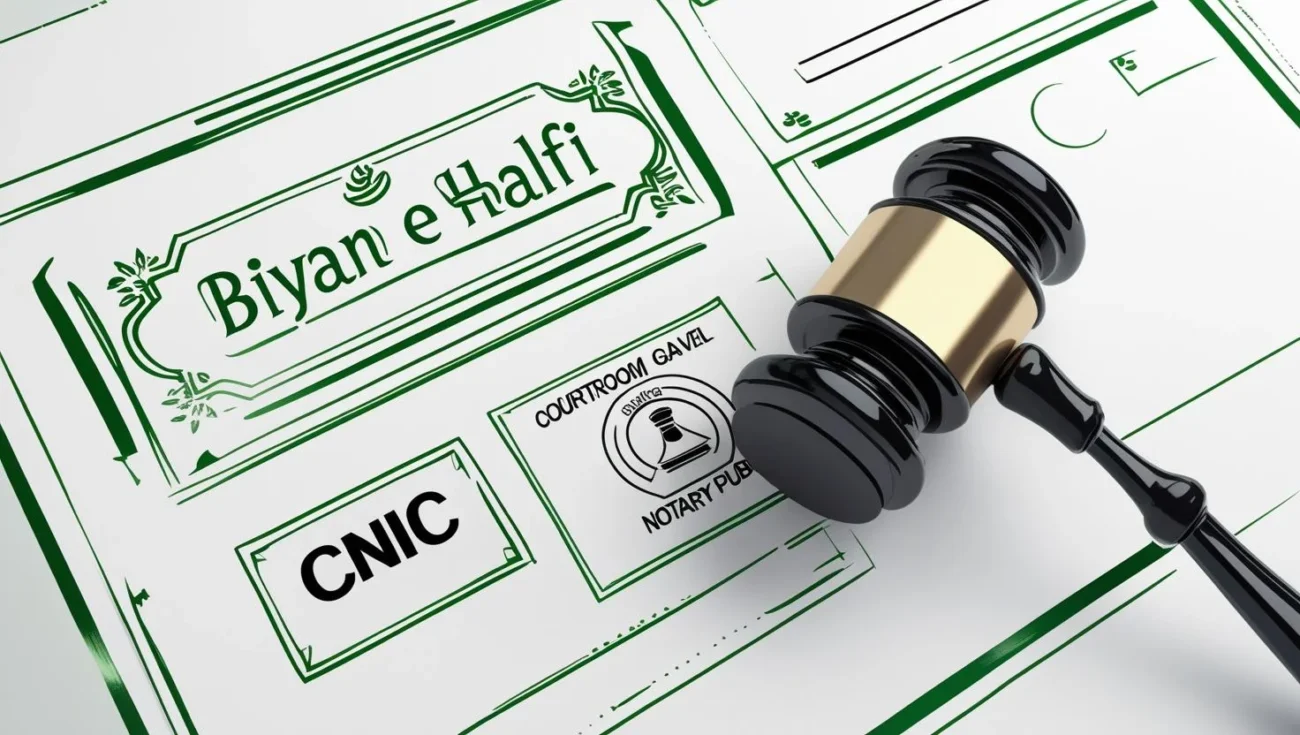
In Pakistan, the legal system recognizes different documents for achieving fairness, order, and clarity in personal, administrative, and legal functions. Among them, biyan e halfi holds special significance. It is a bayan halfi is a obras legal document and a sworn declaration, and a biyan-e-halfi is used for official matters including court cases, as a seal of approval for one’s declaration. Be it for a claim for succession, financial dealings, or personal commitments, a biyan e halfi is crucial in Pakistan’s legal system. What is Biyan e Halfi? Biyan e halfi is known widely as an affidavit. It is a legal document in which an individual swears to the truth of a specific fact or phenomena, It is compiled into a signed document by the swearing individual before an Oath Commissioner or a Notary Public, making the Bayan-e-Halfi a relevant legal instrument in Pakistan. An Oath Commissioner or notary bears no liability for the content of the affidavit; the risks and responsibility lie solely with the signer. Any claiming false a bian e halfi can lead to fines, imprisonment, or other legal consequences in Pakistan. Basically, a bayan e halfi serves as a form of documentation which is important for legal and administrative tasks. It is used when a certain situation requires verification or a formal confirmation of a claim without tangible proof. Legal Importance of Biyan e Halfi in Pakistan Like most countries, Pakistan has a defined legal judiciary system which operates on certain agreements like biyan e halfi. This method ensures that stated agreements are accepted and additional documents such as bayan halfi can greatly improve the validity of the claim. Many people in Pakistan also use bian e halfi documents in civil and inheritance disputes as well as in financial disputes and transactions. Bayan halfi documents hold such a strong importance value because they can be used in government documents as well. Many aim to apply for educational or political importance and identities which also require legal verification, the biyan e halfi makes the verification process easier. This system has been put in place to minimize fraud and strengthen the reliability of document. Preparation and Format of Biyan e Halfi In Pakistan, the preparation of bayan e halfi documents follows a prescribed order. It starts with the declarant’s full name, father’s or mother’s name, CNIC number, and their address. The bian halfi form contains a clean logical sequence free of ambiguity. The last part contains the declarant’s statement affirming his or her declaration is correct to the best of his or her knowledge. As with any legal document, bayan halfi has to be notarized. To ensure its legal enforceability, the Biyan-e-Halfi must be duly signed by an Oath Commissioner or a Notary Public. Stamping and attestation are critical to its acceptance in judicial and government offices. The document must be notarized in order to be legally accepted. The document must also contain notarized statements, or else it is presumed to carry no legal weight. Types of Biyan e Halfi Commonly Used in Pakistan In Pakistan, bian halfi are used in different ways based on the situation. The affidavit of ownership is one of the most common, where a person claims to own a property or an asset. Another common type is the affidavit of identity used for verifying one’s identity in different institutions and offices. There are also affidavits regarding inheritance, property and business transactions, admission in educational institutions, and even an application for a political office. A good example is the application for a domicile certificate where a biyan e halfi for a domicile is needed declaring the person’s permanent residence in a certain district. Another example is the elections where candidates are required to submit nomination papers that are accompanied by affidavits of their assets and liabilities, and a criminal history, if any. These examples demonstrate the way Pakistan relies on the bayan halfi for their day to day administration and legal activities. Attestation and Verification of Biyan e Halfi Legal attestation is required for bian halfi. Usually an oath commissioner or notary public handles this. These persons are permitted by Pakistani legislation to take oaths and certify affidavits. There are some instances, for one, overseas Pakistanis, where a bayan halfi also needs to be attested by a Pakistani consulate or embassy for it to be accepted within the country. Verification is another important part. In some sensitive cases, the courts or other bodies may check the biyan e halfi for claims verification. These claims, if proven untrue, can lead to legal punishments under the Pakistan Penal Code. Such stringent measures highlight the affidavit filing process. Role of Biyan e Halfi in Civil and Family Matters A Biyan-e-Halfi often forms the cornerstone of a party’s position in civil cases, particularly in matters concerning land and property. Parties present affidavits confirming ownership or possession of the land and the courts examine these affidavits together with other evidence to determine the most equitable decision. In family matters, bayan halfi is just as important. During inheritance disputes, it is common for heirs to issue an affidavit stating their relationship to the deceased. In family disputes regarding children, marriage, or divorce, the involved parties may rely on biyan halfi to substantiate their contentions. By conveying information in a sworn format, these affidavits significantly facilitate the resolution of legal matters. Use of Biyan-e-Halfi in Administrative Procedures Not just in courts, but administrative bodies in Pakistan require bayan e halfi for numerous reasons as well. In higher education, certain colleges and universities may require their students to submit affidavits declaring to follow the policies of the institution. Such affidavits also apply to banks in relation to loans and guarantees or resolving disputes. Election offices also rely on bayan halfi to substantiate information where candidates submit their nomination papers. This ensures that candidates do not conceal the facts of their biodata, assets, and liabilities. The Election Commission of Pakistan considers the submission of false affidavits as a declaration of an offence, leading to disqualification from contesting. Issues Related to the Biyan e Halfi System Pakistan’s bian e halfi system comes with a set of problems. One of the key problems is the misuse

fard bay online
Land Record Punjab

Fard Bay Online Process Validity Period and Fee in Punjab

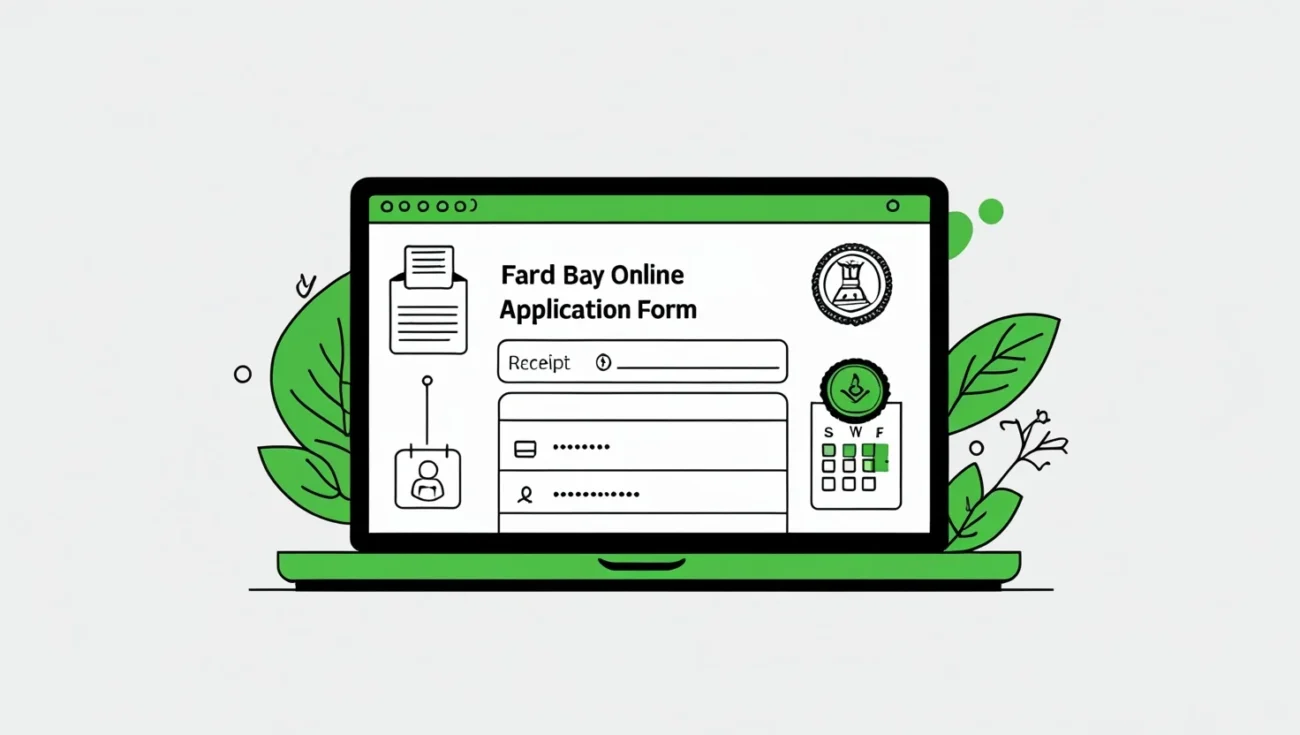
In Pakistan, fard bay is of utmost importance for landowners and for buyers and sellers, as well as for those who for any legal, commercial or administrative reason require proof of land ownership. This document is important as it is issued by land record authorities and serves as proof of ownership. Whether one requires it for a transaction or is preparing for a court case, he needs to have full knowledge of the procedure, rules, and conditions pertaining to fard bay online. From a legal standpoint, this document holds necessity across the entire nation. What is Fard Bay? Fard bay in Pakistan is the term used for the issued document related to land ownership. land record as fard bay. This record contains critical information like the oficial estate of the land, its geographical markings and the legal proprietor, verification of claim is important in cases such as property transactions business loans, daily and court battles regarding the land. A claim without the document of fard bay is virtually of no value in legal rectifications sought through the government channels. Legal Importance of Fard Bay in Pakistan The significance of fard bay stems from its legal aspect. It prevents fraudulent transactions while serving as a legal deed of ownership. In Pakistan, fraud related to properties is rampant and stems from the use of forged or outdated documents. To mitigate the rampant fraud, the government has issued a regulation that a fard bay must be submitted afresh and valid for land sales, mortgages, or deed registrations. This serves the purpose of maintaining legal order, protecting the interests of the plaintiffs and defendants, and providing a documented transparent deal of land transactions. Fard Bay Online Services in Pakistan The Punjab Land Records Authorities and their counterparts in other provinces are steps that Pakistan has taken in the past decade to establish a system for land records. This marks a huge step towards ridding the country of out-dated paper systems. As a result, fard bay online can be obtained conveniently and readily. Landowners no longer need to physically attend the local revenue office. Instead, by entering their CNIC and property details on the official portals, they can access their land records. The fard bay online process usually involves going to the specific provincial portal, providing the necessary details, and either downloading the document or picking it up from the nearest facilitation center. This system minimizes delays, reduces the chances of corruption, and enhances the efficiency of accessing and managing property records. For instance, the PLRA’s Land Record Management Information System in Punjab has greatly improved the fard bay online service, enabling access for both urban and rural residents. The Procedure to Obtain Fard Bay In Pakistan, the process for obtaining fard bay differs from region to region, although most are quite similar. In the past, the local Patwari or Tehsil office was the first stop for candidates, who then needed to submit a formal application, show an ID, and wait for the document fabrication to complete. With fard bay online systems in place these days, a lot of these steps can be started online. An Important Factor of Fard Bay Validity Period An important point to bear in mind is the fard bay validity period. Generally, a fard bay is valid for a period of 15 to 30 days from the day it is issued. This limited fard bay validity period helps to ensure that land transactions are based on current biographical information, relative to the ownership of land, in order to reduce the likelihood of disputes or fraudulent claims against the land. As an example, while selling a piece of land, it is a common practice for the buyer’s lawyer or the registrar to insist on a Fard-e-Beh that is not older than 14 days. This practice exists because ownership information is subject to rapid changes resulting from sales, inheritance transfers, deeds of gift, or court decision transfers, and using stale information documents could lead to unnecessary complications. Fard Bay Fee in Punjab In Punjab, the processes involved in acquiring a fard bay shape the cost incurred. For most citizens, the fard bay fee in Punjab is affordable. Presently, the cost of obtaining a fard bay in Punjab’s Land Record Centers is predominantly within the minimum range of PKR 1500 to PKR 2000. This is a fee range for both personal and court requests. Transaction requests for a sale or mortgage also fall in the same range. Citizens acquiring Fard-e-Beh through online services might also have the option to pay fard bay fee in Punjab using bank and mobile credit account transfers. The streamlining of payment systems eliminates the need to physically show up at revenue offices, which is a visit that most citizens would prefer to avoid. Common Issues in Obtaining Fard Bay The processes involved in Fard-e-Beh acquisition have certainly been enhanced over time, but issues remain for citizens in certain parts of the country. Accessing fard bay online is a challenge for people living in rural areas because of the lack of internet access. Additionally, outdated record systems that have not been fully automated yet can pose retrieval issues because they require manual searches in archive cabinets. Another problem is the limited validity period of the Fard-e-Beh, which, at times, necessitates applicants to submit additional applications for a property transaction plagued by delays. Moreover, disputes concerning the spatial measurements of the land or dated entries of landowner records can lead to cancellation, necessitating the alteration of the official land record prior to issuing a new Fard for Sale. Government Attempts to Enhance the Fard Bay System In response to these issues, provincial governments in Pakistan have put resources towards the digitization of land records, creating systems for monitoring the integrity of the processes, and establishing citizen facilitation centers. Now, people in Punjab, Sindh, and Khyber Pakhtunkhwa have access to numerous service centers from which they can order Fard-e-Beh, and they also have fard bay online services. Revision of revenue staff training, increased biometric checks, and connections with NADRA systems have made the issuance of fard bay documents more secure and efficient. Conclusion As we have always said

FBR Income Tax Return
Land Record Punjab

FBR Income Tax Return Services and Tax Compliance in Pakistan

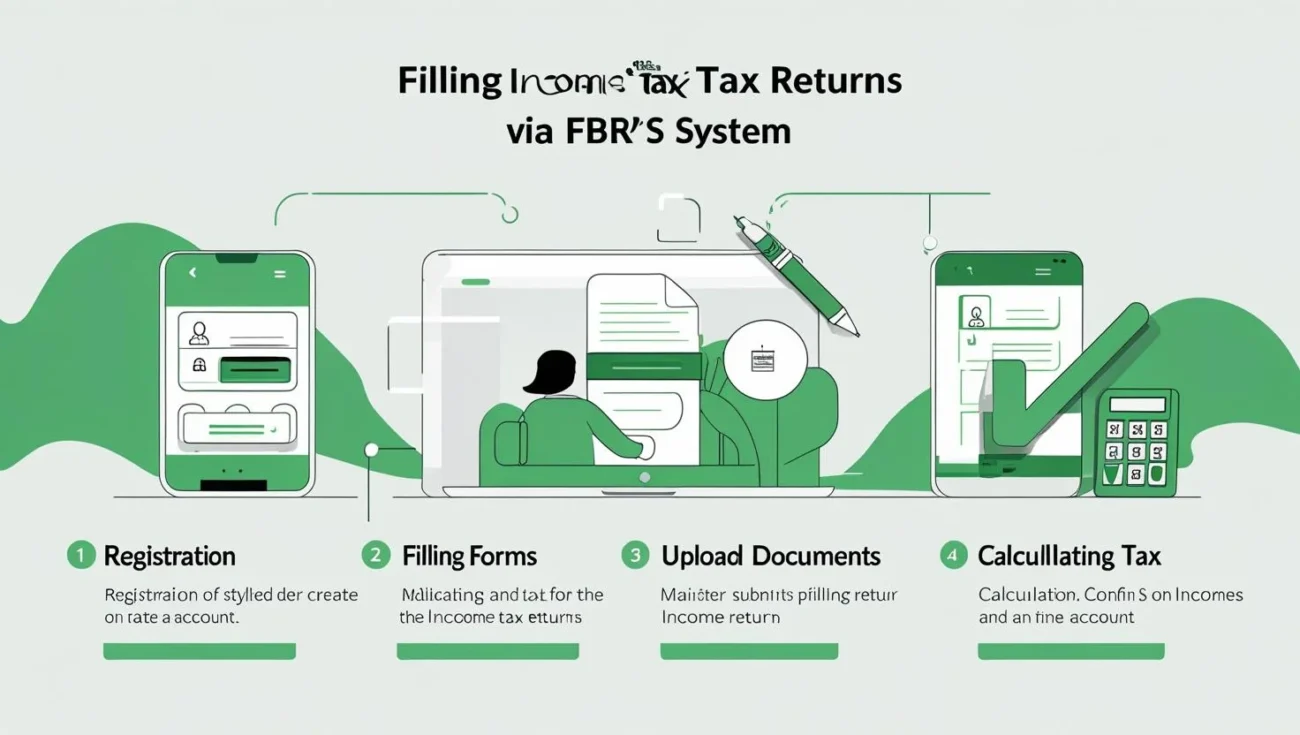
FBR Income Tax Return is something that becomes not only legal for businesses and people able to provide such documents, but also represents an opportunity to become a better citizen of the country in Pakistan. The Federal Board of Revenue (FBR) is the governmental authority that handles the issue of taxation in the country including collection of income tax and the verification of tax records in the country. Are you a salaried, a business owner or a property investor? Filing your FBR Income Tax Return not only makes the law when it comes to your taxes, and makes you eligible to access various financial perks that you get to enjoy. Importance of Filing FBR Income Tax Return The benefits are enormous to filing your FBR Income Tax Return as opposed to not filing the return and being penalized. Actively paying taxpayers have low rates of withholding tax imposed on a number of transactions including purchase of properties, vehicle registration or bank transactions. It also increases credibility when it is time to apply visas, tenders or get loans. In addition, the status of FBR tax return status is an indication of your compliance record, failure of which is likely to keep you among the past taxpayers which is not allowed to enjoy these benefits. Becoming a Tax Filer in Pakistan A tax filer in Pakistan is defined as a person or entity whose name appears in the Active Taxpayers List (ATL) maintained by the Federal Board of Revenue (FBR) You are required to file your FBR Income Tax Return within the due date in order to be put down as a “filer”. The inability to do so not only contributes to the increased level of taxes deduction but also limits the access to some of the legal and financial benefits. It may be tricky to a first-time filer, and that is why, to some individuals, hiring the services of professional tax preparers is a good idea as they guarantee perfection and conformity. Land Record Punjab and Professional Tax Return Services Land Record Punjab focuses on giving you professional, dependable, and speedy tax related services to assist you to file your FBR Income Tax Return with ease. We offer our clients a step-by-step procedure that will take them through appropriate and required documentation to the completion process. Our staff makes sure that not only are you filing your return properly, but that you are an active filer without the fear of those avoidable delays. Accessing our services is one way of saving time, legal mistakes, as well as complete compliance with FBR requirements. Checking FBR Tax Return Status Online Once your FBR Income Tax Return has been submitted, then you should check your FBR tax return status. This will be possible via the internet on the official FBR portal. It reflects on the system on whether your returns have been received, successfully processed or not. You should keep up-to-date with your tax return status so you don’t get any unpleasant surprises last minute and to make sure your name remains secure in the ATL. In our organization, Land Record Punjab, we give full information on how to check and diagnose your status, so there is no need to worry to our customers. Procedure for Filing FBR Income Tax Return There are multiple steps in preparation of FBR Income Tax Return. The first thing is to log in to your FBR account by entering your CNIC. Then the preparation of the return is made by asserting your income, expenses and assets and liabilities of the tax year. This is submitted online into the online IRIS of the FBR. Once the process of submission is complete your FBR tax return status is updated with respect to the process of returning. This might sound easy but most people find it hard to decipher the actual format and requirement, hence the value of such services as Land Record Punjab. Advantages of Active Tax Filer Status The Pakistani tax system allows an active taxpayer to get the reduced tax rates in terms of property transactions, bank withdrawal money, and vehicle registration. As an illustration, at the point of acquisition of real estate or the sale of a car, the non-filers end up paying very high taxes. Also, to receive government tenders or business contracts, or even some foreign travelling, one needs to demonstrate the filer status. Our formal help at Land Record Punjab means that as well as filing your FBR Income Tax Return to your deadline, you will keep your status as an active filer throughout the year. Challenges in Filing FBR Income Tax Return Among the factors that hinder most people in filling the FBR Income Tax Return effectively is the technical expertise that should be used to declare income dispensed by different sources. Most individuals are also not knowledgeable on the deductions, exemptions or credits that they can claim. Failure to file accurately may subject one to notices, penalties or even auditing. Moreover, sometimes taxpayers are exposed to errors with the online system or uploading documents or finding a password. These are some of the difficulties that our clients can be relieved of at Land Record Punjab through professional help and the latest tax know-how. Why Choose Land Record Punjab for FBR Filing Services Opting Land Record Punjab allows you to cooperate with the team of professionals to make the FBR Income Tax Return procedure easier both to individuals and companies. We provide customised consulting service with a fast turnaround time and strict confidentiality of your financial information. With our experience in tax filing and legal documentation, we keep your filings correct, legal, and in line with your long-term financial objectives. Our services are customised to your demands whether you are a salaried employee, you are in business, or an investor who is interested in properties. Final Thoughts on FBR Income Tax Return in Pakistan However, in Pakistan, declaring FBR Income Tax Return is not simply a task that you need to complete, it is the process of protecting your financial status, and enjoying government incentives. Whether it is inquiry on the FBR

Scroll to Top