Buying or selling property in Punjab used to mean a lot of paperwork, a lot of trust in middlemen, and not much certainty. That’s changing. One of the more recent additions to this push toward digital, secure property records is the Green Property Certificate. If you’ve been searching for what it actually is, how to get one, whether it can be done online, and what it costs, you’re not alone — owners, buyers, sellers, overseas Pakistanis, and investors are all asking the same questions right now.
At its core, a Green Property Certificate confirms that a property’s legal status, ownership, and possession have actually been checked and verified — not just claimed. It exists to cut down on fraud, fake ownership claims, blurry boundaries, and the disputes that tend to pop up during a sale. Whether you’re dealing with land, a house, a commercial unit, or agricultural property anywhere in Punjab, this is quickly becoming a document worth having.
Below is a full breakdown — what the certificate is, why it was introduced, how to apply, what it costs, what documents you’ll need, and answers to the questions people ask most often.
What Is a Green Property Certificate?
A Green Property Certificate is an official verification document issued through Punjab’s land record system. It tells you, in effect, that a property has been checked against official records and that its ownership, possession, and legal standing hold up.
Put simply, it’s proof that the paper trail behind a property is clean. That matters to owners, of course, but it also matters to buyers, banks, and legal authorities, since the certificate is directly tied to official land records rather than just a seller’s word.
It does more than confirm who owns what, too. The verification process also looks for legal red flags — disputes, unpaid dues, an existing mortgage, objections filed against the property — so the certificate ends up functioning as a kind of due-diligence report as much as an ownership document.
Why Was the Green Property Certificate Introduced in Punjab?
For decades, Punjab’s land records were largely manual, and that came with predictable problems: disputed boundaries, fraud, multiple people claiming the same piece of land, and records that simply didn’t match reality. Anyone who’s dealt with property in the region has probably heard a story (or lived one) involving fake documents or a sale that fell apart over an ownership question nobody saw coming.
The Green Property Certificate was brought in to close those gaps — to give ownership a verifiable, digital backbone instead of relying purely on paper that could be forged or misplaced.
A few of the goals behind it:
- Cutting down on property fraud and forged documents
- Verifying ownership before any sale goes through
- Confirming actual possession and boundaries on the ground
- Pushing land records toward genuine transparency
- Giving buyers a real basis for their decisions
- Giving banks and legal bodies a verified record to work from
- Reducing the disputes that crop up between owners, heirs, and buyers
For a buyer, it works almost like a pre-purchase inspection — a check before committing serious money. For a seller, having one in hand can make the whole negotiation smoother, since it removes a layer of doubt the buyer would otherwise have to chase down themselves.
Who Needs a Green Property Certificate?
This isn’t only for people in the middle of buying or selling. It’s relevant any time ownership or possession needs to be beyond question.
You’d likely want one if you’re:
- Buying a plot, house, or piece of land
- Selling property anywhere in Punjab
- Trying to verify property you’ve inherited
- Checking ownership before putting money into an investment
- Applying for a loan that uses property as collateral
- Confirming exactly where your boundaries sit
- Working through a dispute with family or another claimant
- An overseas Pakistani who needs a safer way to verify property from abroad
- A housing society member wanting confirmed status on your unit
- A dealer who wants to reassure a client before they commit
Even if none of these apply to you right this moment, it’s still worth having on file — property situations change, and having verified status ready in advance saves time later.
Green Property Certificate Punjab Online Apply
A lot of people type “Green Property Certificate online apply Punjab” into Google expecting a fully online process, start to finish. That’s not quite where things stand yet. The system is moving in a digital direction, but in most cases you’ll still need to visit your nearest Arazi Record Center in person for identity verification, biometrics, and to actually open the case.
What online tools can help with is information, fee payment, tracking your application, and filing objections — but the certificate itself isn’t something you download after filling out a form. Officials have to verify ownership history, possession, boundaries, and check for any objections before it’s issued, and that requires more than a digital form submission.
A realistic way to approach it:
- Check the official Punjab land record portal for current information on the certificate
- Visit your nearest Arazi Record Center if the case requires it
- Bring your property details and CNIC
- Pay the processing fee
- Go through biometric verification
- Allow time for record checks and field verification
- Track progress online if that option is available in your case
- Collect the certificate once it’s approved
So plan for at least one ARC visit, even if some of the peripheral steps can be handled from home.
How to Get Green Property Certificate in Punjab
The exact steps can shift a bit depending on your district, the type of property, and how clean the existing record already is — but here’s the general path most applicants go through.
Visit the Nearest Arazi Record Center
You start by visiting your local ARC. You’ll usually be issued a token, and a service center official opens your Green Property Certificate case in the system from there.
Submit Property Details
Next, you provide the full property information — khewat number, khatooni number, khasra number, registry details, mauza, tehsil, district, and any other land record references that apply.
If the property sits within a housing society, expect to provide a few society-specific details on top of that.
Pay the Required Fee
You’ll pay the processing fee through whichever method is available to you — Bank of Punjab counter or branch, a PSID, e-Pay, a mobile wallet, or online banking, depending on what’s offered at that center.
Complete CNIC and Biometric Verification
Your identity gets verified against your original CNIC plus a biometric check. This step exists to confirm that the person standing in front of the official is actually the person tied to the property record.
Ownership History Review
From here, officials dig into the ownership history — past transactions, sale records, transfers, inheritance details, anything relevant to how the property changed hands over time.
This is where they confirm that previous transfers were legitimate and that your claim to the property actually lines up with what the official record shows.
Check for Disputes, Taxes, Mortgage, or Court Orders
The record also gets checked for unpaid taxes, an existing bank mortgage, pending litigation, stay orders, or any other legal restriction. If something turns up here, expect the process to pause until it’s sorted out.
Field Survey and Boundary Verification
Many cases involve an actual site visit. Officials or survey staff come out to verify possession in person, measure the land, and check that boundaries match the record.
This step matters more than people expect — a huge share of property disputes trace back to boundary mismatches or unclear physical possession, not paperwork issues.
Neighbor or Local Verification
Sometimes neighboring property owners or local record references get consulted too, just to cross-check that the property’s location and possession line up with what’s on file.
Public Notice and Objection Period
A public notice goes out, opening a window for objections. If someone else has a claim or dispute tied to the property, this is when they can raise it.
If nothing valid comes in during that window, the case moves ahead toward approval.
Final Review and Certificate Issuance
Once every check clears, the case goes to final review. If everything’s in order and no dispute remains, the property gets green status and the certificate is issued.
Required Documents for Green Property Certificate
What you’ll specifically need can vary by property type and district, but plan on having these ready going in:
- Your original CNIC
- Property ownership record
- Registry or transfer document, if you have one
- Khewat, khatooni, khasra, or other property reference numbers
- Mutation record, where applicable
- Earlier ownership documents, if requested
- Proof of cleared taxes or dues, if required
- A mobile number registered to your CNIC
- Any court or legal documents, if the property has a dispute history
If the property came through inheritance, be ready for extra paperwork too — a succession certificate, family registration certificate, death certificate, or inheritance mutation record may all come into play.
For overseas Pakistanis applying through a representative, expect additional verification or authorization documents on top of the usual list.
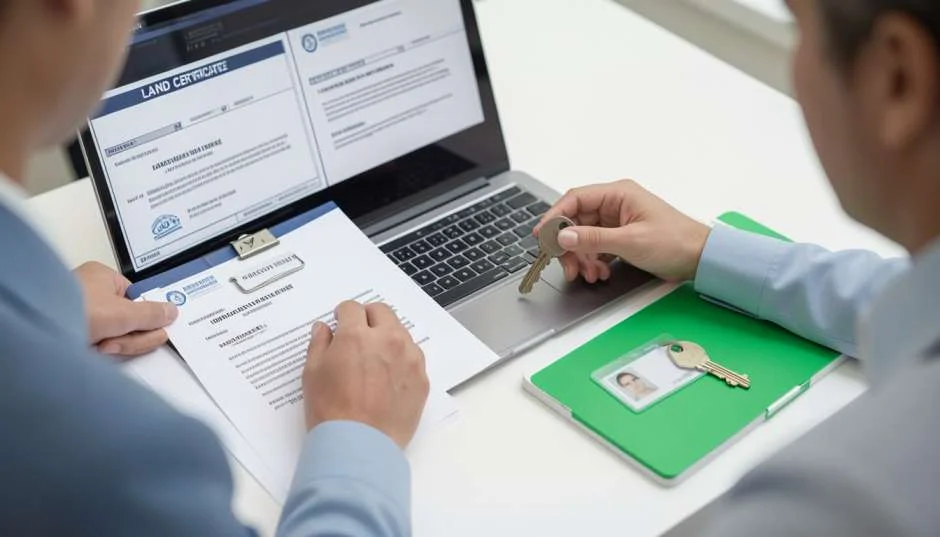
Green Property Certificate Fee Structure in Punjab
As of recent updates, the fee sits somewhere around PKR 900 to PKR 950. Some official sources cite an initial PKR 900 processing fee, while more recent news coverage has mentioned PKR 950 — the figures haven’t fully settled into one number yet.
Since government fees shift over time, don’t take either figure as final. Confirm the current amount directly with the Punjab Land Records Authority or your nearest Arazi Record Center before you go in to apply.
You can typically pay through:
- Bank of Punjab counter at the Arazi Record Center
- Bank of Punjab branch
- PSID-based payment
- e-Pay Punjab
- JazzCash
- EasyPaisa
- Online banking
Keep in mind this fee is separate from anything else tied to the transaction itself — stamp duty, CVT, registry charges, transfer tax, and any pending dues on the property are all additional and need to be checked independently.
How Long Does It Take to Get a Green Property Certificate?
There’s no fixed timeline — it really comes down to how clean the existing record is, which district you’re in, how the verification goes, and whether the public notice period draws any objections.
If your paperwork is already in order, things can move fairly quickly. If there are gaps, disputed boundaries, unpaid taxes, a mismatch in ownership details, or an objection filed against you, expect it to take longer.
Your best bet is to stay in regular contact with your Arazi Record Center and use whatever official tracking tools are available rather than guessing at where things stand.
Common Reasons for Delay or Rejection
Applications can stall — or get rejected outright — for a handful of recurring reasons:
- Ownership details on record don’t match the applicant
- A problem during CNIC or biometric verification
- The property is tied up in a court dispute
- A bank mortgage shows up against the property
- Outstanding taxes or government dues
- A boundary or possession disagreement
- An objection filed during the public notice window
- A missing registry or mutation record
- Incorrect khewat, khatooni, or khasra details
- A property record that hasn’t been fully digitized yet
It’s worth checking your own record for these issues before you apply, rather than discovering them mid-process.
Green Property Certificate vs Fard
People often mix these two up. A Fard is a land record document pulled from the revenue record — it’s been the standard reference for ownership information, sales, and transfers for a long time.
The Green Property Certificate goes further. It’s not just a snapshot of what’s on record; it’s a verified statement covering ownership, possession, boundaries, and legal clearance, specifically aimed at cutting fraud out of the picture.
The short version: a Fard tells you what the record says. A Green Property Certificate confirms that what the record says actually holds up.
Why Buyers Should Check Green Property Certificate Before Purchase
Skipping verification before a purchase is a genuine gamble. It’s not unusual for a buyer to find out only after paying that the property has a dispute attached, unpaid dues sitting against it, questionable documents, a boundary conflict, or an ownership issue nobody disclosed.
Getting a Green Property Certificate lets a buyer confirm a property’s status before money changes hands, which closes off a lot of the ways fraud typically happens.
Before buying anything in Punjab, it’s worth confirming:
- Ownership is genuinely verified
- Possession is clearly defined
- There’s no pending dispute
- No active court restriction exists
- There’s no hidden mortgage
- Boundaries match the official record
- The land record itself is current
This matters even more for overseas Pakistanis, first-time buyers, and anyone going through an agent rather than dealing with the seller directly.
Why Sellers Should Get a Green Property Certificate
On the seller’s side, having this certificate ready builds trust almost immediately. It signals that the property has already been through official checks and that you’re not trying to rush a buyer past due diligence.
It tends to help sellers:
- Bring in buyers who are actually serious
- Cut down on doubts that slow negotiations
- Avoid scrambling for verification at the last minute
- Move the sale along faster
- Demonstrate clear ownership and possession upfront
- Strengthen the property’s overall credibility
Dealers who recommend this to their clients tend to build stronger trust with them too — it shows you’re not just trying to close a deal as fast as possible.
Important Tips Before Applying
A few things worth doing before you start the process:
- Confirm the current fee with PLRA or your local ARC
- Review your own property record ahead of time
- Carry your original CNIC
- Make sure your registered mobile number is active
- Clear any outstanding dues beforehand
- Resolve legal disputes before you apply, not during
- Have registry and mutation documents on hand
- Double-check khewat, khatooni, khasra, mauza, tehsil, and district details
- Don’t rely solely on agents — use official channels directly
- Hold onto your payment receipt and application record
A bit of preparation here goes a long way toward avoiding delays.
Get Help from Land Record Punjab
If you want assistance with Green Property Certificate guidance, document preparation, online process support, or property record-related information, Land Record Punjab can help you understand the required steps clearly.
Land Record Punjab is a private service provider and is not a government department or official PLRA office. Our purpose is to guide property owners, buyers, sellers, and overseas Pakistanis with land record-related support so they can complete the process more easily and avoid common mistakes.
You can visit our website at landrecordpunjab.com to learn more about our property record assistance services in Punjab.
Conclusion
The Green Property Certificate marks a real step toward safer, more transparent property dealings in Punjab. It ties ownership, possession, and legal status back to verified official records instead of leaving everything to trust and paperwork that can be forged.
For buyers, it lowers the risk of getting burned by fraud. For sellers, it builds trust faster. For owners generally, it offers more solid footing on their own rights. And for overseas Pakistanis in particular, it solves a real problem — verifying property from thousands of miles away is genuinely hard without something like this.
If buying, selling, or simply securing a property in Punjab is on your radar, it’s worth understanding this process now rather than later. Check the official Punjab land record portal or visit your nearest Arazi Record Center, confirm the current fee, get your documents in order, and go through the proper channel.
FAQs About Green Property Certificate in Punjab
What is a Green Property Certificate in Punjab?
It’s an official verification document confirming a property’s ownership, possession, legal status, and record position — designed to reduce fraud and make property transactions safer.
How can I apply for a Green Property Certificate online in Punjab?
Certain parts of the process — information, fee payment, tracking, filing objections — can be done online, but you’ll typically still need to visit your nearest Arazi Record Center for the application itself, CNIC and biometric verification, and record processing.
What is the fee for Green Property Certificate in Punjab?
It’s currently reported at around PKR 900 to PKR 950. Since government fees change, confirm the exact figure with the official PLRA portal or your nearest Arazi Record Center before applying.
What documents are required for Green Property Certificate?
Generally: your original CNIC, property ownership record, registry or transfer details, khewat/khatooni/khasra information, mutation record, a registered mobile number, and any relevant legal or tax clearance documents depending on your specific case.
Is Green Property Certificate necessary for buying or selling property?
It’s not yet a strict requirement everywhere, but Punjab is clearly moving toward stronger property verification through this system. It may well become essential for transactions soon, so check the latest PLRA rules before you buy or sell.