
Author name: afzalahmer8@gmail.com

flaws in taxation system of pakistan
FBR & Tax Updates

Top 10 Flaws in Taxation System of Pakistan You Should Know About

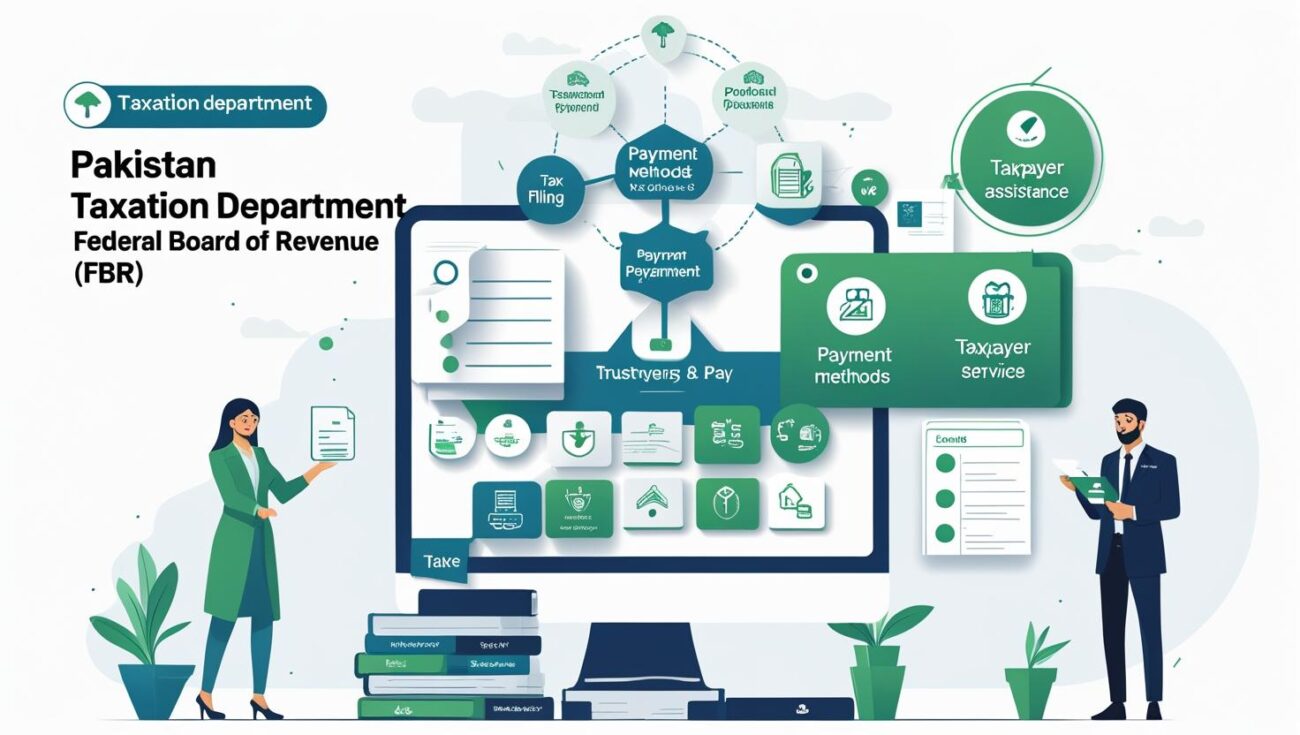
Faced with such challenges, the current structure of Pakistan’s tax system is heavily criticized for not serving the economic development needs of the country or for nurturing fair and complaisant culture. Though there have been reforms in different political periods, the system grapples with inefficiency, inequity, corruption and public mistrust today. Getting a handle on the flaws in taxation system of pakistan is key to reforming the way it operates, not merely on paper, but in fact. 1. Too Few Taxpayers A particularly grievous deficiency is the small tax base. Of the over 240 million population, just around 3 million are registered with the Federal Board of Revenue (FBR) of which less number file their tax returns every year. This small pool of taxpayers are supposed to shoulder the budget burden of the entire country, and it’s unsustainable. Much of Pakistan’s economy is informal, and small traders and shopkeepers, as well as those who own agricultural land or work as professionals like doctors and lawyers, often make sizable amounts of money without ever registering or paying taxes. Wage earners, meanwhile, are taxed at the source, and their room for evasion is limited at best, making them the simplest — and often most exploited — group to target. This imbalance breeds an abiding sense of unfairness — and feeds a vicious circle: The fewer who pay taxes, the more the ones who do have to carry — and the more those who don’t shun the system. 2. Weak Enforcement A tax system is only good to the extent that it enforces the statute. Enforcement is often weak and selective in Pakistan and, occasionally, politically motivated. The FBR has no reliable mechanisms to follow undeclared wealth or income, while audits remain infrequent and substandard. Enforcement is not data driven and is conducted based on outdated, manual, and discretionary judgment. This enables many of the biggest tax evaders to run amok for years, contributing to smaller companies and ordinary, everyday taxpayers getting unfairly caught in the cross hairs. But without a reasonable and efficient enforcement system, the system is sending a dangerous message: that not paying taxes has no true consequences, particularly for the powerful and affluent. 3. Corruption Undermines Credibility Corruption in one of the flaws in taxation system of pakistan and a cause of weak institution. From the process of getting registered as taxpayers to assessments and appeals, taxpayers frequently say they face demands for bribes for lesser obligations or prompt resolutions. In most cases bribery in relation to tax liabilities is when officials and taxpayers agree to underreport income or use fraudulent numbers — to the benefit of both parties and detriment of the state. Honest taxpayers, meanwhile, are the ones losing out, as the system becomes increasingly stacked in favor of those who are able to “work the system.” Corruption not only syphons off the public exchequer but also maligns the image of the FBR and constrains voluntary tax compliance. When people see others cheating without consequence, these observers become less likely to play by the rules. 4. Indirect Taxes Hurt the Poor Pakistan Taxes system is heavily based on indirect taxes — GST, customs and fuel. The taxes are easy to charge, but they lay a heavy hand on the poor and the middle class, for whom they result in the same rate as for the rich on such basic necessities as food. Indirect taxes are typically regressive, since they don’t consider one’s ability to pay. For instance, a billionaire pays no more in sales tax on his lunch than a destitute person; the sales tax on food, fuel or electricity is the same for both. This results in unevenness and undermines the buying power of the poorest sections. A progressive tax system would be based on income, along with property and wealth to cover the flaws in taxation system of pakistan, under which the more you make the more you pay. Alas Pakistan has gone the other way, inserting itself further into the divide line of social and economic status. 5. Tax Filing Is a Nightmare Filing taxes is a daunting and exasperating task for many ordinary Pakistanis. The tax forms are confusing, the systems are frequently unsteady, and help from tax offices is minimal or spotty. Language barriers and legal language are yet another hurdle, in particular for smaller companies and those with lower incomes. Although there have been attempts to digitalize system with online return portals, such as mobile apps, they are often not user friendly. Technical issues, limited real-time support and sudden changes in rules make compliance that much harder. The result? Others would prefer to evade filing entirely — and not, mind you, because they want to scam the system, but because they’re afraid of being trapped by it. 6. Tech Use Is Outdated Any modern tax system should run on data — but Pakistan’s doesn’t. The FBR continues to rely on siloed databases and antiquated manual processes that make it hard to cross-verify data across departments or catch tax evaders who leave digital footmarks behind. Banking information, property files, car registration, utilities usage and even overseas travel patterns are uncollected, or poorly connected. This enables the rich to understate or hide income without being caught. In countries where tax collection is working, smart algorithms and interagency data sharing allow governments to detect discrepancies and send automated notices. Unlike modern, streamlined systems, flaws in taxation system of pakistan occurs due to tax framework remains largely reactive and reliant on physical paperwork — a setup that feels stuck in the 1980s rather than keeping pace with today’s digital advancements. 7. Political Interference Blocks Progress The politicization of tax policy and administration is another flaws in taxation system of pakistan. The leadership of the FBR is constantly changed on political basis and decisions of tax implementation are commonly influenced by vested interests. This institutional dependency is reflected in the fact that tax policies are designed to safeguard specific political power centers, and not for the national good. Exceptions and exemptions are

History of Taxation System in Pakistan
FBR & Tax Updates

History of Taxation System in Pakistan from Colonial Roots to Modern Reforms

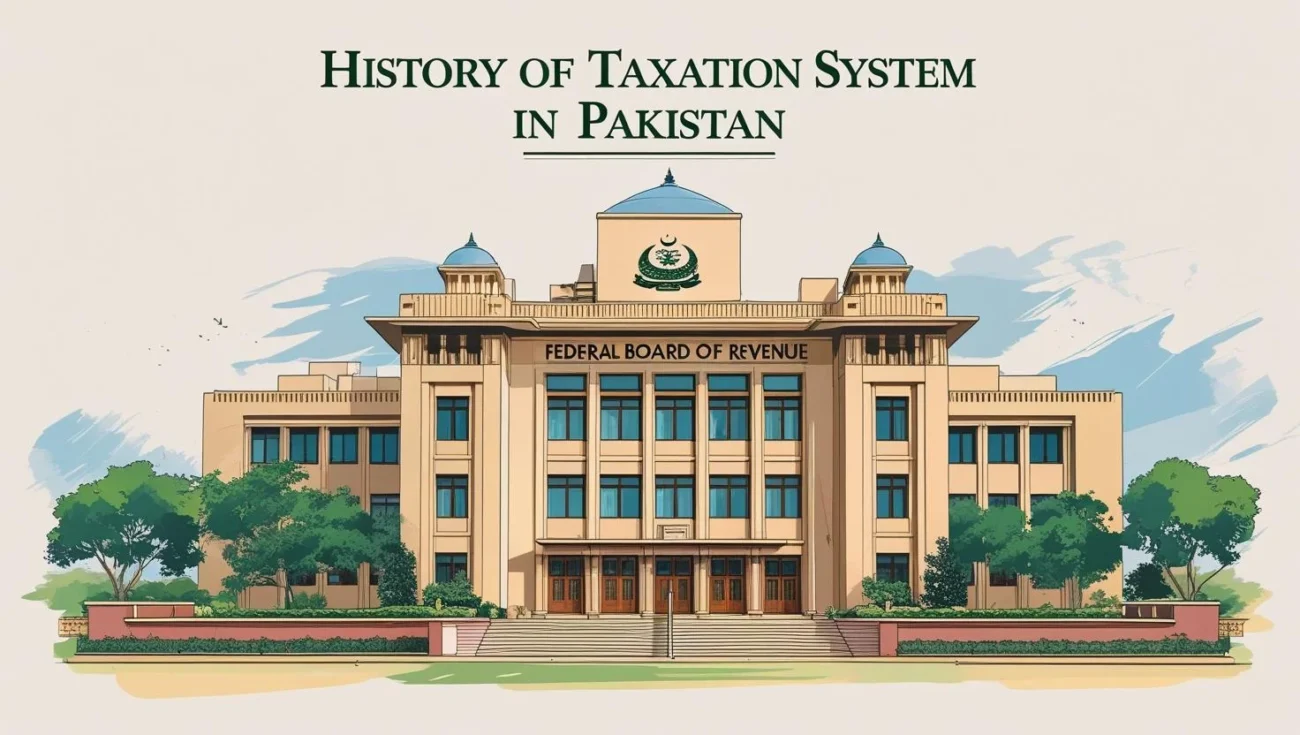
The history of taxation system in Pakistan is deeply interwoven with the country’s political, economic, and institutional evolution. Pakistan has been salvaging to designer a fair and efficient fiscal system since it became independent in 1947. Although there have been some reforms to modernize certain aspects of the system, enduring structural problems — such as a small tax base, widespread informality and political aversion to direct taxation — remain ongoing stumbling blocks. Examining the history of taxation system in Pakistan helps explain the persistent shortfall in revenue collection, despite the nation’s demographic and economic scale. This article provides an overview of where and how Pakistan’s system of taxation evolved, and its historical and contemporary constraints, to give an in-depth picture of the antecedents and pitfalls of taxation in the country. Colonial Legacy and the Inherited Framework As of independence, Pakistan has the same system of taxation as British India. The Central Board of Revenue that came into existence as a result of the CBR Act, 1924, had a wide operational scope under the said Act but its functions were being extended to cover other domestic taxes such as Income Tax. The colonial system was based on indirect forms of taxation—customs duties and excise which, though regressive in nature, were easy to manage. Pakistan’s initial tax system was largely based on British-enacted Indian income tax laws, notably the Indian Income Tax Act of 1922. It had progressive income buckets and spared agricultural income, a policy that survives to this day and severely confines Pakistan’s direct tax base. Pakistan Tax Establishment The history of tax system in Pakistan started with the asymmetry in the capacity to collect taxes and fairness of the tax system. Post-Independence Centralization and Provincial Sharing In the first few decades after 1947, Pakistan adopted a tax model of the centralized system. The federal government could still impose major taxes with the consent of the provinces (this power was exercised through the Raisman Award (1951) and the creation of the National Finance Commission (NFC). Even in the formative decades of the 1950s and 1960s, the tax-to-GDP ratio hovered around a modest 6%. This revenue base was dominated by indirect taxes like customs and excise duties and sales taxes. Direct tax was still underdeveloped as a result of administrative capacity and political resistance against having to subject wealthy interest groups to income tax. It was the same story of taxation system broken during this period of time as well when they depended too much on consumption taxes which not too much has been done on the side of expanding the income and corporate taxes base. Nationalization and Economic Stagnation (1960s–1970s) During the 1970s, efforts to reform the tax system faced major obstacles. Under Prime Minister Zulfikar Ali Bhutto, the nationalization of core industries resulted in their stagnation, as state oversight failed to provide necessary support. This change depressed private enterprise and twisted tax incentives. As fewer private businesses were profitable, corporate tax revenue declined. Throughout the decade, the tax-to-GDP ratio was roughly 8%. The major sources of revenue continued to be indirect taxes such as sales tax and excise duty. Even as economies changed, there were no substantial reforms to widen the base and force compliance. Over reliance on regressive taxes missed opportunities of a structural reform The 70’s 1.0 The history of taxation system in Pakistan can be seen as the missed opportunity of structural overhauling and setting the direction of the path of reliance on regressive taxation system. Reforms And Adoption Of VAT (1980s – 90s) The 1980s featured at least some modest attempts to reform and streamline to raise tax efficiency. The enactment of the 1990 Sales Tax Act marked a shift from the 1951 law, laying the foundation for a value-added tax (VAT) framework. It admitted input tax credits, zero-rate of exports, bringing Pakistan in line with international VAT systems. “But weak enforcement mechanisms and administrative inefficiencies did not allow for any significant headway to be made. The tax regime continued to be heavily reliant on import duties, customs fees accounting for much of total revenue. While the world was moving toward broader tax bases and lower rates, Pakistan could not implement tax laws and widen documentation. Even by the end of the 1990s, the tax-to-GDP ratio remained below 10 percent, and fewer than 1 percent of the population was filing income tax returns. This chapter in the history of taxation system in Pakistan picturesque how inefficiencies of the system, whether systemic or lack of political-will, didn’t allow the country to make the most of positive legislative changes. Income Tax Ordinance 2001 and Institutional Overhaul An important chapter in the history of taxation system in Pakistan is the introduction of the Income Tax Ordinance 2001. Incorporating two decades of tax reform, the legislation replaced older laws and introduced key principles like universal self-assessment, residence-based taxation, and standardized definitions of income.The early 2000s also brought the adoption of the World Bank-funded Tax Administration Reform Project (TARP). The objective of this project was to strengthen FBR’s institutional capacity for: TARP was a mixed bag—there was good news (such as the infusion of more than $400 billion in late 2008 and 2009 to shore up the finances of banks, stabilizing markets, and increased revenue collection by 2011), but many of its goals went unrealized thanks to political opposition, bureaucratic foot-dragging, and spotty enforcement. The evolution happens in history of taxation system in Pakistan in the first decade of 21st century was a changing era, that modernized the system that ultimately led to the digital reform, but structural flaws hindered the process of reform. 18th Constitutional Amendment And Devolution Of Tax Powers In 2010, the 18th Constitutional Amendment radically altered the federal-province fiscal relationship in Pakistan when it provided constitutional space to provinces to tax services. This led to the establishment of distinct revenu authorities, namely. This gave power to provincial governments but also caused administrative disintegration and discord in service taxation between the provinces. There were different rates, rules and compliance measures faced by businesses that

Taxation Laws in Pakistan
FBR & Tax Updates

A Complete Overview of Taxation Laws in Pakistan

Taxation laws in Pakistan are undergoing a historic transformation. Economic structural adjustments, digital development and international commitments have made the national tax structure wider, stricter and more intricate. Whether you are a private taxpayer, a business owner or an offshore investor, knowing what you are up against is key if you are to make informed decisions. Finance Act 2025 Tax Culture Revolution The introduction of Finance Act 2025 brought a radical change in the methods of tax collection and payment system in Pakistan. It illuminated not only higher levels of money creation but also formalization of sectors that have long lurked in the shadows of the informal economy — notably, digital commerce and real estate. In this blog, we are going to delve into the in depth details about structure, recent reforms, enforcement mechanism and practical implications of Pakistan taxation laws. Legal Structure and Authority The Federal Board of Revenue (FBR) is the supreme government organization of Pakistan, responsible for the collection of revenue while playing the role of policymaker of Government of Pakistan. Controlled by the Income Tax Ordinance 2001 and the Sales Tax Act 1990, the FBR administers federal income tax, sales tax, customs duties, and federal excise. Revenue authorities manage taxes like services sales tax under their laws in the meanwhile. There has been increasing synchronization between federal and provincial systems also particularly in services taxation in recent years. More importantly, the move towards a documentation-based, harmonised system reflects its desire to increase tax compliance and broaden the tax base. Major Reforms Proposed by Finance Act, 2025 The introduction of the Finance Act 2025 marked a significant milestone in taxation laws in Pakistan. With effect from 1 July 2025, this law made fundamental amendments to income tax, sales tax, withholding tax and rules related to digital economy. Revised Personal Income Tax Brackets The government also adjusted the personal income tax brackets for a fairer distribution of the tax burden. With earners falling in the up-to-PKR 600,000 bracket, i.e., lowest income group, being disallowed from availing any waiver as they already avail zero excess to others falling in the 11-35% tax rates. These changes are intended to reduce inequality and claw back more cash from the richer parts of society. Capital Gains and Interest Income Reforms for Investors There were also various new provisions for businesses and investors relating to the taxation of capital gains and interest income. Nonresident Investors now to pay more capital gains tax on short-term investments in G-securities. Additionally, the rate for interest income was hiked for non-individual entities so that companies are not able to avoid tax via corporate structuring. Taxation of the Digital Economy Under the Finance Act 2025, the digital economy takes a new spotlight through new taxation laws in Pakistan. From now on, online vendors, marketplaces, intermediaries of payment and logistics services themselves are confronted with a broad array of tax obligations, being faced with compulsory registration in addition to monthly reporting. New tax of digital presence has been imposed on foreign companies that are doing business in Pakistan without having physical existence. This goes for digital advertisers, software providers and online traders worldwide. Property Tax Reforms and Capital Gain Exemptions Property tax is a proposed-reform area too. Sale Purchases of Immovable Properties have been updated to market taxes withheld. Now property held, used personally and lived in for 15 years or more can be exempt from the capital gain tax, subject to fulfilment of certain compliance conditions. Its objective is to promote transparency in the property market and reduce speculative practices. Sales Tax Reform through Negative-List Approach Sales tax also changed significantly. The decision to adopt negative-list system at the provincial level implies that all services are now taxed except those which are specifically exempt. This approach streamlines administration and minimises uncertainty regarding the interpretation of tax. Previously un-taxed services such as commercial renting (in many countries), now fall within taxable net leading to widening of tax net. Strengthening Compliance and Enforcement The new taxation laws in Pakistan has been laid supported by FBR empowered force of compliance. With the new laws, tax officials are given new authority to mine bank data — and to conduct more intrusive audits, such as posting officers on the premises of a business to monitor operations, more aggressively. In particular, section 175AA of the Income Tax Ordinance makes room for live connectivity and exchange of information between the institutions. Restrictions on Non-Documented Transactions For compulsion, non-documented transactions over PKR 200,000 can be disallowed for sake of calculating income on which tax is applicable. Likewise purchase and sale with the suppliers who does not have NTN, can also cause disallowance only to the extent of the supplier not having the NTN No. It is intended that these measures will force commercial entities to do business with registered persons and through proper banking. Penalties for Non-Filers and Higher Withholding Non-filers also face steeper consequences. A higher rate of withholding tax applies to those who are not registered as active taxpayers. The cash withdrawal tax rate of non-filers from banks has gone up and so have the advanced tax rates on property deals, purchase of vehicles. This balance of rewards and penalties reinforces the value of adhering to regulations. Policy Objectives and Economic Impact The central focus of such dramatic reforms is to articulate a policy agenda, which is to raise the tax-to-GDP ratio, to document the economy and to implement commitments made to international partners, including the IMF. Pakistan has long grappled with a narrow tax base, and high levels of tax evasion. These problems are directly targeted through present taxation laws in Pakistan. Ambitious Tax Targets and Agriculture Reforms Govt sets ambitious tax collection target of over Rs14tr for FY 2025–26. There have been reforms in agriculture taxation — an area which was undertaxed — to ensure larger equity. The commonality between governments, especially in the treatment of corporate tax rates on farm income and other related adjustments, can be seen nationwide. Integrating

Punjab Land Record Authority
Land Record Punjab

Punjab Land Record Authority: A Comprehensive Overview of Services and Digital Transformation

The Punjab Land Record Authority (PLRA) has completely changed how land tenure data is recorded, accessed, and managed across the Punjab state. Land governance was based on outdated, paper-based procedures prior to the Authority’s official constitution, which frequently resulted in delays, administrative duplication, and malpractice opportunities. The PLRA was created in 2017 with the passage of the Punjab Land Records Authority Act, marking the beginning of a period marked by improved openness, digital governance, and more efficient public services in land management. The PLRA has created a network of more than 150 Arazi Record Centers, which currently act as a single, province-wide interface for land-related services, after the complete digitization of local land registers. The Authority has effectively eliminated the need for middlemen, reduced rent-seeking, and implemented a customer-focused service model that both locals and foreigners can use in person or online. Both domestic constituents and Pakistanis living abroad can access services thanks to the integrated web portal and specialized mobile application. The Basis of Land Ownership: Fard Issuance The Fard, also known as the Record of Rights, is essential to every land transaction since it serves as proof of legal title and is required for many administrative, financial, and legal procedures. Why is Fard Important and What Is It? The Fard serves as the official record for land titles. Its presence is essential for property transfers, secured financing acquisitions, land-related litigation, and entitlement verification in conflict situations. The majority of land deals cannot be legally completed without a Fard. How to Obtain a PLRA Fard? Any citizen can obtain a Fard at the closest Arazi Record Center by presenting their CNIC and relevant land details, such as their Mouza title and Khasra number. The process usually takes little more than sixty minutes, greatly reducing the previously required bureaucratic time. The PLRA also allows applications through its website and smartphone interface for added ease, which is a very useful alternative for foreign nationals and people with limited mobility. Land Mutation: Simplified Transfer of Title Land mutation is a required process after any change of ownership, and the Punjab Land Record Authority has significantly lowered the administrative difficulties associated with it. The accelerated framework improves the efficiency of title updates in the record by reducing waiting times and procedural ambiguity. Recognizing Mutation and Its Significance in Law The official process of amending property ownership registrations to reflect title transfers brought about by sales, inheritances, gifts, exchanges, or court orders is known as mutation. Without alteration, a purchase made in complete compliance with the law will not be listed in the public register, leaving the supposed owner vulnerable to title disputes and endangering future deals. How the Mutation Process Is Simplified by the PLRA The Punjab province has completely digitized mutation. The PLRA web portal or an Automated Record Center (ARC) are two possible places for initiators to start the process. The applicant’s identification is verified by checking the National Database and Registration Authority (NADRA) after submitting the necessary documentary proof, which is usually a sale deed, succession certificate, or court order. After the mutation is decided by the PLRA, the updated record is electronically stored and immediately available for review. Both the possibility of fraudulent title modification and clerical errors have been significantly reduced by this publicly available and verifiable system. Verification of Land Records and Search Services The Punjab Land Record Authority’s primary responsibility is to provide a trustworthy system for confirming ownership. For buyers, attorneys, and other real estate industry participants, this service is essential since it allows them to determine the integrity of title before encumbrance or investment. Using Services for Land Verification People can verify the legal status of any cadastral parcel in several ways. A user has two options: visit any Arazi Record Center (ARC) and ask questions of the personnel, or use the mobile application or the Punjab Land Record Authority (PLRA) website. Presenting a Computerized National Identity Card (CNIC), the appropriate Khasra number, or geographic identifiers like district and mouza is all that is needed for verification. The service strengthens the integrity of real estate transactions and is an essential defense against land fraud. The advantages of confirming land records Prospective buyers are shielded from future legal issues, ownership disputes, and substantial financial loss by having their land records verified beforehand. By encouraging openness in real estate transactions, the service discourages unauthorized transfers and false claims to ownership. Now that they have access to reliable and up-to-date data, stakeholders consider this verification process to be crucial to responsible property management. Arazi Record Centers: Your Local Hub for Land Information The Punjab Land Record Authority has established an extensive network of Arazi Record Centers in an effort to promote regional fairness and increased public access. Which Services Do ARCs Provide? Each ARC is prepared to provide legal heirs with advising advice, fard issuance, mutation processing, cadastral record verification, and correction petition acceptance. Every center uses digital processing systems that speed up and improve the accuracy of service delivery, and they are all connected to the PLRA central repository. How Public Access Has Been Improved by ARCs Before Automated Record Centers (ARCs) were established, people had to rely on patwaris to grant them access to land records and travel long distances to record offices. These days, a record-related request can usually be completed the same day by visiting the closest ARC. This strategic network has increased trust in public land administration and significantly reduced turnaround times. Services for Data Correction and Document Verification In addition to issuing the Fard of Ownership Rights and handling title mutations, the Punjab Land Record Authority (PLRA) now offers services that verify the accuracy of the underlying data and safeguard the integrity of land documentation.  Acquiring Certified Land Records Copies Certified copies of land papers are made available to citizens through PLRA by using their jamabandi records for use in personal, business, and legal activities. These copies have the same evidentiary weight in courts and financial institutions as the original records, and

active taxpayer status online
FBR & Tax Updates

Check Active Taxpayer Status Online: FBR Filer Verification Guide

For individuals and businesses in Pakistan, it is important to maintain an updated filing history with the Federal Board of Revenue (FBR). Due to the increasingly digital nature of government services, taxpayers can now verify their registration and filing status using the online filer checker tool. This comprehensive article discusses the process of FBR filer status check online by CNIC and also provides guidance on FBR filer status check via SMS. Moreover, it discusses the active taxpayer status online verification process and its importance for compliance as well as financial incentives. Why Your Filer Status is Important Your assumption after registering with FBR and filing your tax return may be that the work is over. Unfortunately, that may not be the case. There could be a lapse in taxpayer status due to missed filings, registration, or administrative errors. Regardless of whether you are an individual taxpayer, a business, or a salaried employee, FBR filer status check online is important from time to time to ensure that the tax profile remains valid. By filing, you gain access to these benefits: To summarise, the verification of your active taxpayer status online is more than a legal requirement; it is a prudent financial move.   Online Method: Check FBR Filer Status Using CNIC  This method is from the website of FBR which has provided a means to verify the status using CNIC for computerized national identity card holders. Let us analyse the procedure this way:   Step-by-Step Guide: With accuracy and no fees charged, the FBR active taxpayer status online portal acts as a useful tool to verify taxpayer status any time during the day if utilised the right way. SMS Option: FBR Filer Status Check SMS For those with limited internet access or who prefer using mobile devices, FBR offers a simple SMS option to check filer status. Steps To Follow: Reasons For Using SMS: Do note that sending messages on these services may incur charges depending upon the mobile service provider being used. Thorough Advantages of Confirming Your Active Taxpayer Status Online Verifying your active taxpayer status online through the FBR portal or SMS offers numerous benefits: Peace of Mind   “Active” status displays that you have filed your returns within the legal timelines which comes with various benefits. Ignoring this step may land an individual in various fines, legal notices or worse, face lawsuits. Government Tax Exemption Programs   Vendors of property, vehicles or services usually have a norm of source withholding tax deduction. Withholding tax exemptions result in lower or no rates being deducted for filers and increased costs for non-filers. Government Subsidies Programs Access Active filers are entitled to certain subsidies, agriculture incentives, and energy rebates, which are restricted to non-filers or inactive taxpayers only. Active filing ensures one meets the criteria to avail these benefits. Financial Institutions Access   When applying for a loan, credit card, or mortgage, banks and lending institutions usually require confirmation of recent active taxpayer status. Business Development   Credibility and eligibility for public tenders, supplier registration, and invoicing are done electronically. Tax compliance is strengthened through active status. Help Avoiding Compliance Notices   The FBR sends communication directly to the registered active taxpayers. If by chance a taxpayer becomes inactive due to some oversight, penalties or compliance reminders will be in place, which can be easily avoided by simply regularly checking status. Verification of Filer Status in Real Life Situations   Home Purchase: As part of the transaction and loan processing steps, your bank or estate agent may ask for an active taxpayer certificate.   Foreign Travel or Visa Application: Some embassies and consulates may require tax compliance evidence for certain visa applications.   Job Offers and Employment Contracts: To ensure proper withholding and tax compliance, employers may require proof of active taxpayer status.   Company Bidding or Contracts: For government projects, only tax-compliant businesses may partake. Verifying your FBR active taxpayer status online through CNIC saves you from registration problems.   Loan Applications: Proof of tax filing is a requirement for many banks, especially for car loans, home financing, or business capital loans.   Resolving Filer Status Problems Despite following best practices, problems can still occur. Here are some common issues and how to resolve them:  No Record Found  Inactive Status   Website Not Loading   Recent Filing Not Displayed Tips for Maintaining Your Active Taxpayer Status File Tax Returns Early Avoid waiting until the last minute. Filing in the first month of the new tax year improves chances of maintaining active status. Use CNIC Freely To avoid discrepancies with the status checks, ensure that the CNIC used for filing with FBR is the one officially registered. Report All Personal and Business Information Changes Use the web portal or your filing officer to report all personally or business identifiable information changes to the FBR. Print Annual Status Slip Revisit the portal after filing, do the FBR filer status check online, and download the confirmation for future reference. Ensure CNIC is Handy Online and SMS methods still use CNIC as primary verification for filer status checks. Land Record Punjab – Your Trusted Partner for FBR Filer Status Verification Land Record Punjab offers specialised services for checking FBR filer status check online. Known for our reliability in property and legal services, we aid people and organisations in verifying their taxpayer status with CNIC and SMS methods. Whether you are purchasing a property, applying for a loan, or need to remain compliant, Land Record Punjab makes certain that tax verification related to substantive compliance is precise, prompt, and effortless.   Final Thoughts   Tax obligation doesn’t have to be a hassle. Using both FBR filer status checks via CNIC and SMS provides a quick and efficient way to manage your active taxpayer status online. Utilise these services immediately, and maintain your status as a compliant taxpayer within Pakistan’s formal tax system.   Your financial stability and peace of mind commence with confirming your active taxpayer status online. Automate this step and unlock the numerous advantages associated with being a compliant

Fbr Filer Registration Fees
FBR & Tax Updates

Filer Registration Online in Pakistan: A Step-by-Step Guide to Becoming a Tax Filer

Over the past few years, the Pakistani government has been actively working to modernise public sector institutions. One of these major changes is filer registration online — a system that enables individuals and businesses to apply for tax filer status with the Federal Board of Revenue (FBR). With this system in place, not only is registration simplified, it enhances accessibility and transparency.   This article will explain everything you need to know about tax filer registration, NTN filer registration, FBR filer registration fees, and provide a step-by-step guide in accessible language.   What Is Filer Registration Online and How Does It Work?   In simpler terms, filer registration online refers to the procedure which individuals go through to become registered taxpayers through FBR’s portal Iris. After registration, the individual’s name is placed in the Active Taxpayers List (ATL) which means they are compliant and have submitted an income tax return for the fiscal year. A filer in Pakistan enjoys multiple benefits especially in areas such as banking, purchasing of real estate, and vehicle registration. The entire process can now be done digitally, which allows you to receive your NTN and submit your tax returns without having to set foot in an FBR office. Why Become A Filer? Becoming a filer provides more than just fulfilling a legal obligation; it also yields financial rewards that can be accessed almost immediately. Being registered with the ATL allows you to access cheaper tax brackets for essential financial activities. Along with lower tax rates on withdrawals, filers also enjoy discounted rates on loans, property purchases, and vehicle registrations. Moreover, your financial profile is boosted when paired with a valid NTN. If you’re looking to book a loan, file for a bank card, or apply for a visa, a registered filer boosts your reputation. It indicates that your transactions are proper and beyond question, which in today’s highly regulated economy, is a valuable asset. How to Start: Registering on Your FBR Iris Account To begin with filer registration online, you need to set up an account on the FBR’s Iris system, which is the digital interface for tax submission and other financial documents. Start by navigating to the official FBR webpage and searching for the Iris section.   On the login page, there’s an option labelled “Registration for Unregistered Person.” This is the new user onboarding section where users input their CNIC, name, phone number, and email address. After submitting the form, you will be provided with a verification code to complete the authentication process. Make sure your mobile number is registered under your own name with the telecom provider, as verification cannot be completed otherwise.  After completing identity verification, you receive login details for the Iris portal. With this step completed, you can now proceed to NTN filer registration. How to Apply for Your NTN: Starting Your Journey as a Tax Filer  After activating your Iris account, you can apply for a National Tax Number (NTN), which is an assigned identifier number for each taxpayer. This step is crucial for NTN filer registration. In the absence of an NTN, you are unable to file your income tax returns or be listed as a filer.   Form 181 available on the portal needs to be completed. It requires personal details, business details (if any), and an address. For employees, this is usually quite simple. However, if you are a businessperson, self-employed, or a property owner, you will need to report your income streams.   The FBR does not impose any official fees for this service.Though, if you decide to engage a tax advisor or accounting firm, there is likely to be a service charge, commonly known as FBR filer registration online fees. These charges differ based on how complicated your financial situation is, but the portal remains free to use regardless. Submitting Your First Income Tax Return Your next step after getting your NTN is to file your first income tax return. This action is what officially establishes your filer classification. Filing an income tax return means for a financial year declaring all of your required income whether it’s salary, rent, business, or freelancing services to the FBR. Your tax return must include comprehensive details: Most employees need to have only the salary certificate for the relevant period, a basic bank account statement, and sometimes a tax declaration. Most freelancers and proprietors would need to keep receipts and documentation related to income and expenditure, business transactions, and other activities. Your name can be seen on the Active Taxpayers List within a few business days of submitting the return through the Iris portal. This confirms the successful completion and finalization of your registration process. Common Misunderstandings Regarding Fbr Filer Registration Fees Filer registration online is commonly misunderstood to have a government fee attached to it. To set the record straight, the FBR does not charge for becoming a filer. The fees that many people mention are due to the lack of information and help with registration and are actually paid to accountants, legal and registration advisers who assist in the procedural steps involved in registration and tax return filing.If you are very confident with the Iris online system, you may complete the procedure 100% free. Despite this, many people opt to hire someone to assist due to the fear of making errors dealing with multiple income streams or business entities. For such scenarios, professionals can charge between PKR 2,000 to PKR 10,000 and above depending on the situation. Checking Your Filer Status Once you submit your return, it is critical to check that your status has been updated to “filer.” You can check this status by simply going to the FBR Active Taxpayers List. You only need your CNIC number which is entered without dashes or spaces. If your name shows, that confirms you are a tax filer. Note that the ATL is modified on a weekly basis. If your status has not changed, give it a few days and check again. Keeping Your Status as a Filer

mutation law in pakistan
Land Record Punjab

Mutation of Property in Pakistan – Process, Documents & Fees Explained

What is Mutation of Property? Mutation of property is a formal process that facilitates a change in government land revenue records of a particular property or land. At the time when property is acquired or transferred (through selling, inheritance, gifting, or a court ruling), it is necessary to update the concerned government department. This is to ensure that the name of the new owner is updated in the land records of the relevant revenue department.   Although the process of mutation is of no significance, in isolation, it does serve to provide considerable legal and administrative value. A mutation certificate is usually issued after this process which is evidence of the updated ownership and is useful for taxation, utility services, and management of the property. A property buyer or a legal heir without undergoing the mutation process, will run into challenges asserting legal ownership or performing transactions in the property in the future. Why Mutation of Property is Required Recognizing mutation of property aids in legal compliance. Most importantly, it offers recognition of the new owner of the property by the revenue department records. This is important for the assessment of property tax and for availing other of municipal services and utility services like electricity and gas. Moreover, mutation helps prevent legal conflicts by keeping a documented and transparent record of ownership. If ownership mutation is not applied following a sale or inheritance, potential heirs or buyers may challenge legal ownership. It also becomes mandatory when applying for bank loans, selling the property, or enhancing the property because financial institutions and regulatory bodies often require a mutation certificate as part of their verification processes. Mutation Law in Pakistan The mutation law in Pakistan is governed by the respective provincial land revenue acts. Each province follows slightly different procedures, but the core concept remains the same: updating ownership records after a property transfer. In Punjab, the Punjab Land Records Authority (PLRA) manages this process and has digitized much of the system for public ease. By law, any kind of property transaction, be it a sale deed, gift, inheritance, or a transfer via a court order, needs to be documented through a mutation process. This is done to maintain the integrity of land records and to ensure responsible management of the properties. In the case of inheritance, heirs are bound to provide legally appropriate documents to the provincial court to start the mutation process. Not following the mutation process can result in a number of legal issues, complications in taxation, and disputes over ownership. Who Needs Mutation of Property Anyone who has received a property via sale, inheritance, gift, partition, court decision, or any legally documented means must apply for mutation. This includes: Mutation is not just about civil compliance—it’s a safeguard. By physically linking ownership changes to the public revenue record, the state prevents future fraudulent sale attempts, misallocation of utility services, and tax evasion. Documents Required for Mutation When applying for a mutation of property, applicants must present certain legal documents pertaining to ownership change to initiate the procedure. This includes the marriage or death certificate along with the succession or legal heir certificate if applicable. For a simple gift, partition, or a court ordered transfer, corresponding registered documents are to be submitted. A verified extract of land ownership, commonly known as Fard-e-Malkiat, must also be provided to establish the rightful owner listed in the official land records. For transfers not within the family, NOC along with some other documents like recent tax clearance receipts, utility bills, and documents proving there are no pending dues with the property are needed. Due to particlar mutation laws in Pakistan and tunable policies in Punjab, documents submission is now allowed through the PLRA’s portals. Filing in the documents with the right sequence is equally as important as using the right documents in order to avoid delays in the mutation of property procedure. Step-by-Step Mutation Process Applying for a mutation petition in Punjab involves making an application in person or online through the relevant Tehsil office, depending on the province. For Punjab, online submission is made through the Easy Jamabandi portal. In Easy Jamabandi, applicants can make payments for mutation fees, which in Punjab is set at a minimum fee and is fixed by the Board of Revenue. Once the mutation of property application and documents are submitted, revenue officers such as the Patwari and Kanungo verify the details. Sometimes, a site inspection is carried out to verify the property details. A public notice is then issued to allow for objections. If no objections arise—or once any are resolved by the Tehsildar—the mutation is approved, and the new owner’s name is updated in official land records. On the issuing of final approval, a mutation certificate is issued which in Pakistan is the formal certificate issued after a person is muted. Though a mutation certificate lacks the status of a title deed, its usefulness is paramount indeed for ensuring debts, transfers of property, and other relevant transactions. Mutation Fee in Punjab In Punjab, the mutation fee is set at a nominal rate, aimed at reducing corruption and ensuring the process is affordable for all citizens. As such, the Board of Revenue Punjab has issued a circular for the felony of mutation of the property which in itself is a crime. As a broad rule, the fee curbed a minor amount set aside for a Patwari, Kanungo, and Tehsildar, and collection through service centers.   These fees cater at serving the bare minimum as opposed to cost recovery for the service to help both the rural and urban populations. However, it is critical to mention that mutation fees are distinct from other fees that pertain to the property such as stamp duty, registration fee, or capital value tax which is charged depending upon the nature of the transaction and location of the property. To put it in simple words, mutation fee is an incentive in Punjab which serves to promote registration of ownership transfers which in turn enhances the overall

check online registry
Land Record Punjab

Check Online Registry for Property in Punjab, Pakistan – Complete Guide

In Pakistan, owning land has always been integral to personal wealth and the economy as a whole. It is accompanied by legal transfer, which is a critical challenge as well. The old ways of check online registry of property relied on a lot of manual work and physical document verification were slow and prone to scams. The government is modernizing the digital processes of registration in the Punjab province by implementing an e-registry system which is meant to improve accuracy and efficiency. e registry Punjab simplifies property registration, increases accuracy, enhances trust, and reduces reliance on outdated systems. Legal Structure Governing Property Registration in Pakistan In Pakistan, property registration is a provincial matter. Each province has its own system of record keeping of land and registration. In Punjab, the PLRA is in charge of land record management under the supervision of the Board of Revenue. In former times, Patwaris maintained property registers under the supervision of Tehsildars. These records were useful to prove ownership, identify property location and dimensions, and record its valuation and transactions.   This approach faced many challenges, such as title fraud, lost documents, and land disputes. The manual system of registry exposed many owners of land, particularly in the rural regions, to fraud due to unavailability of secure and verifiable records. How e Registry Punjab Transformed Property Registration? To improve service delivery and address these challenges, of check online registry in punjab. The goal was to modernize the infrastructure for registering property transactions to make them more trustworthy, open, and user-friendly. This system allows for the digitization and secure storage of all legal transactions related to property, such as sales, transfers, inheritances, and more. Reducing human interference in these processes aids in the reduction of delays. Furthermore, the system increases accountability at all administrative levels. With the introduction of this system, the province has automated many of the registry’s manual processes. How e Registry Punjab Works in Practice? As its nucleus, E Registy Punjab facilitates the online submission and processing of property transaction documents. Citizens can now log onto PLRA’s official webpage and they are walked through online robotic forms that take the place of handwritten documents.The system requires parties involved in the transaction to undergo biometric verification, which is cross-referenced with NADRA (National Database and Registration Authority) to confirm identity and legitimacy. Compliance with tax obligations such as the payment of stamp duty and capital value tax are checked through the systems and retrieved from the Federal Board of Revenue (FBR) which lowers risks of tax evasion.   After submission of the application and supporting documents, online bookings can be made for inspections and/or for final clearance and approvals. The transaction outcome, viz. approved, rejected, or under review, can be monitored in real-time which saves the multiple visits to the land offices. Migrating to online platforms not only helps save time but promotes public faith as all actions can been seen and verified. Understanding the Registry of Property and Its Importance The registry of property serves as an official document that verifies an individual’s ownership of land or property. It also records any changes to ownership, whether through sale, inheritance, gifting, or mortgaging. Registration of the property serves as legal proof of protective ownership. It safeguards the owner, and assists in accessing loans, investments, and other financial resources. It also provides documentary proof for the settlement of ownership disputes.   Ownership of land in a country like Pakistan, especially in developed and developing areas like Punjab, comes at an expensive price. Due to the emerging trends in urbanization, land value increases, thus digitization of such records through systems like e registry Punjab ensures preservation of records. How to Check Online Registry in Punjab? The digital aspect of the platform remarkably allows users to check online registry details without stepping into any office physically. This feature works for prospective buyers, investors, and legal consultants who want to check the authenticity of ownership before making any deal. Users only need to provide the owner’s CNIC or property registration number to the PLRA portal to receive, in summary form, the legal status of the land, its current ownership details, and any existing liabilities such as unpaid taxes or mortgages. This level of transparency not only boosts confidence in property transactions, but also diminishes the frequent fraudulent land sales in both rural and urban areas. The Role and Process of e Registry Verification The registry verification step is particularly critical in maintaining the integrity of a property transaction conducted in the PLRA system. In a verification search, the system connects to a centralized repository with all the properties registered in real time. This verification step is necessary to disclose important matters such as whether the land title is clean, the seller is the registered owner, and if the land is subject to any legal suits. Buyers are strongly recommended to perform this verification step prior to any transaction to mitigate the risk of fraud, encumbrances, or even legal claims. In the past, such information was elusive. Now, with the aid of technology, this information is available at the turnaround time of a few minutes. Benefits of e Registry Punjab for the Public and Government The launch of e registry Punjab has brought about widespread benefits for multiple stakeholders. It provides the public with easier access, lower expenses, and correct details about the properties. Both city and country dwellers no longer have to physically queue at land offices. Legal practitioners and real estate brokers also benefit as the registry streamlines the processing of cases and due diligence. Government officials no longer have to depend on estimates and have seen an improvement in revenue tax collection and the integrity of the data because the records of the properties are now kept in one secured place. Addressing Challenges and Looking Ahead Check online registry system has provided so much help people and government agencies that there is still much to be done. Challenges like a lack of computer and internet skills still

Property dc valuation punjab
Land Record Punjab

Property DC Valuation Punjab – What Every Buyer and Seller Must Know

Property DC Valuation Punjab associates with the value of land set by the government for tax purposes, registration, and other formal transactions within the region. This assessment is done by each district’s Deputy Commissioner in Punjab, and in most cases, the value of land set is lower than the prevailing market price. DC valuation aims at achieving a standardized value of the property which serves the purpose of uniform tax assessment, registration fee levies, and a benchmark for property transactions. This is crucial in ensuring the law is abided by, aiding collection of revenue, and controlling the property market of Punjab. Legal Framework The property DC valuation Punjab has its roots in various provincial and national laws. The valuation is conducted by the Punjab Revenue Department, and the Deputy Commissioners of the Districts are instrumental in its administration. Important legislative acts like the Punjab Land Revenue Act and the Stamp Act of 1899 provide the legal grounds for these property valuations. The Federal Board of Revenue issues property valuation tables for the entire country. However, the DC rates are instrumental at the provincial level for determining stamp duties and registration fees. The pervasive conflict between the FBR values and DC rates is especially pronounced in metropolitan centers such as Lahore and Rawalpindi, where there are substantial discrepancies between market rates and the DC rates. Components of DC Valuation DC valuation Punjab has several salient elements that affect the valuation of a property. Properties are grouped into categories which include residential, commercial, agricultural, and industrial. Each category is further evaluated on parameters such as the property’s location, plot size, road access, proximity to major centers of business, and the level of development in the area. For example, commercial property on major roads in urban centers have a much higher valuation than those in semi-rural areas. DC rates are also higher in urban areas as compared to rural zones owing to inadequate infrastructure, facilities and higher demand in cities. Process of Setting DC Valuation The Revenue Department begins the process of determining property DC valuation Punjab with the collection of data. Local officials such as Patwaris and Tehsildars conduct surveys and collect data concerning real estate transactions in different regions. This information is consolidated at the Tehsil level and then sent to the Deputy Commissioner. Upon approval, the DC rates can be published online. These rates are usually revised every year. However, due to political or bureaucratic delays, there are often outdated valuations which result in discrepancies when compared with the current market prices.   Applications of DC Valuation DC valuation Punjab fulfills an essential function in determining the incurred administrative costs for the Government in the course of a property transaction and for imposing taxes. Other important taxes such as stamp duty, capital value tax (CVT), and withholding tax are based on the property’s valuation. Registration authorities use these valuations to charge fees for property transfer or mutation registration. Additionally, when the government acquires land for public use, compensation is often calculated based on DC valuations. This can sometimes lead to disputes, especially when the DC rates are lower than the actual market prices. Comparison with Market Rates and FBR Valuation In property valuation rates, one of the major concerns is the difference between the FBR estimation and the market prices, as well as the DC values. The principal concern with the DC valuation punjab is the drastic disparity between the sales and purchase prices of the properties and the reported valuation. The FBR has attempted to fill this gap by issuing valuation tables, yet the inconsistencies in these figures can create confusion and risks of tax avoidance. To minimize tax responsibilities, property buyers and sellers often declare transaction values close to DC rates, leading to lost tax revenue for the state. Issues and Challenges The effectiveness and equity of the DC valuation Punjab system faces numerous problems. The primary concern is the outdated tables with valuations that lag behind the actual market prices. In addition, the opaque and arbitrary property valuation processes devoid of any clear rationale leads to concerns of equity and uniformity. Also, there is the possibility of biased corrupt political favoritism behind property valuations that biased to favor particular individuals or groups. Additionally, the gap that exists between DC rates and the prevailing market rates leads to the suppression of declared property values for the purpose of tax evasion, damaging public confidence in the system. Reforms and Recommendations In order to improve the property DC valuation system in Punjab, a number of reforms are required. Most importantly, the digitization of land and property records should be implemented to enable real-time updates and to improve public access to valuation data. Constant updates of DC rate revisions, which are published online, would improve transparency and ensure that the data remains relevant in the socio-economic context. It would further be important to bring valuations in closer alignment with market rates to enhance the tax base and discretionary revenue collected by the government. Coordination between the FBR and the provincial governments would be useful in designing a single, uniform, and coherent valuation system. Furthermore, the accuracy and objectivity of property assessments would be enhanced by proper training of the revenue staff. Case Studies / Real Examples In Lahore, for instance, the DC rate of a commercial property located in a prime location, DHA, is pegged at PKR 30,000 per Marla, when in reality, the market value is well over PKR 500,000 per Marla. This differential is so substantial that it incentivizes buyers to underreport transaction prices, significantly lowering their tax obligations. In contrast, recent attempts to revise DC estimates in Multan and Faisalabad have led to an increased tax burden, which in turn, reduced property transaction volumes. These cases illustrate the profound consequences that property valuation methodologies have on the real estate market and on the economy in general. What is e Stamp Punjab dc Valuation Rate Online? E stamp Punjab DC valuation online refers to the digital system used

fard
Land Record Punjab

Online Fard Check Punjab – Instantly Access Land Records

In Punjab, Pakistan, land serves as a symbol of prosperity, family burden, and wealth. Peace of mind, as well as legal and administrative matters, hinges on proper documentation of land ownership. Here, online Fard check serves a crucial purpose.   Gone are the days of endless lines at government offices. With the services provided by Land Record Punjab and the digital transformation as a whole, obtaining your Jamabandi Fard has never been easier and more streamlined—almost as effortless as a WhatsApp message. We offer timely verification and delivery of land ownership records in PDF format, thus helping avoid confusion and eliminating needless effort.   What is a Fard and Why Does It Matter? Fard Malkiat, or Jamabandi, serves as a legal document for land ownership and is referred to as a Fard. Fard contains key information like the holder’s name, land type, Khewat/Khatuni numbers, and area among others. Without a legitimate fard, any form of property transfer, registry, or legal claim is impossible. The Fard is arguably the most crucial document in land and property matters throughout Punjab.  Key Roles of Fard: Definitive Verification of Ownership: The Fard document acts as legal proof allowing one to claim the property as theirs. It contains vital information the current owner’s name, type of property (agricultural, residential, commercial), size (Kanal, Marla), location details (Khasra number, Khewat number, Khatuni number), and other important details. Such legal verification offers the custodians of the land solid protection and security from any false claims or encroachments. In light of the rampant property conflicts across Punjab a genuine online fard record check is, to a degree, a preemptive safeguard against enduring and expensive legal battles. It is relieving to know that you have executed a thorough online fard check. Mandatory for Land Transactions: In Punjab, property buying or selling is restricted until a Fard is produced. It offers unchallengeable assurance that the person selling the property holds the legal rights to offer the land and is therefore central to the whole procedure. Property registry or mutation (Intiqal) cannot, for any reason, progress without this document. This fundamental requirement is why our clients in key regions like Faisalabad, Jaranwala, and Lahore consistently rely on our swift jamabandi fard online service to facilitate their transactions efficiently. Foundation for Government Planning & Development: Consolidated Fard records serve a greater purpose beyond individual usage; they are crucial for district and provincial authorities. Such records guide strategic infrastructure development, urban expansion management, allocation of public utilities (schools, hospitals, roads), and zoning enforcement.   Accurate land records strengthen urban policy decision making, especially in rapidly expanding cities such as Faisalabad and nearby districts like Jaranwala. The modern online system Fard Punab Zameen simplifies access to records, making access to information and policy planning easier. Essential for Dispute Resolution: Boundaries of properties belonging to different families, or families within the same lineage, often lead to disputes and conflicts. In most of these situations, establishing the ownership chain becomes a necessity. The Fard delivers such historical records.   It provides decisive proof of ownership and shares in legal disputes or mediation, unequivocally and partitioned documentally. Such proof is essential for any just resolution. Online Fard checks are one of the methods for collecting evidence. Land Record Punjab – Who We Are? With 20+ years of hands-on experience,we are dedicated to simplifying the process of obtaining your crucial land documents. Land Record Punjab makes the online fard experience remarkably simple, completely secure, and entirely stress-free. Forget the hassle of physical visits to crowded land offices or the confusion of deciphering government websites. A single WhatsApp message initiates the process, granting you access to your jamabandi fard online, delivered as a legally verified PDF directly to you. How Our Streamlined Online Fard Check Service Works? Land Record Punjab provides a fast and reliable way to obtain your Fard of Record from anywhere in Punjab. Whether you are at home or traveling, our professional team ensures that you get verified property records quickly, accurately, and without any hassle. Initiate via WhatsApp:  Simply send a message to our dedicated number with your property details. Crucially, include: AND one of the following unique identifiers: Secure Digital Delivery:  We create your official Fard Malkiat by online fard checking and send it to your WhatsApp as a password-protected PDF. This prevents unauthorized access. Fard Malkiat digitally is a pdf file and is irrefutable proof when it is unfalsified. Receiving the document only takes a few hours. Forget the long queues or other unproductive activities. Focus on the streamlined, quick service that a team always prepared to cater to your needs is keen on providing. Expert Record Retrieval & Verification:  Record proof and authentication through primary sources, especially for the land record of Punjab, is usually a tedious task. However, my team of dedicated professionals makes verification and record procurement remarkably simple. We ensure correctness and detail meticulous precision on file search, especially for the Punjab Land Record Authority – PLRA. The Kinds of Fards Offered by Land Record Punjab Land Record Punjab aims to provide an array of services which will help you quickly and easily get the official property documents you’ve been seeking. We are here for all your Fard needs. For property transaction of record, general ownership confirmation. Not only we supply different kinds of Fards, we also cater to your individual requirements. Each Fard can be used for different needs—for example, a Fard of Record is your basic property document; if you want to sell your property or get records corrected, then for that fard bay and fard badar will come. Fard of Record – Verified Property Ownership The Fard of Record is an official document giving proof of ownership and details related to a property. It is handy for uses such as human record-keeping, proof of right, and property management. Our team ensures the Fard of Record you receive is both accurate and up to date, matching the official records that the government has so you can depend on it for all your verifications. Fard Bay –

Scroll to Top