
Author name: afzalahmer8@gmail.com

Prize Bond Tax Deduction
FBR & Tax Updates

How Prize Bond Tax Deduction Works in Pakistan Filers vs Non Filers

Among various government-sponsored investment options in Pakistan, prize bonds are the only prize-winning saving bonds available. As a form of saving, prize bonds capture the attention of all layers of society. In addition to their safety, they also offer the opportunity of winning cash prizes through periodic draws. In this regard, the winning cash prizes are subject to prize bond tax deduction, which influences the amount received by tax bond winners. For a considerable number of investors, comprehending the specifics of tax deduction, tax rates of filers and non-filers, and acquiring necessary certificates is equally essential as purchasing the bonds. What Is Prize Bond Tax Deduction? Prize bond tax deduction is the policy of income tax collection at the source when an individual wins a prize bond. In Pakistan, this tax deduction is administered under the FBR (Federal Board of Revenue) rules. The income tax framework acts as an essential mechanism to minimize discrepancies between filers and non-filers. In case of winning a prize bond, the tax is deducted, and only the non-filer portion of the prize bond is given out. This tax deduction is mandatory because the tax is paid off at source and deducted before a prize is distributed. Thus, regardless of the prize amount, all winners are subjected to tax bond deduction of prize bond tax deduction. Prize Bond Tax for Filer For prize winners who are filers, the tax is relatively higher as compared to non-filers. In an effort to increase the tax net, the Pakistan Government grants certain prize bond tax for filer perks. Under existing regulations, tax filers in Pakistan are charged income tax at the rate of 15 percent on prize bond winnings. Consider a tax filer who wins PKR 1,000,000 in a prize bond draw. They will incur a tax deduction of PKR 150,000. After the deduction, the filer is left with PKR 850,000. This substantial difference motivates people to register as filers with the FBR and stay an active taxpayer. Prize Bond Tax for Non Filer On the other hand, prize bond tax for non filer is considerably more punitive, acting as a fine for staying outside the tax net. Non-filers face a steep 30% tax on their prize bond earnings. That means if a non filer wins PKR 1,000,000, prize bond tax deduction will be PKR 300,000 and the non-filer will be left with PKR 700,000. The non-filer and filer disparity illustrates the tax policy attempts to incentivize more people into the taxation system. This is something many people in Pakistan try to do when they realize these figures, so they don’t end up losing so much of their money, and register as tax filers. Types of Prize Bonds and Tax Deduction In Pakistan, prize bonds are issued in various denominations, including PKR 100, PKR 200, PKR 750, PKR 1,500, PKR 7,500, PKR 15,000, PKR 25,000, and PKR 40,000. These bonds are categorized into first, second, and third tiers, with each category offering different prize amounts. Prize bond tax deduction is applicable to individuals across these categories, but it is more pronounced in higher denominations where the prize amounts are significantly larger. As an illustration, the PKR 40,000 prize bond may be taken as an example. The first prize winning amount can exceed tens of millions of rupees, and so the tax deduction becomes substantial. For lower bonds, although the prize is smaller, tax deduction is a definite lower proportion. This illustrates that regardless of bond denomination, it is advisable for celebrants to consider the tax deducted amount as tax will always be deducted, celebrating the winning amount is inaccurate. How to Obtain Prize Bond Tax Certificate Online For winners, striking a balance and maintaining tax records can be cumbersome. To help facilitate tax record management, FBR allows individuals to get a prize bond tax certificate online of their winnings. This certificate contains the amount of tax deducted against the prize bond winning amount. The online certificate allows a user to file annual income tax returns which ensures transparency and compliance with the legal requirements. For tax filers, the certificate aids in account reconciliation during the return submission, and for non-filers, the certificate accentuates the higher deduction which has suffered. This online service has eased access to deduction verification for residents of Pakistan, eliminating the need for tedious, time-consuming manual processes. Recurring Questions on Prize Bond Tax Deduction One of the most popular queries people ask is, “Is there a change in the prize bond tax deduction based on the prize amount?” The answer to this is no, the deduction is set at 15% for filers and 30% for non-filers, irrespective of the winning amount, whether it is small or large. Another popular query is, “Are prize bond winnings further taxed in annual returns?” Under Pakistan’s taxation framework, tax withheld at source is ordinarily regarded as the final discharge of liability. Thus, no additional tax will be imposed on the same winnings. However, the winners still need to declare the prize money in the annual income statement for compliance and record-keeping purposes. Some people wonder if minors or joint holders of prize bonds pay a different tax amount. In reality, the same practices apply, and the prize bond tax deduction withholding is done prior to payment, without any exemptions. Significance of Filing Status in Prize Bond Tax The disparity in prize bond tax for filer and prize bond tax for non filer in Pakistan is a motivating factor to become an active filer. The government’s persistent efforts to document the economy by penalizing non-filers through higher tax rates on multiple financial transactions, including prize bonds, forces many to become compliant. For active participants in prize bond draw, the shift to filer status means not just tax savings, but legal protection. Investment Patterns of Prize Bonds and Tax In Pakistan, prize bonds have been attracting investors for their investment potential and the opportunity to win a lump sum of money for years. However, an increased investment in Pakistan prize bonds also means an increased awareness of prize bond tax deduction. These days, especially
biyan e halfi
Land Record Punjab

Explaining Biyan e Halfi in Pakistan From Documentation to Courtroom Practices

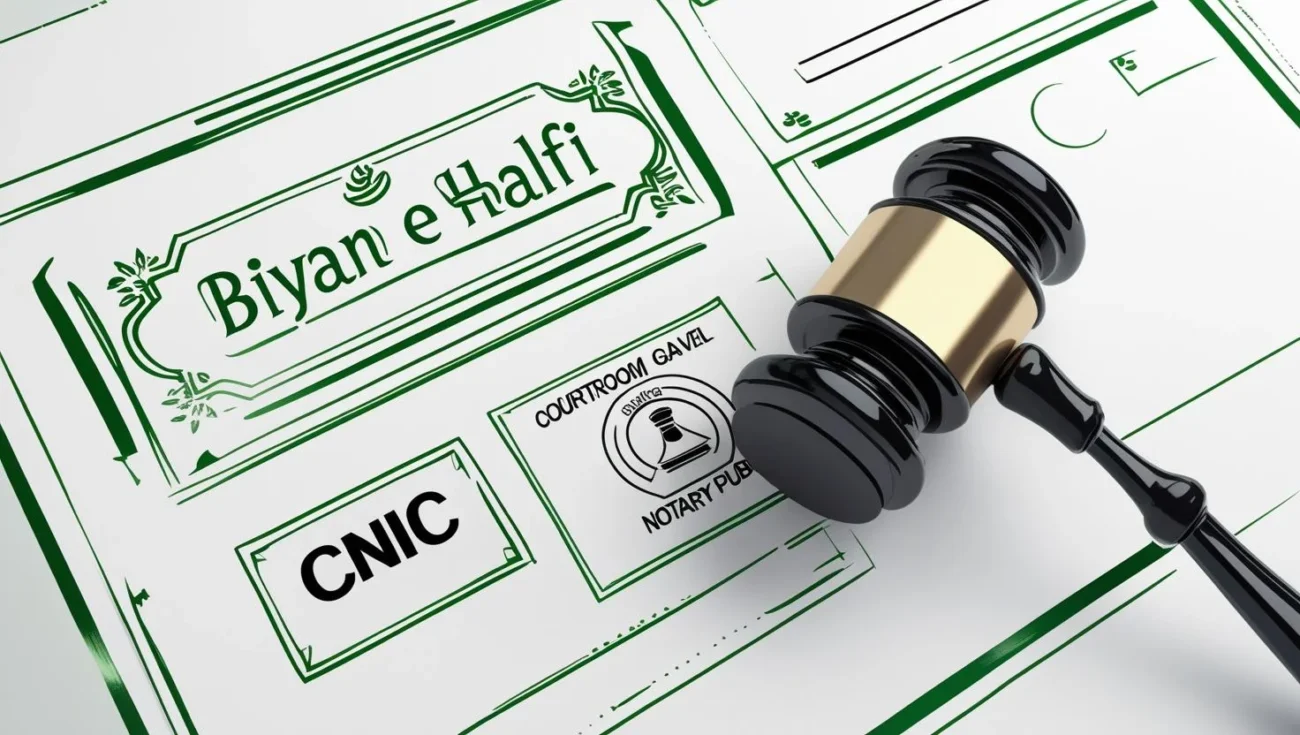
In Pakistan, the legal system recognizes different documents for achieving fairness, order, and clarity in personal, administrative, and legal functions. Among them, biyan e halfi holds special significance. It is a bayan halfi is a obras legal document and a sworn declaration, and a biyan-e-halfi is used for official matters including court cases, as a seal of approval for one’s declaration. Be it for a claim for succession, financial dealings, or personal commitments, a biyan e halfi is crucial in Pakistan’s legal system. What is Biyan e Halfi? Biyan e halfi is known widely as an affidavit. It is a legal document in which an individual swears to the truth of a specific fact or phenomena, It is compiled into a signed document by the swearing individual before an Oath Commissioner or a Notary Public, making the Bayan-e-Halfi a relevant legal instrument in Pakistan. An Oath Commissioner or notary bears no liability for the content of the affidavit; the risks and responsibility lie solely with the signer. Any claiming false a bian e halfi can lead to fines, imprisonment, or other legal consequences in Pakistan. Basically, a bayan e halfi serves as a form of documentation which is important for legal and administrative tasks. It is used when a certain situation requires verification or a formal confirmation of a claim without tangible proof. Legal Importance of Biyan e Halfi in Pakistan Like most countries, Pakistan has a defined legal judiciary system which operates on certain agreements like biyan e halfi. This method ensures that stated agreements are accepted and additional documents such as bayan halfi can greatly improve the validity of the claim. Many people in Pakistan also use bian e halfi documents in civil and inheritance disputes as well as in financial disputes and transactions. Bayan halfi documents hold such a strong importance value because they can be used in government documents as well. Many aim to apply for educational or political importance and identities which also require legal verification, the biyan e halfi makes the verification process easier. This system has been put in place to minimize fraud and strengthen the reliability of document. Preparation and Format of Biyan e Halfi In Pakistan, the preparation of bayan e halfi documents follows a prescribed order. It starts with the declarant’s full name, father’s or mother’s name, CNIC number, and their address. The bian halfi form contains a clean logical sequence free of ambiguity. The last part contains the declarant’s statement affirming his or her declaration is correct to the best of his or her knowledge. As with any legal document, bayan halfi has to be notarized. To ensure its legal enforceability, the Biyan-e-Halfi must be duly signed by an Oath Commissioner or a Notary Public. Stamping and attestation are critical to its acceptance in judicial and government offices. The document must be notarized in order to be legally accepted. The document must also contain notarized statements, or else it is presumed to carry no legal weight. Types of Biyan e Halfi Commonly Used in Pakistan In Pakistan, bian halfi are used in different ways based on the situation. The affidavit of ownership is one of the most common, where a person claims to own a property or an asset. Another common type is the affidavit of identity used for verifying one’s identity in different institutions and offices. There are also affidavits regarding inheritance, property and business transactions, admission in educational institutions, and even an application for a political office. A good example is the application for a domicile certificate where a biyan e halfi for a domicile is needed declaring the person’s permanent residence in a certain district. Another example is the elections where candidates are required to submit nomination papers that are accompanied by affidavits of their assets and liabilities, and a criminal history, if any. These examples demonstrate the way Pakistan relies on the bayan halfi for their day to day administration and legal activities. Attestation and Verification of Biyan e Halfi Legal attestation is required for bian halfi. Usually an oath commissioner or notary public handles this. These persons are permitted by Pakistani legislation to take oaths and certify affidavits. There are some instances, for one, overseas Pakistanis, where a bayan halfi also needs to be attested by a Pakistani consulate or embassy for it to be accepted within the country. Verification is another important part. In some sensitive cases, the courts or other bodies may check the biyan e halfi for claims verification. These claims, if proven untrue, can lead to legal punishments under the Pakistan Penal Code. Such stringent measures highlight the affidavit filing process. Role of Biyan e Halfi in Civil and Family Matters A Biyan-e-Halfi often forms the cornerstone of a party’s position in civil cases, particularly in matters concerning land and property. Parties present affidavits confirming ownership or possession of the land and the courts examine these affidavits together with other evidence to determine the most equitable decision. In family matters, bayan halfi is just as important. During inheritance disputes, it is common for heirs to issue an affidavit stating their relationship to the deceased. In family disputes regarding children, marriage, or divorce, the involved parties may rely on biyan halfi to substantiate their contentions. By conveying information in a sworn format, these affidavits significantly facilitate the resolution of legal matters. Use of Biyan-e-Halfi in Administrative Procedures Not just in courts, but administrative bodies in Pakistan require bayan e halfi for numerous reasons as well. In higher education, certain colleges and universities may require their students to submit affidavits declaring to follow the policies of the institution. Such affidavits also apply to banks in relation to loans and guarantees or resolving disputes. Election offices also rely on bayan halfi to substantiate information where candidates submit their nomination papers. This ensures that candidates do not conceal the facts of their biodata, assets, and liabilities. The Election Commission of Pakistan considers the submission of false affidavits as a declaration of an offence, leading to disqualification from contesting. Issues Related to the Biyan e Halfi System Pakistan’s bian e halfi system comes with a set of problems. One of the key problems is the misuse

fard bay online
Land Record Punjab

Fard Bay Online Process Validity Period and Fee in Punjab

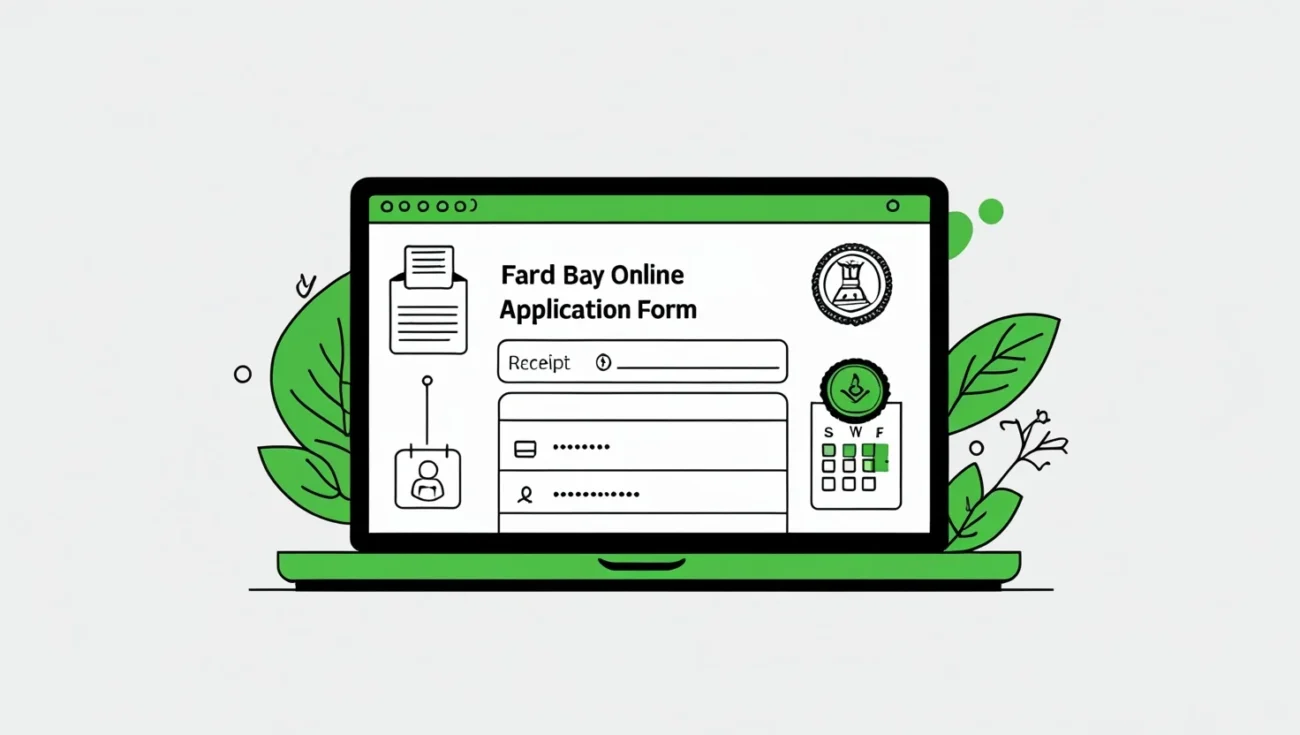
In Pakistan, fard bay is of utmost importance for landowners and for buyers and sellers, as well as for those who for any legal, commercial or administrative reason require proof of land ownership. This document is important as it is issued by land record authorities and serves as proof of ownership. Whether one requires it for a transaction or is preparing for a court case, he needs to have full knowledge of the procedure, rules, and conditions pertaining to fard bay online. From a legal standpoint, this document holds necessity across the entire nation. What is Fard Bay? Fard bay in Pakistan is the term used for the issued document related to land ownership. land record as fard bay. This record contains critical information like the oficial estate of the land, its geographical markings and the legal proprietor, verification of claim is important in cases such as property transactions business loans, daily and court battles regarding the land. A claim without the document of fard bay is virtually of no value in legal rectifications sought through the government channels. Legal Importance of Fard Bay in Pakistan The significance of fard bay stems from its legal aspect. It prevents fraudulent transactions while serving as a legal deed of ownership. In Pakistan, fraud related to properties is rampant and stems from the use of forged or outdated documents. To mitigate the rampant fraud, the government has issued a regulation that a fard bay must be submitted afresh and valid for land sales, mortgages, or deed registrations. This serves the purpose of maintaining legal order, protecting the interests of the plaintiffs and defendants, and providing a documented transparent deal of land transactions. Fard Bay Online Services in Pakistan The Punjab Land Records Authorities and their counterparts in other provinces are steps that Pakistan has taken in the past decade to establish a system for land records. This marks a huge step towards ridding the country of out-dated paper systems. As a result, fard bay online can be obtained conveniently and readily. Landowners no longer need to physically attend the local revenue office. Instead, by entering their CNIC and property details on the official portals, they can access their land records. The fard bay online process usually involves going to the specific provincial portal, providing the necessary details, and either downloading the document or picking it up from the nearest facilitation center. This system minimizes delays, reduces the chances of corruption, and enhances the efficiency of accessing and managing property records. For instance, the PLRA’s Land Record Management Information System in Punjab has greatly improved the fard bay online service, enabling access for both urban and rural residents. The Procedure to Obtain Fard Bay In Pakistan, the process for obtaining fard bay differs from region to region, although most are quite similar. In the past, the local Patwari or Tehsil office was the first stop for candidates, who then needed to submit a formal application, show an ID, and wait for the document fabrication to complete. With fard bay online systems in place these days, a lot of these steps can be started online. An Important Factor of Fard Bay Validity Period An important point to bear in mind is the fard bay validity period. Generally, a fard bay is valid for a period of 15 to 30 days from the day it is issued. This limited fard bay validity period helps to ensure that land transactions are based on current biographical information, relative to the ownership of land, in order to reduce the likelihood of disputes or fraudulent claims against the land. As an example, while selling a piece of land, it is a common practice for the buyer’s lawyer or the registrar to insist on a Fard-e-Beh that is not older than 14 days. This practice exists because ownership information is subject to rapid changes resulting from sales, inheritance transfers, deeds of gift, or court decision transfers, and using stale information documents could lead to unnecessary complications. Fard Bay Fee in Punjab In Punjab, the processes involved in acquiring a fard bay shape the cost incurred. For most citizens, the fard bay fee in Punjab is affordable. Presently, the cost of obtaining a fard bay in Punjab’s Land Record Centers is predominantly within the minimum range of PKR 1500 to PKR 2000. This is a fee range for both personal and court requests. Transaction requests for a sale or mortgage also fall in the same range. Citizens acquiring Fard-e-Beh through online services might also have the option to pay fard bay fee in Punjab using bank and mobile credit account transfers. The streamlining of payment systems eliminates the need to physically show up at revenue offices, which is a visit that most citizens would prefer to avoid. Common Issues in Obtaining Fard Bay The processes involved in Fard-e-Beh acquisition have certainly been enhanced over time, but issues remain for citizens in certain parts of the country. Accessing fard bay online is a challenge for people living in rural areas because of the lack of internet access. Additionally, outdated record systems that have not been fully automated yet can pose retrieval issues because they require manual searches in archive cabinets. Another problem is the limited validity period of the Fard-e-Beh, which, at times, necessitates applicants to submit additional applications for a property transaction plagued by delays. Moreover, disputes concerning the spatial measurements of the land or dated entries of landowner records can lead to cancellation, necessitating the alteration of the official land record prior to issuing a new Fard for Sale. Government Attempts to Enhance the Fard Bay System In response to these issues, provincial governments in Pakistan have put resources towards the digitization of land records, creating systems for monitoring the integrity of the processes, and establishing citizen facilitation centers. Now, people in Punjab, Sindh, and Khyber Pakhtunkhwa have access to numerous service centers from which they can order Fard-e-Beh, and they also have fard bay online services. Revision of revenue staff training, increased biometric checks, and connections with NADRA systems have made the issuance of fard bay documents more secure and efficient. Conclusion As we have always said

FBR Income Tax Return
Land Record Punjab

FBR Income Tax Return Services and Tax Compliance in Pakistan

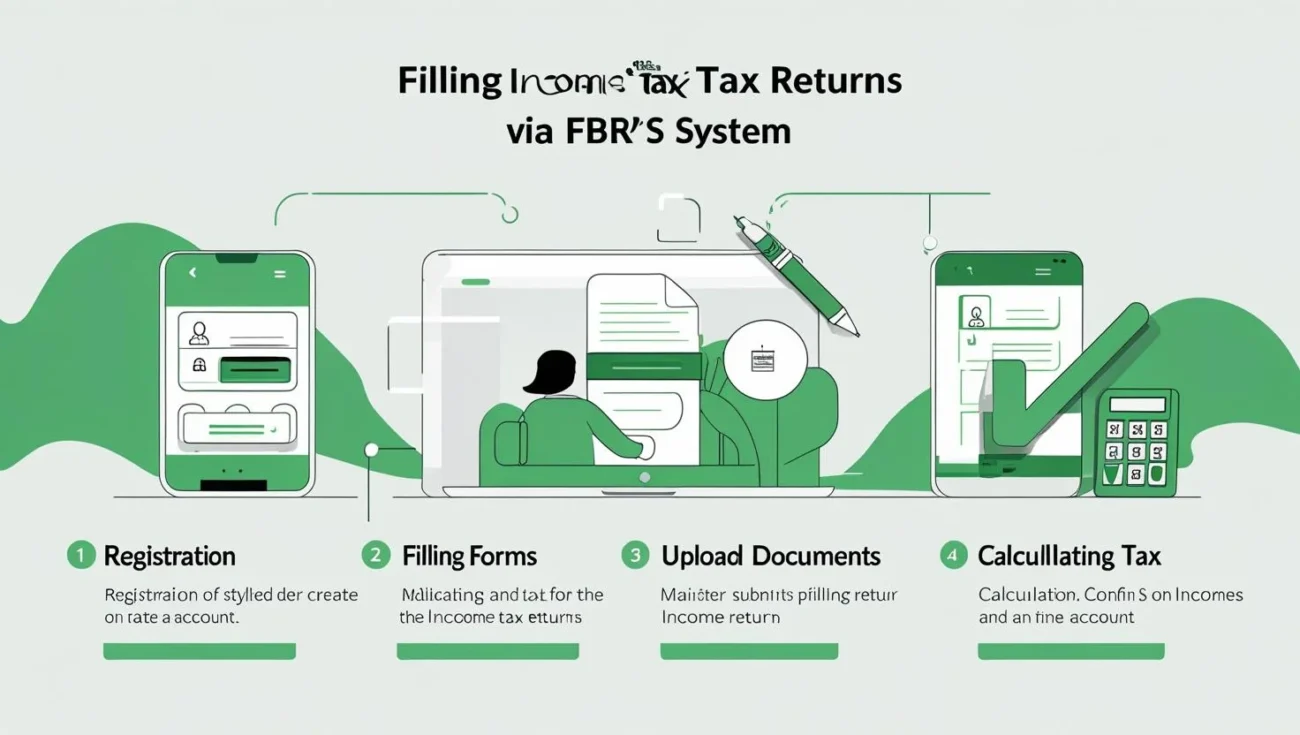
FBR Income Tax Return is something that becomes not only legal for businesses and people able to provide such documents, but also represents an opportunity to become a better citizen of the country in Pakistan. The Federal Board of Revenue (FBR) is the governmental authority that handles the issue of taxation in the country including collection of income tax and the verification of tax records in the country. Are you a salaried, a business owner or a property investor? Filing your FBR Income Tax Return not only makes the law when it comes to your taxes, and makes you eligible to access various financial perks that you get to enjoy. Importance of Filing FBR Income Tax Return The benefits are enormous to filing your FBR Income Tax Return as opposed to not filing the return and being penalized. Actively paying taxpayers have low rates of withholding tax imposed on a number of transactions including purchase of properties, vehicle registration or bank transactions. It also increases credibility when it is time to apply visas, tenders or get loans. In addition, the status of FBR tax return status is an indication of your compliance record, failure of which is likely to keep you among the past taxpayers which is not allowed to enjoy these benefits. Becoming a Tax Filer in Pakistan A tax filer in Pakistan is defined as a person or entity whose name appears in the Active Taxpayers List (ATL) maintained by the Federal Board of Revenue (FBR) You are required to file your FBR Income Tax Return within the due date in order to be put down as a “filer”. The inability to do so not only contributes to the increased level of taxes deduction but also limits the access to some of the legal and financial benefits. It may be tricky to a first-time filer, and that is why, to some individuals, hiring the services of professional tax preparers is a good idea as they guarantee perfection and conformity. Land Record Punjab and Professional Tax Return Services Land Record Punjab focuses on giving you professional, dependable, and speedy tax related services to assist you to file your FBR Income Tax Return with ease. We offer our clients a step-by-step procedure that will take them through appropriate and required documentation to the completion process. Our staff makes sure that not only are you filing your return properly, but that you are an active filer without the fear of those avoidable delays. Accessing our services is one way of saving time, legal mistakes, as well as complete compliance with FBR requirements. Checking FBR Tax Return Status Online Once your FBR Income Tax Return has been submitted, then you should check your FBR tax return status. This will be possible via the internet on the official FBR portal. It reflects on the system on whether your returns have been received, successfully processed or not. You should keep up-to-date with your tax return status so you don’t get any unpleasant surprises last minute and to make sure your name remains secure in the ATL. In our organization, Land Record Punjab, we give full information on how to check and diagnose your status, so there is no need to worry to our customers. Procedure for Filing FBR Income Tax Return There are multiple steps in preparation of FBR Income Tax Return. The first thing is to log in to your FBR account by entering your CNIC. Then the preparation of the return is made by asserting your income, expenses and assets and liabilities of the tax year. This is submitted online into the online IRIS of the FBR. Once the process of submission is complete your FBR tax return status is updated with respect to the process of returning. This might sound easy but most people find it hard to decipher the actual format and requirement, hence the value of such services as Land Record Punjab. Advantages of Active Tax Filer Status The Pakistani tax system allows an active taxpayer to get the reduced tax rates in terms of property transactions, bank withdrawal money, and vehicle registration. As an illustration, at the point of acquisition of real estate or the sale of a car, the non-filers end up paying very high taxes. Also, to receive government tenders or business contracts, or even some foreign travelling, one needs to demonstrate the filer status. Our formal help at Land Record Punjab means that as well as filing your FBR Income Tax Return to your deadline, you will keep your status as an active filer throughout the year. Challenges in Filing FBR Income Tax Return Among the factors that hinder most people in filling the FBR Income Tax Return effectively is the technical expertise that should be used to declare income dispensed by different sources. Most individuals are also not knowledgeable on the deductions, exemptions or credits that they can claim. Failure to file accurately may subject one to notices, penalties or even auditing. Moreover, sometimes taxpayers are exposed to errors with the online system or uploading documents or finding a password. These are some of the difficulties that our clients can be relieved of at Land Record Punjab through professional help and the latest tax know-how. Why Choose Land Record Punjab for FBR Filing Services Opting Land Record Punjab allows you to cooperate with the team of professionals to make the FBR Income Tax Return procedure easier both to individuals and companies. We provide customised consulting service with a fast turnaround time and strict confidentiality of your financial information. With our experience in tax filing and legal documentation, we keep your filings correct, legal, and in line with your long-term financial objectives. Our services are customised to your demands whether you are a salaried employee, you are in business, or an investor who is interested in properties. Final Thoughts on FBR Income Tax Return in Pakistan However, in Pakistan, declaring FBR Income Tax Return is not simply a task that you need to complete, it is the process of protecting your financial status, and enjoying government incentives. Whether it is inquiry on the FBR

online domicile certificate
Land Record Punjab

How to Obtain an Online Domicile Certificate in Pakistan

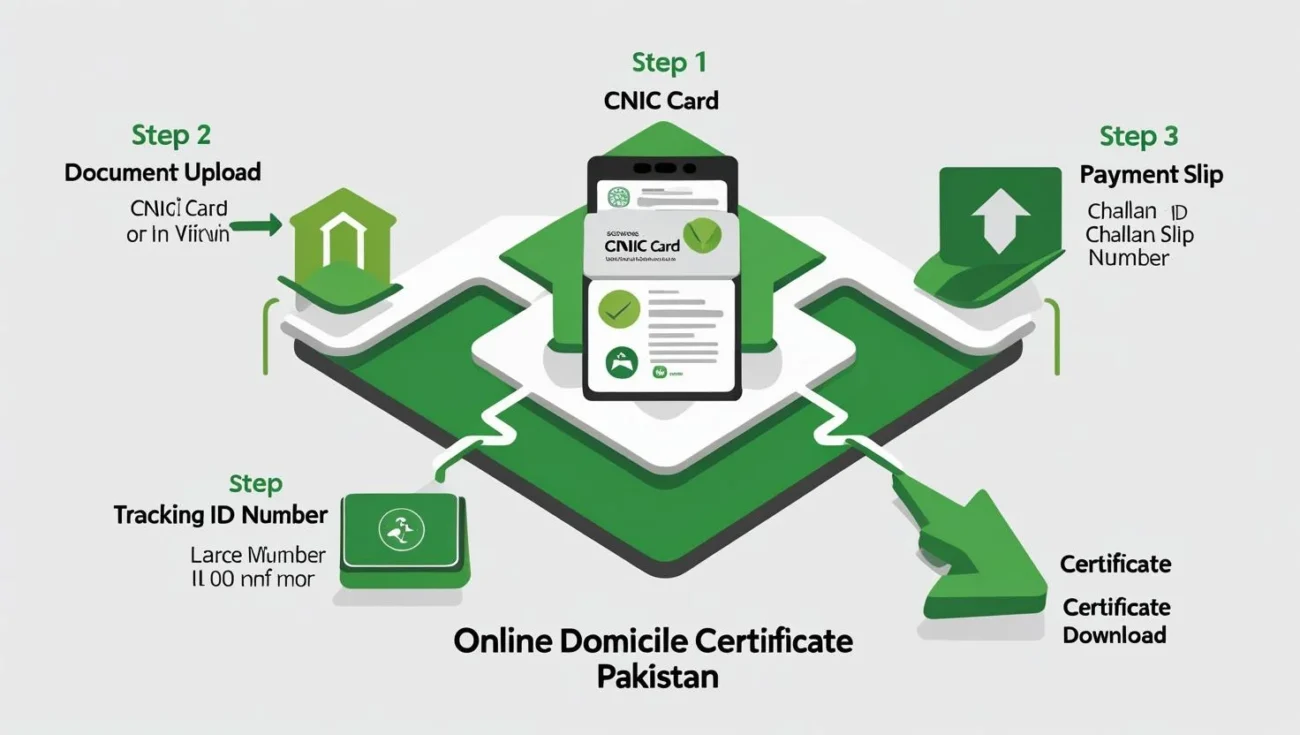
Pakistan has shifted in recent years towards digitization in the provision of services to the residents in order to make official procedures quicker, transparent, and within reach of citizens. Among the emerging situations, the availability of the online domicile certificate via digital platforms operated by the government is remarkable. Among essential legal documents, the domicile certificate holds significance as proof of an individual’s permanent residence within a defined administrative region, whether a district or a province.  There are numerous usages of the document among which the access to education institutions, seeking jobs in the government sector and receiving provincial quotas are the most evident. Online domicile certificate system streamlines efficiency in the application procedure by completing filling the necessary forms to verify the candidates using a computer. Importance of Online Domicile Certificate Domicile certificates are in most cases required in cases of official requests in Pakistan, however, in the past, this process was performed manually and subsequently required a person to physically travel to government offices a number of times. The launching of the online domicile certificate facility has made the process much easier since applications are now submitted electronically and updates can be monitored without the burden of physical follow ups. Such a transition to the digital realm guarantees efficiency and helps reduce delays, not to mention that records are simpler to keep and authenticate. Transparency helps the citizens as they can monitor their application progress in real time using official portals. Domicile Management System Anchoring the online domicile certificate process is the Domicile Management System, a centralized software infrastructure overseen by district authorities. This system deals with the entire lifecycle of a domicile certificate—receiving an application, verifying documents, and issuing the final certificate. The domicile management system provides the assurance that all the records are accessed in a digital form lessening a possibility that they can be lost or altered. NADRA is also amalgamated into the national level databases namely the national databases and is used to verify identity. Through this system, the authorities can easily find duplicate applications, block fraudulent claims of domicile and have a transparent record in the public. Online Domicile Verification One of the key features of the system, after the issuance of the certificate, is domicile verification. The process also enables employers, educational facilities and government facilities to verify authenticity of domicile certificate over the internet. Rather than photocopies or physical bypass, the interested party may feed certificate number into the portal and immediately get to know whether it corresponds to recorded data. The domicile verification facility is an effective feature, which greatly eliminates the chances of using forged documents during official procedures, thus, only authentic certificates are accepted. Sindh Domicile Verification Online The provincial government of Sindh has created its own portal of Sindh domicile verification online. With the aid of this portal, citizens and others in Sindh may verify the dividend of domicile certificates made in this province. Large cities such as Karachi and Hyderabad are particularly in need of this service since fake domiciles have long been used to improperly gain access to jobs quotas or educational admissions. The Sindh domicile verification online system enables government departments to promptly verify the authenticity of issued certificates, promoting transparency, fairness, and merit-based procedures. Domicile Tracking Facility The other notable aspect of the online domicile certificate process is the domicile tracking opportunity. After filling in an application, the applicant may enter the portal and follow the progress through different steps, “under review,” or “verification in process,” etc. This eliminates the element of uncertainty in the process since the applicants do not have to visit the issuing authority too frequently asking about their application. Accountability of the officials is also guaranteed since delays and pending cases are easily tracked through domicile tracking facility. Urgent Domicile Fee in Pakistan It is seen that various district administrations provide urgent domicile fee services to citizens who require their domicile certificate as an emergency measure. On paying this extra cost, the application will be done on priority basis, it may take one or two working days as opposed to the normal taking up to a week. The expedited home charge differs depending on the district it is applied in, but it is considered rather cheap to most applicants who need fast processing in their employment demands, educational, or government tenders. The actual urgent domicile fee and procedure should be checked by the applicant in his or her Deputy Commissioner office. Application Process for Online Domicile Certificate Online domicile certificate applicants have to visit the official site of either the district administration or provincial e-service globule. It normally starts by making an account verification with a valid CNIC number. Applicants subsequently complete an online application form wherein he or she will enter his or her personal information like full name, father name, permanent address and the cause of the application. Documents such as CNIC, educational certificates, utility bills and in selected cases affidavit of residence have to be scanned and uploaded. The domicile management system would have then processed the application, cross-checked the details with the NADRA records and assigned verification. When authenticated, then the applicant is informed via SMS or email and later the certificate can be downloaded or collected physical. Requirement in Laws to Issue Domicile Pakistan is ruled by rules and regulations of provinces when it comes to issuing a domicile certificate. In most cases, one must have stayed in the district a given time, which may be between three to five years depending on the provincial policies. There must be reliability of constant residence and family background. Applicants are also required to give a statement whether or not they have received domicile certificate in any other district. Deliberate falsehoods or presentation of forged documents in the process of the domicile verification may also result in cancelation of the certificate and face prosecution. The Advantages of the Online System Online domicile certificate introduction and domicile management system also present many advantages to both the applicants and the authorities. To the people, it is simpler, clearer and can be accessed at any point provided one has access to internet. In case of government offices, it ensures lesser work places, lesser mistakes due to human

Affidavit in Pakistan
Land Record Punjab

Affidavit in Pakistan Legal Importance and Requirements

In Pakistan an affidavit in Pakistan, is a written and sworn statement of fact authenticated by the oath or affirmation of that person who makes it, the deponent. This is generally an official document that is employed in many issues where the population is obliged to declare the truth in front of a court of law, the government body, or any official body. Affidavits are theoretically legally binding in Pakistan and thus they are admissible as evidence in both civil and administrative cases. Affidavit aims at recording a statement in a formal manner so that it can be used actually in the case of legal matters or administrative purposes and must have accountability and authenticity. Legal Importance of Affidavit in Pakistan The use of affidavits in Pakistan is deeply embedded in the nation’s legal processes. It is known under the Qanun-e-Shahadat Order, 1984 which applies the rules of evidence in the country. Courts and the government offices demand the affidavits to prove facts in issues like property transfer, family altercations, business transactions, immigration and education application. An affidavit obliges the deponent to assume the full legal responsibility to this statement being true. The Pakistan Penal Code states that any incorrect statement in an affidavit would lead to a legal action in form of a fine or jail term. Types of Affidavits that are Common in Pakistan In Pakistan, there are various choices of affidavits that happen to serve various intents. They are the affidavit of support, affidavit for domicile, affidavit for name change, affidavit for property matters, as well as affidavit for marriage; which are the most common. Both types are written based on the needs of a particular case and have to be sworn in by a qualified official, most likely an oath commissioner, notary clerk or magistrate. Affidavit of Support In Pakistan, the affidavit of support is usually needed in immigration and sponsorship cases especially where one is financially sponsoring a visa or residency application by another. This kind of affidavit proves that the sponsor possesses enough finance to accommodate the applicant during their stay either abroad or in Pakistan. An example is where students who are seeking to get admission in foreign universities must submit an affidavit of support by parents or guardians to demonstrate evidence of funding. On the same note, it might be necessary where there is need to reunify families, joint business ventures or perhaps to sponsor employment. Such additional information required in this affidavit of support should include the details of sponsors income, their occupation and willingness to cater the living expenses of the applicant. Affidavit for Domicile Other legal documents in Pakistan include an affidavit for domicile. Most of the time, it is necessary when one is seeking domicile certification with the local representatives. This affidavit for domicile grants the permanent stay of the applicant in a certain district or province in Pakistan. It is the most widely applied when it comes to educational quotas, application in the government jobs, or updating of statistical records. The address, the length of stay in a given place and confirmation that the applicant has never been awarded another domicile in a different destination must be stated in the affidavit for domicile. These supporting documents are normally attached along with the affidavit for domicile including the utility bills, national identity card, and proof of residence. Process of Making an Affidavit in Pakistan In order to prepare an affidavit in Pakistan, the initial requirement is to compose the content based on the case needs. It must be written in a specific, objective, and non-exaggerated wording. The affidavit should be printed on a non-judicial stamp paper of the proper value once prepared which is decided depending on the nature of the declaration. Once printed out, the deponent is then required to sign in the presence of the authority where an oath commissioner is required. The officer next checks the identity of the deponent, takes the oath and signs the document and seals it with an official seal and signature. Affidavit Fee in Pakistan The cost of affidavit in Pakistan will be a variation based on stamp duty on the stamp hyper paper and the charges that are levied by the authorized authority. The charges however would be minimal for the regular affidavits when taking into consideration the stamp paper which is cost ranging between Rs. 50 to Rs. 500 along with the small fee in the affidavit attesting. Nonetheless, some are specialized affidavits like the affidavit of support used during immigration process which might need very high valued stamp papers or an extra notarization hence costing more money. Before proceeding, it is good to check that the affidavit fee at the local court or the office of the oath commissioner states. Uses of Affidavits in Pakistan An affidavit in Pakistan is used on many legal and administrative occasions. It may be employed to claim the ownership right, to resolve disputes, or replacement of rights in property issues. Affidavits are utilized in family law to claim child custody, inheritance issues or even divorce. In education, universities can insist on affidavits during the admissions of students, scholarships, or the hostels. Affidavits are also needed by government authorities in order to rectify names in official records, prove marital status or even in obtaining updates in national identity. Writing and Correctness An affidavit in Pakistan demands absolute accuracy concise wording, complete honesty, and a single direct answer for every point. Any misleading information that has been given in an affidavit may have severe legal consequences according to Section 191 and 193 of the Pakistan penal code. These provisions impose penalties for giving false evidence and for fabricating evidence. Therefore, it is advisable to draft or review an affidavit in the presence of a legal expert to ensure compliance with legal requirements. Attestation Requirements An affidavit has to be attested to be legally valid in Pakistan. This happens either through an oath commissioner, notary public or magister, depending on the kind of affidavit being signed. In some instances, an affidavit must be attested not only by the Ministry of Foreign Affairs in Pakistan but also by the embassy of the destination country

Cheapest Agricultural Land in Punjab Pakistan
Land Record Punjab

Cheapest Agricultural Land in Punjab Pakistan

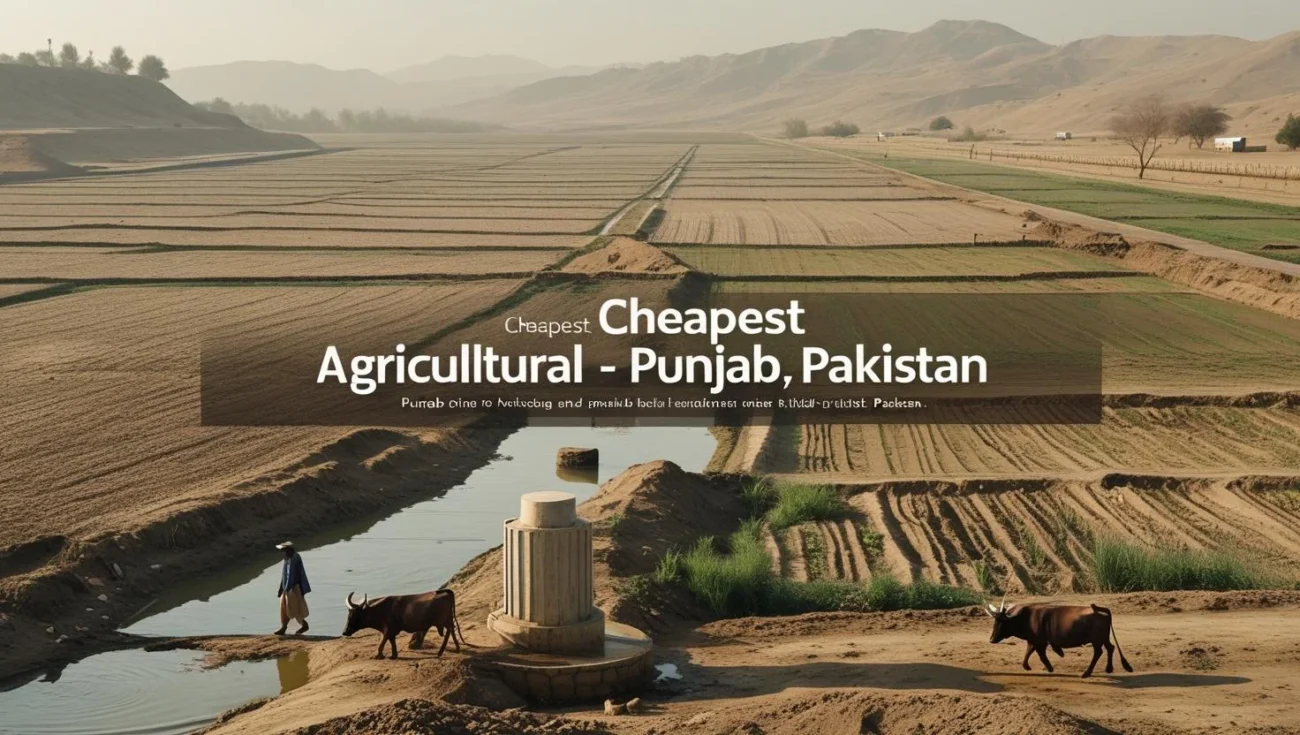
For new farmers, small-scale entrepreneurs, or those wishing to acquire farmland, finding the cheapest agricultural land in Punjab Pakistan has gained the utmost importance. While the farmland in Punjab Pakistan is still being pushed out of reach due to urbanization and the ever-increasing prices of real estate, there are still certain parts of Punjab, that provide agricultural land at a much lower price. Identifying and evaluating such regions of Punjab along with their future prospective value is crucial for anyone who is looking for investment or desire to cultivate over the long term.   Where is the cheapest land found?   The agricultural land that is the cheapest is usually found in the less developed regions of Punjab Pakistan that are canal-irrigated. These areas tend to have moderate soil fertility along with little or no infrastructure. The remote areas of Khanewal, and a portion of southern Punjab that is in proximity to the Thal Desert like the Chaubara Tehsil have agricultural land at much lower prices. The Attock districts have land in Pari and Fateh Jang where, at nearly 150,000 to 200,000 PKR per kanal, it is much cheaper compared to the rest of Pakistan. Khanewal is another district where the much of the available land is cheaper compared to other districts, with several listings at 1.3 to 2.8 million PKR for 100 kanals, equating to 13,000-28,000 PKR per kanal. Traits of Inexpensive Agricultural Land The lower priced areas mostly have a few traits in common. These locations tend to be further away from metropolitan areas like cities or markets. They don’t have proper irrigation systems or easy access to groundwater. In Southern Punjab areas like Chaubara adjacent to Bhakkar or Thal desert, land is priced at 5 to 6 million PKR for 24 acres (~30,000 per kanal or 130,000 PKR per acre). Not to forget, the land would be useless unless canals are constructed or reclamation is done. These regions have the most inexpensive agriculturable land in the Punjab province in Pakistan with trade-offs being lower access and lower productivity. Attock: One of the Farmers’ Most Inexpensive Choice Wetted areas have an agricultural average price to buy land, and to the Attock region, this price is relatively low. Some listings have and agricultural land for sale close to Fateh suggesting a price of 150,000 to 350,000 PKR per kanal. This price is partially dependent on the land’s water supply, and proximity to CPEC routes. Land priced at PKR 150,000 per kanal is considered very cheap for farmland in the far regions of Punjab. This partially explains why the land is highly valued. It is utilized for canal irrigated crops like wheat, peanuts, olives and crops such lower valued agricultural lands. Khanewal And Southern Parts: Ultra-Low Prices   Like in Khanewal or parts of Multan division, one can find very low prices advertised such as PKR 1.3 million for 100 kanals (thus ~PKR 13,000 per kanal) or PKR 2 million for larger 100 kanal holdings (PKR 20,000 per kanal). Many of these low priced plots are, of course, unenviated kacha land or located near kacha roads. These land plots do, however, stand as the cheapest agricultural land in Punjab Pakistan. Such plots are particularly appealing for long term investments or low-input farming.   Thal Desert And Reclamation Projects   In areas long considered barren such as Chaubara Tehsil of Layyah or parts of Bhakkar district (Thal Desert) land is very cheap, sometimes selling for PKR 200,000 to PKR 300,000 per acre (~PKR 50,000 to 75,000 per kanal). These areas are among the cheapest agricultural land in Punjab Pakistan. The Greater Thal Canal is expected to increase the wateraccess in these areas improving the value of these lands, though they will initially be non-fertile or semi-desert. Balancing Risk with Reward While some regions in Pakistan, like Attock and Khanewal, sit far from vital markets and are devoid of fertile soil and reliable water sources, they do offer cheaper agricultural land. This land, however, comes with the burden of higher risks. On the other hand, Southern Punjab and the Thal regions are rich in soil and offer water sources, but these regions do require greater investment in land development and irrigation. Buyers have the option of weighing cheaper upfront costs against ongoing maintenance expenses. Future Profit and Investment Strategy Used strategically, these low-cost farmlands have the potential to increase in value. Leasing these to local farmers, growing low-input crops such as pulses or oilseeds, or reselling as infrastructure develops are all ways through which value can be added. Additionally, the average ROI of 10% to 15% per annum on farms in the middle regions of Punjab fuels investment. With the right strategies, even those starting with backed agricultural land in Punjab Pakistan can achieve modest returns in the long-run. Legal and Regulatory Considerations Acquiring cheapest agricultural land in Punjab Pakistan demands careful consideration, especially if negotiating from a lower price point.To stay out of legal trouble, make sure the land is clear of claims and properly recorded in the Patwar and Tenant registers. Also, check that canal or groundwater is available for irrigation. In some regions of Punjab Pakistan, especially where land is offered at reduced prices, titles may be passed down through generations. Moreover, mapping precision requires on-the-ground help. Impact of Urbanization on Prices Urbanization is affecting agricultural land both in terms of scarcity and value within Punjab. Around cities like Lahore, Faisalabad, and Gujranwala, farmland is getting really expensive because of all the new housing societies and growing cities. But in the more remote parts of Punjab, land is still cheap since there hasn’t been much development there. The disparity is increasing between peri-urban expensive land and rural plots at much lower rates.   Advice for Prospective Buyers So, for buyers looking for the cheapest agricultural land in Punjab Pakistan, looking at regions such as Fateh Jang area of Attock, Khanewal’s kacha-land listings, or even the borders of Thal Desert may be a good starting point. Do a thorough assessment of water

Future of Girdawari in Pakistan
Land Record Punjab

The Future of Girdawari in Pakistan with Jamabandi Integration and Web Girdawari Portal Access

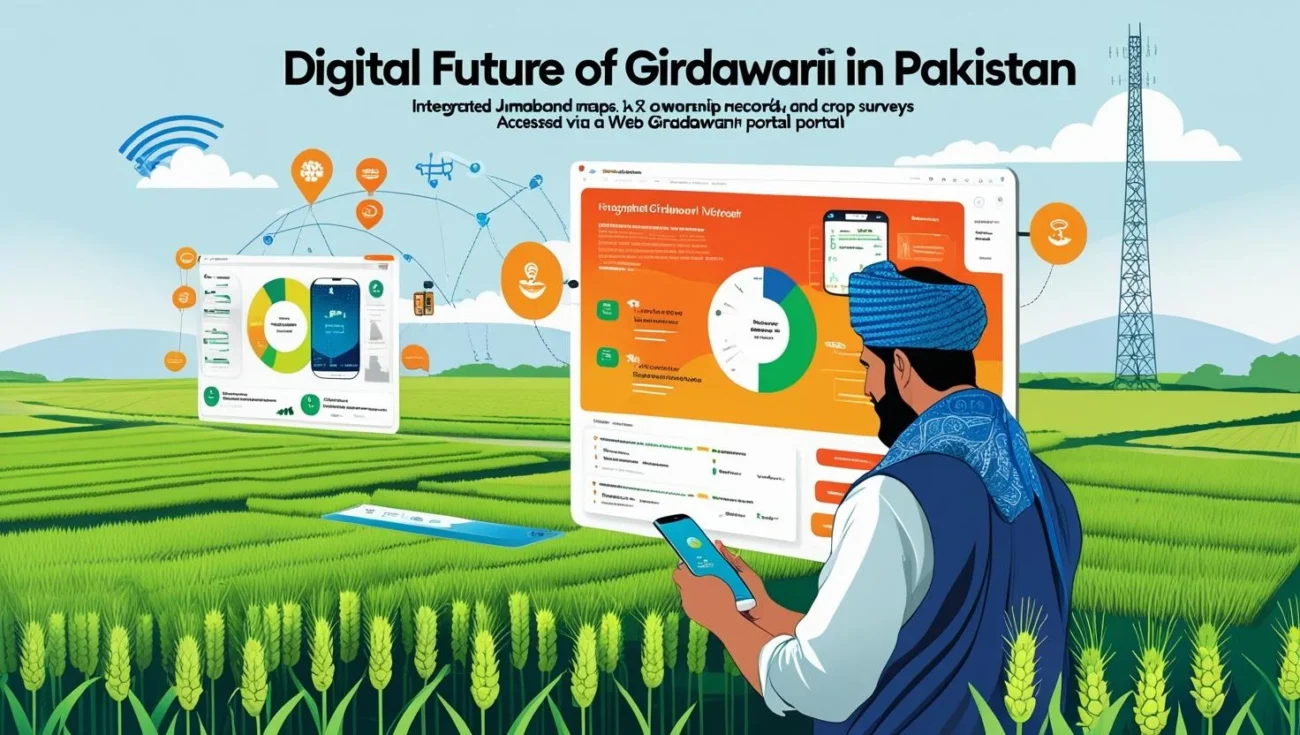
Girdawari is a historic and statutory process in Pakistan which is imperative part of the Land Revenue System in which inspection of land and crop take place. Local revenue officials work traditionally as patwaris and tehsildars, conduct girdawari twice a year to document the details of cultivated land, tube can installation, type of cultivatet crop list, land area and status reviewing in rural holding. Web Girdawari Portal helps to keep accurate land and crop records, provides information for tax assessments, fights in the interests of farmers and also avoids conflicts over land grabbing. Traditional Process of Girdawari Traditional girdawari was conducted through visual observation, and roznamchas were maintained by the revenue department in which observations were noted. Inspectors would travel to every village during the Rabi and the Kharif season where all of this data was written away in registers, often leading to discrepancies, delays and leakages. The manual girdawari system was also liable to be tampered with, and its delayed operation led to lags in land revenue administration and contestations over possession & cropping statistics. The Evolution: Digital Girdawari Digital girdawari — A Big Reform by the Punjab Government and its Board of Revenue in this Regard Today, the Punjab government along with its Board of Revenue had undergone a major reform by introducing digital girdawari. Starting around 2020 or 2021, the project aimed to build mobile and web apps that used GPS tools to gather data from the field. The system links the crop and land inspections with the geospatial coordinates, that eradicates false entries and maintains accurate real time update from ground. On the digital girdawari front, patwaris log in and enter data at a location with an authenticated login, and can only fill data about that plot if their GPS shows them on the same. The implementation substantially expanded the integrity validation of Girdawari data and minimized system errors by ensuring that field observations conformed to predefined verification rules. For example, Punjab BOR full digitization of crop inspection registers Rabi & Kharif and achieved 100% in the year 2022 covering all over province and implementations thousands of Dehi Markaz Maal(DMM) for access at rural revenue centres. Punjab Land Girdawari Punjab land girdawari — The term punjab land girdawari refers specifically to the province-wide implementation of Lies in Punjab, Pakistan. Punjab land girdawari performed online by the Board of Revenue Not only urban but also rural land verification is arranged. Dehi Markaz Maal Centres set up in the villages, pushing for accurate girdawari data in PunjabThe government can approach farmers or landowners directly and get their names inserted correctly in the girdawari, that too without visiting field offices far away from their homes. This South Asian model of a provincial rollout has been transformational in terms of land records management in Punjab. Punjab land girdawari has not only lead to improved data management of crops; it has increased transparency and reduced the number of conflicts by ensuring correct records of cultivated parcels, helping strengthen revenue collection efforts. Interplay With Jamabandi Girdawari Jamabandi girdawari —A closely related concept to jamabandi, which helps in connecting the process of crop inspec今on with larger land〜record document. The Jamabandi lays down the particulars of rights pertaining to land i.e Owner, cultivator (meter reading), tenancy rights and shareholder or government Land etc. Jamabandi girdawari demonstrates modifications from the crop and land use information contained within Jamabandi records, which in turn assists in maintaining land document with ground recognition. In the State of Punjab the jamabandi girdawari is integrated which facilitates revenue authorities to tally digital girdawari outputs with the entries in Jamabandi. This ensures that any issues like changing ownership, missed out co-owners or wrong classification of land are quickly detected, and such discrepancies are rectified in Jamabandi records which will be benefit for the farmers as well as legal process. Access Via Web Girdawari Portal A web girdawari portal was launched by the Government as a complement for field based inspection process. This is an online platform to view and download the girdawari reports along with crop inspection results pertaining to land parcels, for landowners, farmers, revenue staff, as well as citizens. This web girdawari portal is interconnected with Jamabandi and other land registration tools to ensure easy validation of data for Correction. The girdawari updates or discrepencies, will lead to automated alerts and SMS notifications by the web girdawari portal at mobile numbers or emaiil addresses registered with Jamabandi records. This handholding with digital girdawari, jamabandi girdawari and web girdawari portal will provide convergence in access to the land records status trapping & stake holders got to understand about the progress of their requirements. Benefits and Impact in Pakistan There are many advantages of bringing girdawari digitalization in Pakistan, especially punjab land girdawari. This helps digitising will also help state land to be taken back by the state and also prevent land grabbing as records can be accessed at village level. Challenges and Continuing Issues Girdawari has taken a leap over the problematic issues, yet certain challenges are stumbling block in its implementation. In constituencies such as Rawalpindi, digitalization has been stalled and deadlines have been missed — until 2023, the eight main deadlines for completion of digital girdawari in all villages were said to be administratively impossible. Areas completely under new technlogy : all of this is fully up to date but incomplete coverage: there are parts where they have not been able to fully update the database,so some areas still rely on old manual records- making them inconsistent in both punjab land girdawari and jamabandi girdawaris. At the same time, a few other user experiences have occasionally complained about problems with accessing the portal or payment systems associated with it in web girdawari portal but those were possibly more concentrated around early rollout phases. Nonetheless, even in Punjab, the majority of landowners do not face any hassle and access their records free of charge through digital forms. However, worries more than re `ente_angbeen = “patwari affect” in the rural parts of the nation nevertheless persist, which could sluggish digitization unless of training course there is ongoing oversight. Future Prospects and Conclusion Paving the way, girdawari in Pakistan

Taxation of Partnership Firm in Pakistan
FBR & Tax Updates

Understanding the Legal Structure and Taxation of Partnership Firm in Pakistan

With regard to taxation of partnership firm in Pakistan, it falls under the purview of the Income Tax Ordinance, 2001, wherein partnership firms are considered as ‘Association of Persons’ (AOPs). Under current tax regulations, these organizations are considered pass-through entities, allowing earnings to bypass corporate taxation. A partnership firm’s tax treatment has implications for both the firm as a whole, and for the individual partners. For business owners and legal and tax professionals, understanding the taxation of partnership firms in Pakistan helps to enhance compliance and minimize tax liabilities.   Legal Structure and Tax Entity Status   A partnership firm in Pakistan operates as an Association of Persons (AOP) and does not enjoy the separate legal identity afforded to companies. A partnership firm’s legal status under the Partnership Act, 1932 enables it to sue or be sued, and also facilitates the acquisition of a National Tax Number (NTN) from the Federal Board of Revenue (FBR). It is mandatory for taxation of partnership firm in Pakistan to file a business tax return, compute its tax liabilities, and pay tax on its income as per the tax brackets prescribed. Tax on income is determined and paid on the firm level. After tax is settled, profits are distributed among partners who report their share on individual returns. Determination of Income and Tax Assessment The taxation of partnership firm in Pakistan starts with the calculation of firm’s income based on sections 59 to 65 of the income tax ordinance. After the income of the firm is computed and assessed, tax is paid based on progressive AOP rates. Under section 69(1), in registered firms, taxation is done in two steps: first, a firm’s taxable income is computed, and tax is paid on it, then, based on the pay out to the partners, each one of them incorporates the profit share in their tax returns. In the case of a non-resident partner, the firm pays tax on their share as if it is in the rates as if the partner was individually taxed. In cases where the firm is unregistered, the Deputy Commissioner may choose to evaluate the tax either at the firm level or at each partner level; this choice is made based on which is expected to take higher tax payment. This form of taxation is unique to partnership firm taxation in Pakistan; it seeks to enhance revenue collection regardless of the registration status of the firm. Tax Rates and Surcharges   The taxation of partnership firm in Pakistan follows the AOP income slabs. The tax year 2025 introduces a progressive tax structure, with a tax-free threshold of PKR 600,000. Earnings between PKR 600,001 and PKR 1,200,000 are taxed at 15%, while higher income brackets see tax rates increase up to a maximum of 45% on income above PKR 5.6 million. A surcharge of 10% on the calculated tax becomes applicable where the taxable income exceeds PKR 10 million. These partnership firm taxation policies are intended to achieve equity in taxation, distributing the tax burden according to income levels, and are applicable to the firm’s income prior to distribution. Impact on Partners and Loss Allocation   In Pakistan, the taxation of partnership firms, the individual profit or loss share of each partner is determined according to the profit-sharing ratio outlined in the partnership deed. Each partner’s allocated profit share is reported in their tax filings. A partner’s share of losses can be offset against other income or be brought forward, as per Sections 34 to 38 of the Ordinance. For registered firms, partners are jointly and severally liable for the tax allocated to their share. This mechanism ensures that the distribution of taxation aligns with the actual profit and loss allocated to each partner. Minimum Tax and Advance Tax Provisions In Pakistan, partnership firms are also governed by minimum tax and advance tax rules. As per Section 113, a firm with considerable turnover is still required to pay a minimum tax of 1.25% of turnover even if taxable income is low or nil. Under Section 147, there is a forecasted income tax obligation for advance tax that is to be paid quarterly, which prevents income underreporting. These provisions are part of the tax policy for partnership firms in Pakistan and are designed to reduce tax avoidance and ensure proper compliance with deadlines for tax payments.   Compliance and Administrative Obligations   Compliance assists in enforcing the tax policy for the partnership firm in Pakistan. A partnership firm is required to register with the FBR, keep proper accounting records, and submit annual tax returns. Every partner bears joint and several liability in respect of the firm’s tax obligations, as prescribed under applicable tax laws. Registered partnership firms are required to obtain sales tax registration, if applicable, and submit returns for tax collected and paid, and quarterly advance tax returns. AOPs in Pakistan have been given a greater ease of compliance through the Tax Assan portal, Taxpayer mobile app, and simplified returns for SMEs. Advantages of Correct Tax Planning   The proper planning and taxation of partnership firm in Pakistan has notable advantages. A registered partnership firm is able to claim deductible business expenses, depreciation, and partner’s remuneration as expenses which diminishes taxable income at the firm level. Accurate reporting of profits enables partners to manage their individual tax exposure. Furthermore, the firm’s registration provides added value as it improves the firm’s reputation, makes it easy to access bank loans, participate in tenders, and provides the firm access to consumer and legal partnership protections.   Concerns and Tax Administration   There is still a gap in the taxation of partnership firm in Pakistan as there are certain gaps that need to be filled. Tax evasion in the informal sector, income underreporting, and low registration of firms are common in these areas. Unregistered partnerships are likely to bear higher withholding taxes for banking, vehicle registration, and certain service expenditures. The FBR’s intelligence and enforcement arms have legal authority to detect non-compliance, and in cases of FBR maladministration, the Federal Tax Ombudsman has

Health Insurance Tax Benefit
FBR & Tax Updates

Advancing Healthcare Through the Health Insurance Tax Benefit in Pakistan

In Pakistan, where the healthcare infrastructure is nascent and relies primarily on out-of-pocket payments, the notion of health insurance tax benefit is viewed as an encouraging development towards socio-economic and healthcare safety. Between the economic burden of healthcare, sparse coverage of insurance, and a significant informal employment sector, there is an urgent need for the government to motivate health insurance and provide tax benefits. Grasping the health insurance tax benefit landscape is vital for policy makers, but also for individuals and businesses who aim to mitigate financial obligation while enabling access to healthcare services. What Is the Tax Benefit? This is the financial advantage that the government offers in the form of tax deductions or exemptions to individuals or corporations who put in funds towards health insurance plans. Although in Pakistan this is a largely untapped benefit, the recognition of health insurance as a necessity is growing. With the steady realization of health insurance as an essential expenditure, the benefits that come from tax deductions help to lower the burden of expected insurance premiums and support in achieving financial stability in the long run. Although Pakistan’s tax framework does not revolve around a national health insurance system, the Federal Board of Revenue (FBR) has taken steps towards policy change by permitting deduction claims under certain categories related to health spending, including health insurance. Eventually, the health insurance tax benefit could become an essential element of fiscal policy related to health spending. Individual Benefits The health insurance tax benefit affects salaried employees and self-employed taxpayers in a positive way. The deduction alleviation which health insurance tax benefit provides makes the system more equitable specially to salaried employees and self-employed taxpayers. Economists and health policy advocates in Pakistan have cited the need to increase tax deductions on insurance premiums, insurance is more accessible than ever. Apart from tax exemption, an additional advantage health insurance provides is protection from catastrophic health expenditures, which drives families to bankruptcy. When coupled with health insurance tax benefit, taxpayers benefit from preventative financial planning and tax savings, enabling health coverage. Business Benefits In Pakistan, employers are adopting group health insurance policies as part of the employee benefits package. Businesses are beginning to realize the advantages of investing in employee health programs. These expenditures are deductible under corporate tax rules, lowering the company’s taxable income. While in Western nations this incentive is fully exploited, Pakistan is starting to formulate tax policies designed to encourage employers to enhance their employee health benefits. The direct outcome of the tax benefit is multifold from a reduction in operational expenditures and a rise in employee engagement to improved productivity. There is a reduction in absenteeism and a shift towards proactive health management. Also, these benefits can encourage formal employment in informal sectors, fostering formal structures and resilience in the economy. National Impact When health insurance coverage with tax benefits is available, the public has access to necessary care, and the government has tax savings in the long run. More insured individuals translates to lower financial strain on public hospitals. There are fewer people fully subsidized care, so the government can concentrate on enhancing the quality of services provided and improving infrastructure. Implementing a single policy for all citizens to benefit from tax deductions for health insurance could potentially increase the tax base. Citizens are more likely to participate in formal insurance schemes and, insurance premiums declared serve to formalize additional economic activities, thereby ushering more economic activities into the formal sector. This is not only an evidence of greater accountability and an improved economic environment, it expands the tax base and opens avenues for revenue generation without imposing new tax burdens. Moreover, citizens in good health are more productive. The government has a vested interest in subsidized health insurance because it ensures constant attendance of insured individuals, and it is in the government’s interest because it promotes frequent examinations, early detection of conditions, prompt treatments, cheaper long-term healthcare expenditures, improved productivity and greater productivity. Key Challenges The tax benefit for health insurance in Pakistan appears to be advantageous, however, it remains underutilized and underdeveloped. This is primarily due to the absence of comprehensive legislation addressing health insurance deductions. The country’s tax code is mainly concerned with income and indirect taxes, paying little to no attention to incentivizing healthcare through fiscal policies. A further contributing factor is the limited public awareness. Health insurance benefits are not widely publicized, especially among small and medium enterprises and their owners, and therefore, the potential for tax relief goes unutilized. Even when tax benefits are available, lack of proper guidance and cumbersome steps disincentivizes participation. To fully capitalize on the health insurance tax benefit, Pakistan requires comprehensive policy frameworks that are not only affordable and accessible, but also actively promoted. Policy Suggestions The health insurance tax benefit can only be achieved through a set of policy reforms. The most policy friendly of all is the defined spending policy. This is most actionable through set deductibles and would therefore be regarded as a confidential social strategy. To accommodate individuals, families, and employers as well, tax laws should be updated to expressly consider health insurance premiums as deductible costs. The Federal Board of Revenue can also lead these initiatives through issuing circulars and establishing declarations through dedicated online portals. These tax deduction portals can be made tax insurance deductible related. Second, regulating health insurance companies to provide standardized offerings eligible for tax deductions would Benefit Consumers and Mitigate System Abuse. Registered and approved providers would be part of the tax-benefit framework, increasing compliance and trust. Lastly, the adoption of health insurance can be facilitated through public-private partnerships. A subsidized health insurance scheme for lower-income groups, alongside a tax benefit for higher-income earners, allows for an inclusive structure that caters to the entire population. Long-Term Vision The proposed integration of the health insurance tax benefit into the broader fiscal and social strategy could enhance economic equity for Pakistan. Health shocks remain a leading cause of poverty within the country. A fair tax structure could support families by rewarding

Scroll to Top